
Table of Contents
- What Makes an Affiliate Network Actually Worth Joining?
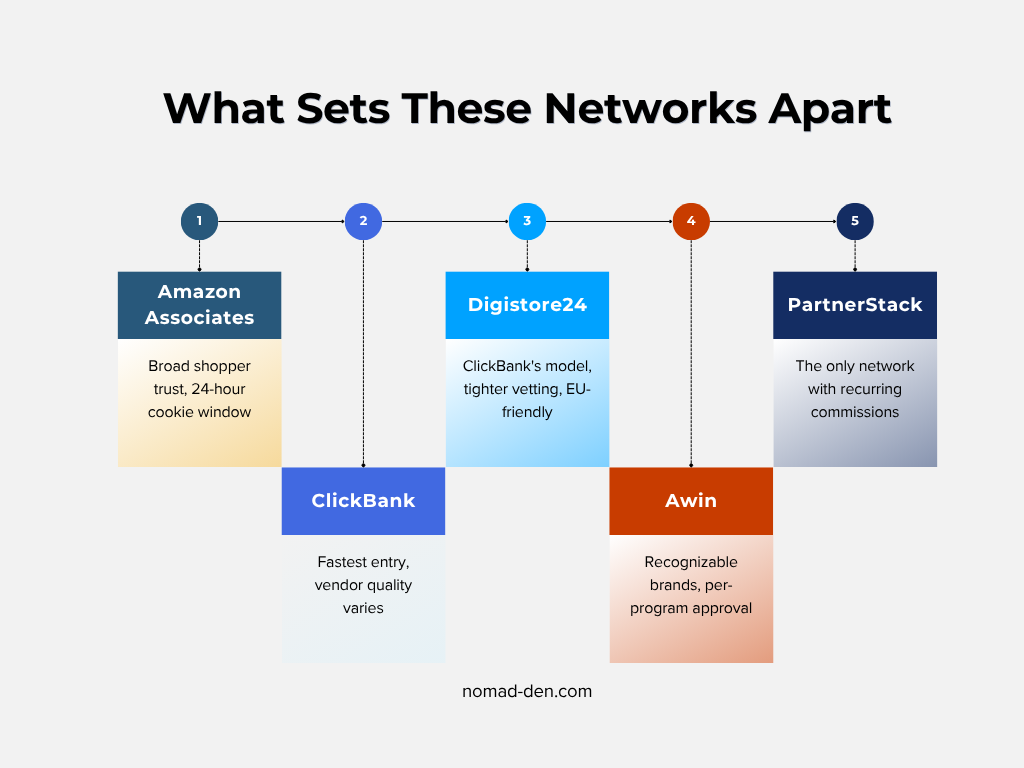
- The 5 Networks at a Glance
- Amazon Associates: The Beginner Standard
- ClickBank: Best for Digital Products and Fast Starts
- Digistore24: The Curated Alternative
- Awin: Mainstream Brand Access at Scale
- PartnerStack: Recurring SaaS Commissions
- Quick Comparison: All 5 Networks Side by Side
- Which Network Should You Actually Join First?
- FAQs About Affiliate Networks
- Final Thoughts
- Continue Reading Related Posts
An affiliate network is a middleman platform that connects you to multiple merchants or vendors under one login, one set of tracking tools, and one payment system, instead of applying to each brand’s program individually. Not every network is worth the time it takes to sign up. Some pay reliably and vet their merchants closely. Others leave you chasing a support ticket or wondering if a payment is actually coming.
This comparison covers five networks I have hands-on experience with, evaluated on the things that actually determine whether a network is worth your time: sign-up requirements, payment reliability, account maintenance, merchant and product quality, and the assets available to help you promote effectively.
What Makes an Affiliate Network Actually Worth Joining?
Commission rate is the number most beginner content leads with, and it’s also the least useful one on its own. A 75% commission on a product with a 30% refund rate can pay out less than a 30% commission on a product nobody returns. Judging a network by its top-line commission percentage alone misses most of what actually determines your income.
A more complete picture comes from six factors: how hard it is to get approved, how and when you actually get paid, what it takes to keep an account in good standing, how consistently the merchants or products meet a baseline quality bar, what training and promotional assets are available, and how the network’s support team behaves when something goes wrong. Every network in this comparison gets evaluated against that same list, so the differences you see below are structural, not just a matter of which one has flashier marketing.
The 5 Networks at a Glance
| Network | Best For | Minimum Payout | Payment Schedule | Sign-Up Barrier |
|---|---|---|---|---|
| Amazon Associates | Beginners, broad product trust | Varies by payment method | 60 days after month-end | Low |
| ClickBank | Digital products, fast starts | No stated minimum | Weekly or biweekly | Very low |
| Digistore24 | Curated digital products, EU audiences | €50 | 90% at 14 days, rest at 60 | Low |
| Awin | Mainstream retail and travel brands | $20 | Twice-monthly | Moderate (per-program approval) |
| PartnerStack | Recurring SaaS commissions | $5–$25 | Monthly | Moderate (per-program approval) |
The next five sections break each of these down individually, starting with the two most beginner-accessible options and moving toward the networks that ask more of you up front.
Amazon Associates: The Beginner Standard
Sign-Up Requirements & Approval
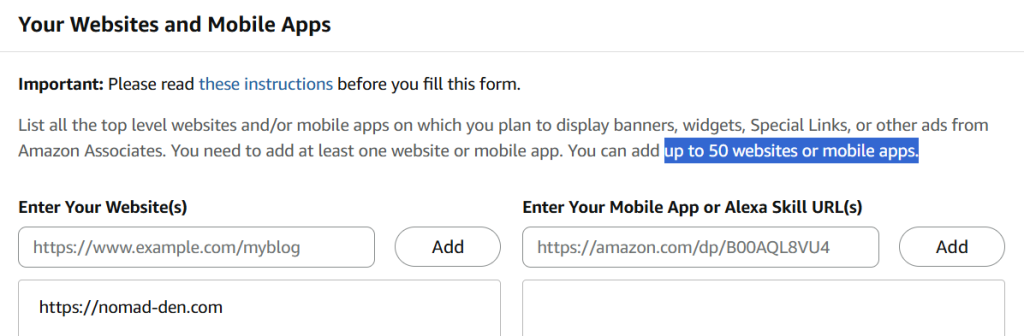
Amazon Associates is open to anyone with a live website, blog, YouTube channel, or social platform where they can post links. Signup itself is free and starts with verifying your identity and account details (address, phone number, payment information) before you move into the site and app registration step, where you can register up to 50 websites or mobile apps under a single account.
One requirement worth knowing before you apply: Amazon now requires original content containing commentary, analysis, or added value, not just bare product links, formally written into the operating agreement as of April 2026. If you’re building comparison posts or genuine reviews, you’re already meeting the bar. New affiliates also get a 180-day window to generate their first qualifying sales, so the program is built around proving yourself within that stretch rather than judging your site on day one.
Payment Structure & Reliability
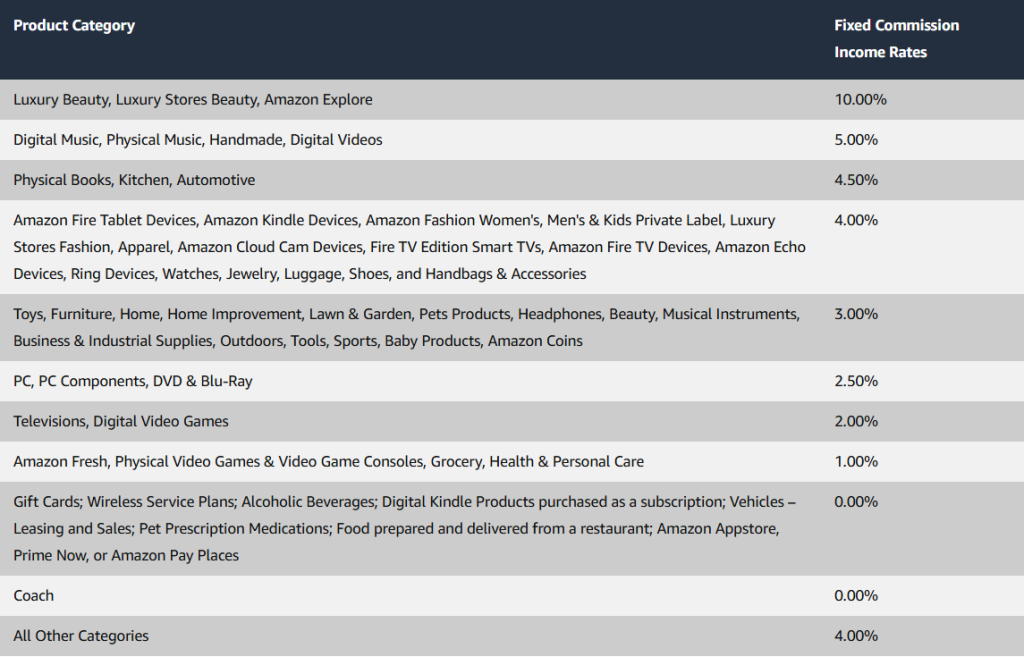
Amazon pays on a 60-day delay cycle, with a $10 minimum threshold for direct deposit, since Amazon holds the payout until the return window closes. Commission rates are modest and category-dependent, topping out at 10% for categories like Luxury Beauty, with most everyday products landing between 1% and 4.5%. The tradeoff is conversion rate, not commission size: shoppers already trust Amazon’s checkout, which tends to offset the lower payout per sale.
Cookie Window & Attribution
This is Amazon’s most-cited limitation, and it’s a real one. The Amazon affiliate program operates on a 24-hour cookie duration for most purchases, meaning customers must complete their purchase within 24 hours of clicking your link. There’s a partial “hack” as a possible workaround to this limitation: if a visitor adds an item to their cart after clicking your link, the cookie window for that specific item extends to 90 days.
Where It Falls Short
Amazon’s biggest risk isn’t the commission rate, it’s account enforcement. They are more strict about policy violations than the other networks on this list, including accidental missteps. An outdated affiliate link format or inaccurate disclosure placement can result in immediate account closure with forfeited commissions. Treat the Operating Agreement as a real rulebook, not fine print to skim once and forget. If Amazon still looks like the right starting point after that, our beginner’s guide to Amazon Associates walks through product selection and promotion strategy in depth.
ClickBank: Best for Digital Products and Fast Starts
Sign-Up Requirements & Approval
ClickBank’s biggest advantage for beginners is speed. Approval is almost immediate for most applicants, with no traffic minimums or content requirements to meet. There is one requirement worth mentioning before your first payout: a new affiliate must generate at least five sales, and ClickBank holds payment until fourteen days after that fifth sale clears, a rule designed to prevent self-referral abuse rather than to slow down legitimate affiliates. For the full account setup walkthrough, see our step-by-step ClickBank tutorial.
Payment Structure & Reliability
ClickBank has a strong reputation for infrastructure reliability. By default, payments go out on a Wednesday two weeks after the end of the pay period, and affiliates can opt into more frequent schedules. The platform’s tracking and payment systems themselves are consistently described as dependable across independent reviews; the variability sits with individual vendors, not ClickBank’s payment infrastructure.
Product Quality & the Gravity Score
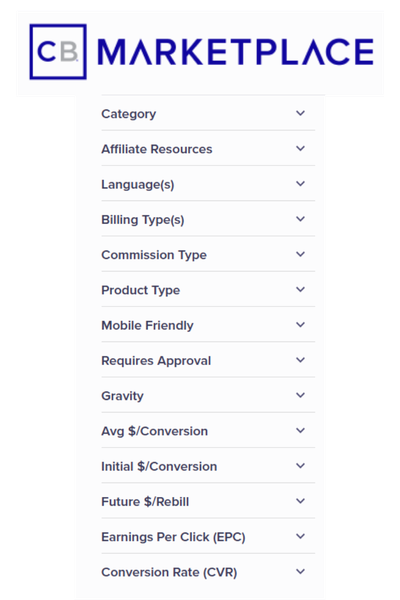
This is the section that actually matters for picking what to promote. ClickBank uses a metric called Gravity Score to signal recent sales activity, tracking how many unique affiliates have made a sale of that product in the past 12 weeks. A low score can mean a product that isn’t converting well, but it can also just mean the product is new and hasn’t built up sales history yet, so it’s worth investigating rather than dismissing outright. Most experienced affiliates target a moderate score of 20-100 instead of chasing the highest number on the board, since that range signals proven demand without overwhelming competition.

Where It Falls Short
ClickBank is an open marketplace, and that openness is both its strength and its weakness. Digital products, particularly in certain categories, experience higher refund rates, sometimes 10-30%, which quietly erodes commissions that looked good on paper. However, high gravity score doesn’t equal high quality; it just means a lot of affiliates are currently promoting that product. Vetting the vendor and sales page yourself before promoting anything is not optional here.
Digistore24: The Curated Alternative
Sign-Up Requirements & Approval
Digistore24 also has a low barrier to entry, is free to join, with minimal restrictions, and no long approval wait for the affiliate side of the account. Where it differs from ClickBank is on the vendor side, where products go through a more active vetting process before they’re allowed onto the marketplace.
Payment Structure & Reliability
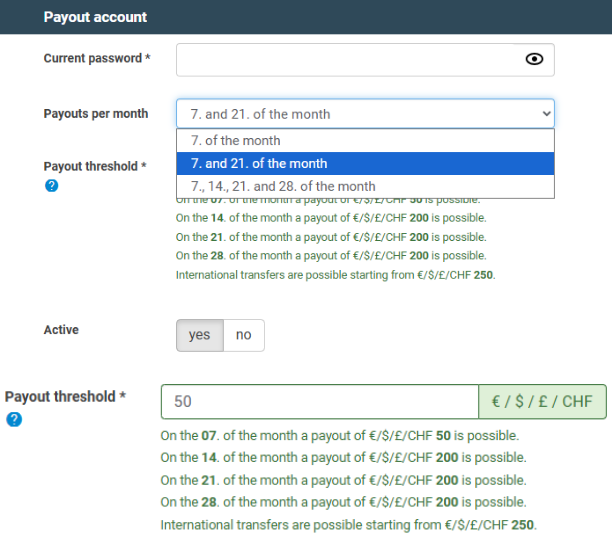
Digistore24 releases 90% of your earnings after a 14-day security period, with the remaining 10% held for 60 days as a security deposit to cover potential refunds. Payouts run on four dates per month, with a €50 minimum threshold on the earliest payout date and €200 on the other three. (make sure to include your local currency for proper conversion).
Product Curation vs. ClickBank
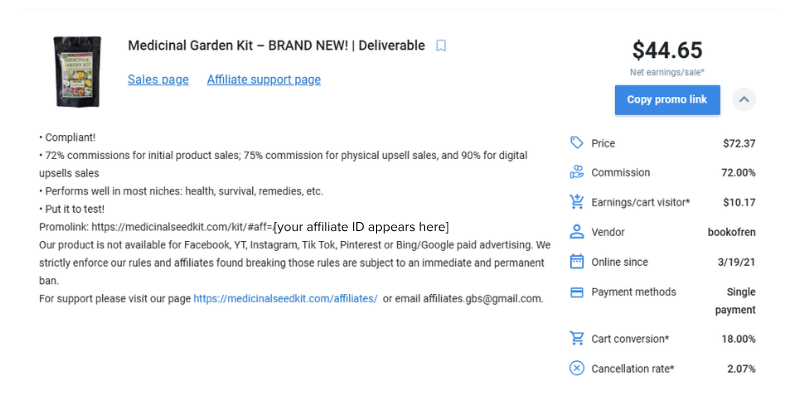
Digistore24’s commissions run similarly high to ClickBank’s, up to 75% on many products, and the catalog has grown to roughly 8,500 vetted offers across 44 niches, larger than ClickBank’s. The tradeoff isn’t catalog size anymore, it’s the vetting itself: fewer low-effort or misleading offers make it through Digistore24’s screening in the first place.
Where It Falls Short
Digistore24’s advantages are real, but they’re most pronounced for a European or international audience specifically. If your traffic is overwhelmingly US-based, the currency and VAT handling that make this platform stand out won’t move the needle much, and ClickBank’s larger US presence may still be the more natural fit.
Awin: Mainstream Brand Access at Scale
Sign-Up Requirements & Approval
Awin is the first network on this list with a real gatekeeping step. Some publishers report a small refundable signup deposit; this may not apply to all accounts, particularly those that migrated over from ShareASale. Network-level approval tends to move quickly; the slower part is getting approved by individual advertiser programs once you’re in, since Awin’s dashboard displays a wide range of retail, travel, and finance brands, and some programmes have strict approval criteria for new publishers.

Payment Structure & Reliability
Awin’s payment reputation is solid. The platform pays publishers twice per month on a set schedule, with a minimum payout threshold starting at $20 for US publishers, which is lower than several comparable networks. Confirmed commissions don’t release instantly, though: for e-commerce programs, the gap between click and payment can run 30-45 days while the advertiser’s return window closes.
Brand Catalog & Per-Program Approval
This is where Awin earns its place on the list. Operating a massive global footprint, Awin provides access to over 30,000 advertisers. Unlike digital-product marketplaces like ClickBank or Digistore24, which skew heavily toward info-products, software, and supplements, Awin gives you direct access to household retail, travel, and financial brands. The catalog breadth is unmatched, but the tradeoff is friction: you must apply and be approved by each individual brand layout before you can grab your tracking links.

Where It Falls Short
Getting approved for Awin itself is just step one. Each advertiser you want to promote requires its own approval, so pulling together a roster of active programs takes time. The dashboard also has a real learning curve for anyone coming from a simpler, single-marketplace network like ClickBank.
PartnerStack: Recurring SaaS Commissions
Sign-Up Requirements & Approval
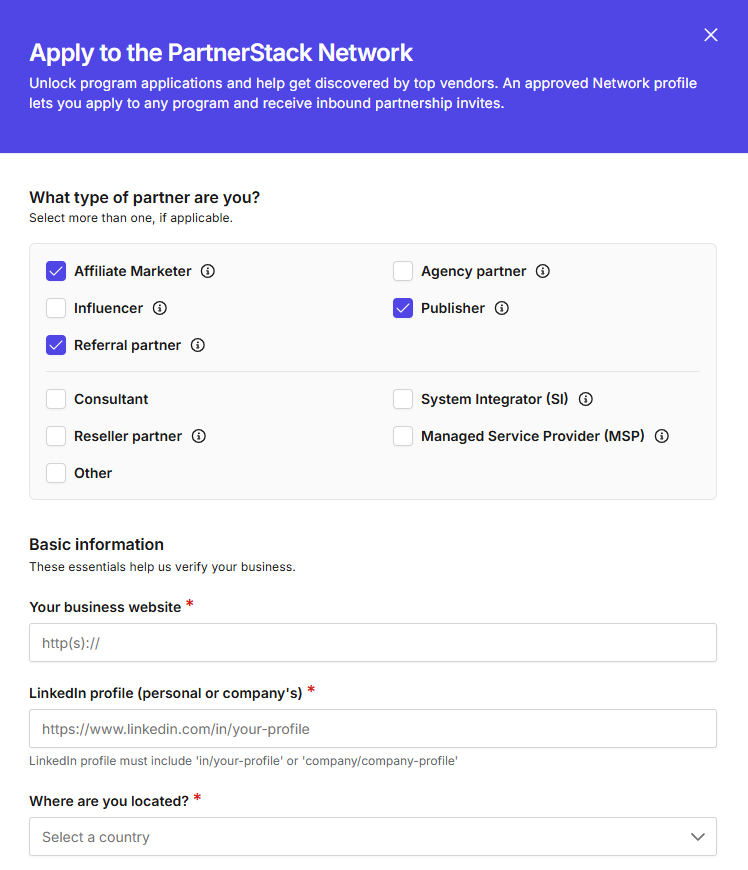
PartnerStack works differently from every other network on this list: there’s no single ‘join the network’ step that unlocks everything. Like Awin, each advertiser inside PartnerStack runs its own program, so getting approved for one brand doesn’t automatically grant access to the rest of the marketplace.
A separate Network application unlocks marketplace-wide discovery, letting you apply to any program and receive inbound partnership invites. That application requires a business website and a LinkedIn profile, a sign-up requirement none of the other four networks on this list ask for. PartnerStack is also upfront that approval isn’t a set-it-and-forget-it process: its own application notes that the Partner Success Team continuously evaluates partner activity, and PartnerStack reserves the right to limit program access at its discretion.

Payment Structure & Reliability
PartnerStack’s payout structure is highly reliable, but it isn’t fully hands-off. Approved commissions clear on a monthly schedule (typically around the 13th), moving into your account once you clear PartnerStack’s platform minimum of $5. Note: some individual software vendors raise this threshold to $50 in their specific program terms.
The tradeoff is that payouts are not automatically deposited: you must manually log into your dashboard to trigger a “cash out.” Furthermore, these withdrawals aren’t free: PartnerStack automatically passes third-party processing fees directly to the affiliate. Cashing out via Stripe costs $2.25 + 0.25%, PayPal eats a 2% cut, and standard US direct deposits carry a flat $1 fee on balances under $1,000.
Why Recurring Commissions Change the Math
This is PartnerStack’s actual differentiator, and it’s a bigger deal than the commission percentage on any single program. PartnerStack’s own network data shows active partners earning an average of over $5,000 annually, a figure driven largely by recurring commissions compounding over the life of a subscription rather than resetting with every sale. A modest monthly commission on a handful of retained software subscribers adds up over time in a way flat, one-time payouts simply cannot match.

Where It Falls Short
PartnerStack is built exclusively for B2B SaaS and software, so it won’t replace a broad-catalog network like Awin or ClickBank; it complements them. And as noted above, the “one login, all programs” promise doesn’t necessarily reflect how access actually works in practice for every affiliate.
Quick Comparison: All 5 Networks Side by Side
| Network | Sign-Up Barrier | Approval Speed | Payment Schedule | Minimum Payout | Cookie Window | Commission Style |
|---|---|---|---|---|---|---|
| Amazon Associates | Low (content review) | Fast | 60 days after month-end | $10 (direct deposit) | 24 hours (90 days if added to cart) | One-time, 0-10% by category |
| ClickBank | Very low | Near-instant | Weekly or biweekly | No stated minimum | Up to 60 days (vendor-set) | One-time, up to 75% |
| Digistore24 | Low | Fast | 90% at 14 days, remaining 10% at 60 days | €50 | Up to 180 days (vendor-set) | One-time, up to 75% |
| Awin | Low to moderate (per-program approval varies) | Fast at network level, slower per-brand | Twice-monthly | $20 | Varies by advertiser, often 30 days | One-time, varies by advertiser |
| PartnerStack | Moderate (per-program access) | Varies by program | Monthly, some manual-trigger | $5-25 | Often 30-90 days | Recurring, varies by program |
Which Network Should You Actually Join First?
The right starting point depends less on which network sounds most impressive and more on what you’re actually trying to build.
If you want the lowest possible barrier to your first commission, start with ClickBank or Amazon Associates. Both approve quickly, and ClickBank in particular removes the content-review step Amazon requires.
If your audience is meaningfully international or Europe-based, Digistore24’s VAT handling and curated marketplace make it the more natural open-marketplace choice over ClickBank.
If you want your affiliate links to carry instant brand trust, Amazon Associates and Awin do the heaviest lifting here. Readers already know these names, which shortens the trust-building work your content has to do.
If you’re building toward long-term, compounding income rather than one-off payouts, PartnerStack’s recurring commission structure is worth the extra setup friction. A modest monthly commission on a handful of retained SaaS subscribers adds up in a way one-time payouts never will.
If you’re not sure yet, that’s a reasonable place to be. Nothing prevents holding accounts with more than one of these at once, and most affiliates who’ve been at this a while end up running two or three networks simultaneously rather than committing to a single one.
FAQs About Affiliate Networks
Final Thoughts
Commission percentage is the number every beginner-focused list leads with, and it’s the least useful one for actually deciding where to spend your time. Payment reliability, product or merchant quality, and how much work a network asks of you before you see your first payout matter more, and they don’t show up in a “50% commission!” headline.
Of the five networks covered here, none of them is objectively “the best.” They solve different problems. The right combination depends on what you’re building and who you’re building it for, which is exactly the kind of decision worth making with real data instead of a commission-rate headline.
If you’re just getting your first affiliate account off the ground, start with our beginner’s guide to the top affiliate networks worth joining. If you want to understand the vocabulary this post assumes you already know, our guide to essential affiliate marketing terms covers gravity score, cookie duration, and EPC in plain language.
Continue Reading Related Posts

Affiliate Marketing Scams: How to Spot Them (and Protect Your Own)
Affiliate marketing is a legitimate, commission-based business model, not a scam, that predates the internet…
Affiliate Marketing Networks Compared: Which Ones Are Actually Worth Joining?
An affiliate network is a middleman platform that connects you to multiple merchants or vendors…

6 Affiliate Niches That Last (And Beginners Can Start Today)
Most people pick an affiliate niche based on what’s trending right now. While that may…
How to Start Affiliate Marketing For Less Than $50 (Beginner Guide)
Affiliate marketing is one of the most affordable and accessible ways to start earning income…

17 Affiliate Marketing Terms Beginners Need to Know
Affiliate marketing terms are the core vocabulary that explains how the business model works, including…
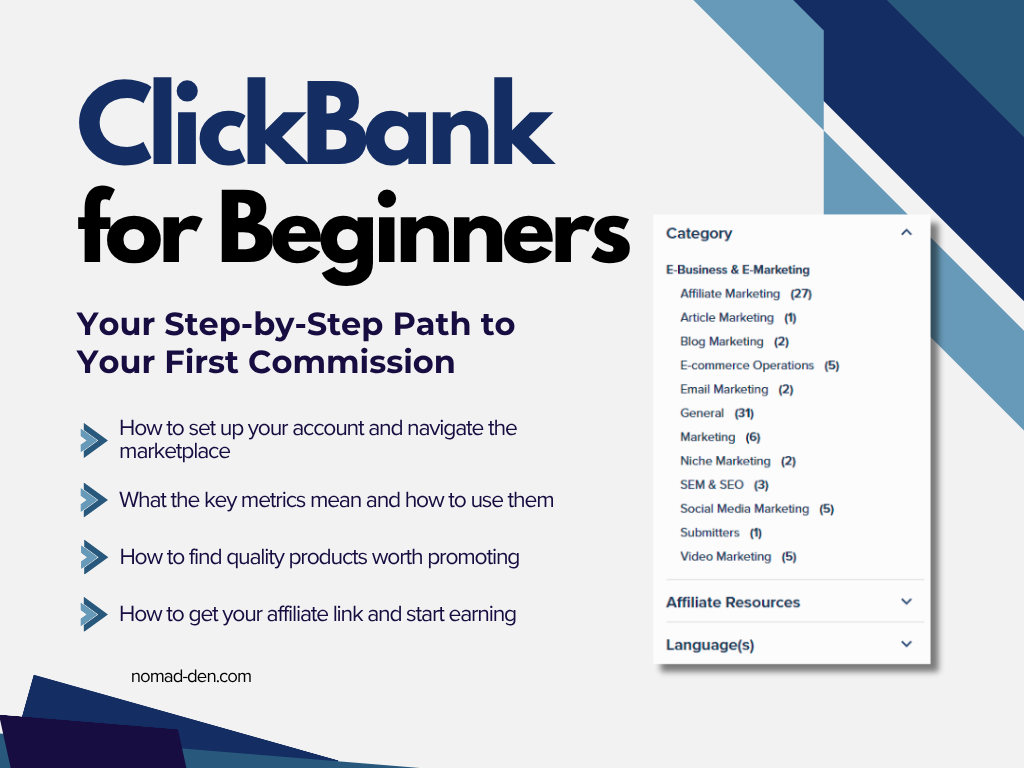
ClickBank for Beginners: Step-by-Step Tutorial to Your First Commission
ClickBank is a digital marketplace where product creators list offers and affiliates earn commissions by…