
Some links in this post may be affiliate links. I may earn a commission at no extra cost to you.
Table of Contents
- The Simple System Behind Selling Digital Products
- The #1 Foundational Platform for Beginners
- Simple Alternatives for Selling Digital Products
- Designing Your Product (No Experience Needed)
- How People Find Your Product (Without Ads)
- The Beginner’s Path to Selling Digital Products
- Frequently Asked Questions
- Conclusion
- Continue Reading Related Posts
One of the most practical ways to earn income online, whether you’re starting a side hustle or building a full-time business, is by selling digital products. The reason is simple: digital products have little to no overhead, no manufacturing costs, and can be sold repeatedly without additional work, which dramatically increases their long-term profit potential.
Beyond the financial upside, creating digital products is also a powerful way to build a recognizable and credible brand. Instead of relying on one-off income streams, you’re developing assets that compound over time. And despite what many people assume, you don’t need to be a designer or have technical skills to get started. The right tools remove most of that complexity.
In this guide, you’ll learn a clear, beginner-friendly approach to creating and selling digital products, along with realistic expectations about what it actually takes to succeed. We’ll focus on simple systems, proven platforms, and a clear way to get started.
The Simple System Behind Selling Digital Products
When people talk about selling digital products, it often sounds more complicated than it really is. In reality, every digital product business relies on the same basic system. Once you understand the pieces, the process becomes much easier to manage.
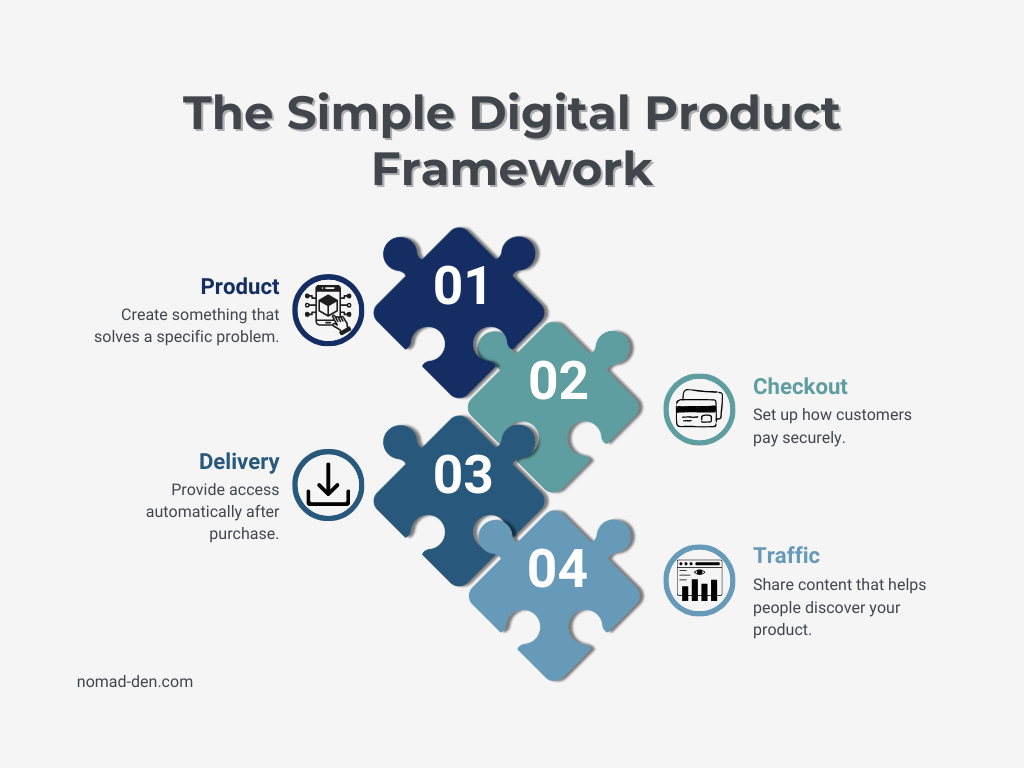
Fundamentally, selling a digital product requires just four things:
A product
This is the value you’re offering. A digital product exists to solve a specific problem, remove friction, or save someone time. People buy digital products because they want clarity, structure, or a shortcut that helps them move forward more easily.
That value can be delivered in many ways, such as an eBook, a template, or a mini course. The format matters far less than the outcome. Because of that, digital products don’t need to be large or complex to be effective. Lead magnets are one of the most practical starting points, especially if building an email list is part of your strategy.
Many successful products start by solving one narrow problem well, then improve over time based on real use and practical feedback.
A checkout
A checkout is integral to any e-commerce transaction, and most digital product platforms include secure payment integration by default. This allows customers to pay safely while ensuring transactions are processed and recorded properly on your end.
Delivery
Unlike physical goods, digital products require no shipping or inventory. Delivery can be automatic, such as a download link or account access, or structured, like a course dashboard. The key is that it works reliably without manual effort.
Traffic
Traffic can come from content, search, social platforms, or referrals. It is not instant, but it compounds over time as you continue to post content consistently and share useful information.
To explore different ways content can be used to market a business, see our Content Marketing guide.
These four steps apply to any e-commerce transaction, regardless of how many products you sell or how you choose to sell them. With that foundation in place, the next step is choosing a platform that makes it easy for beginners to put all of this into practice.
The #1 Foundational Platform for Beginners
Building an online business can feel overwhelming because there are so many moving parts that rarely get explained in one place. Products, payments, pages, delivery, and basic automation all need to work together, and beginners often get stuck trying to connect separate tools before they ever publish anything.
One of the simplest ways to reduce that friction is to start with an all-in-one platform. When fewer tools are involved, there’s less setup to manage, fewer things to break, and a much clearer path from idea to first sale.
Why Beginners Benefit From an All-In-One Platform
An all-in-one platform handles the essential tools for marketing and online business management within a single system, so instead of spending time connecting separate tools through integrations, payment processors, or domain and DNS settings, you can focus on building, testing, and learning how the process actually works.
This matters far more early on than having advanced customization or features you’re unlikely to use. For beginners, momentum and clarity are far more valuable than flexibility that only becomes useful later.
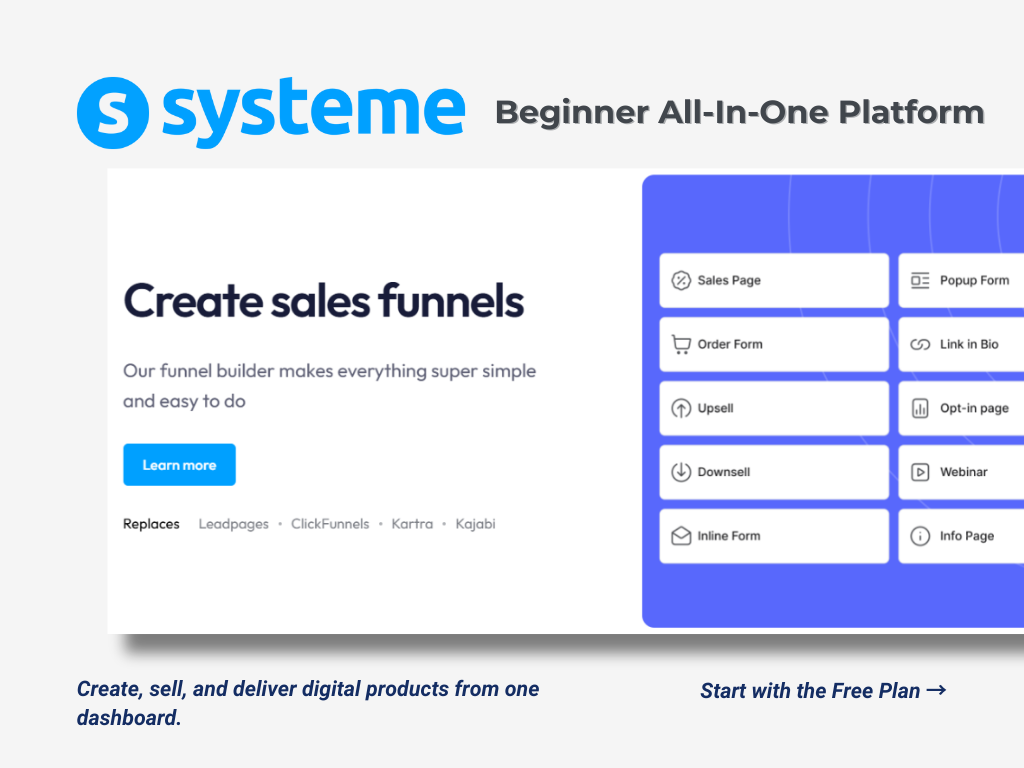
This is where Systeme.io stands out as a practical starting point.
Starting Without Upfront Cost
Systeme.io offers a free plan that has no trial period. This allows anyone starting out to create pages, sell digital products, and automate basic delivery without upfront cost. Beginners can learn at their own pace, experimenting with the platform, and publish their first product without committing to a paid subscription.
They do have paid plans that add capacity and advanced features, but the free plan is fully functional for getting started, and is one of the best values available for any online marketing and business platform. For beginners, this makes it easier to focus on building and publishing instead of evaluating pricing tiers too early.
Simple Alternatives for Selling Digital Products
While an all-in-one platform is often the easiest place to start, its comprehensive toolset may feel like more than some creators need, especially if they already have traffic from social media or an existing audience. In those cases, link-in-bio platforms can offer a more streamlined path to selling digital products.
There are many link-in-bio platforms to choose from. The three options below are our top recommendations and stand out for their simplicity, speed, and quick setup.
- Stan Store
Best for creators who already have a following on social media and want a simple storefront for digital products, subscriptions, or links. Setup is fast, but flexibility is more limited than full platforms. - Beacons
A flexible link-in-bio tool with built-in selling options. Useful for creators who want customization and multiple links in one place, without managing a full website. - SendOwl
Focused on digital product delivery and checkout. Works well if you already have a website or landing page and just need payments and delivery handled reliably.
These tools can work well in specific situations, but they often rely on external traffic and additional setup. For beginners starting from scratch, an all-in-one platform typically offers a more complete foundation.
Designing Your Product (No Experience Needed)
A common hesitation for beginners is the belief that you need to be creative or design-savvy to create a digital product. In reality, most modern tools are built to remove that barrier entirely.
Platforms like Canva make it possible to create professional-looking digital products without starting from a blank page. Instead of relying on talent or experience, you can start with templates structured for common use cases, then customize them to fit your content. Canva also provides users with Brand Kit tools, allowing creators to build visual consistency using their own colors, fonts, and reusable layouts. This helps designs stay cohesive as you experiment and improve, making it easier to focus on your product’s message and value.
Many beginner digital products start as simple formats such as short guides, checklists, workbooks, templates, or mini courses. These don’t need to be perfect or exhaustive. What matters is that they’re useful and clear.
One advantage for beginners is that Canva offers a free plan with no trial period, reducing pressure while you learn the platform and build your business. Even upgrading to Canva Pro remains affordable if you choose to expand later.
You don’t have to be an expert to start, but you do have to start to become an expert.
How People Find Your Product (Without Ads)
Getting traffic doesn’t require being everywhere at once. For beginners, the goal isn’t maximum reach but consistent visibility that you can actually maintain.
A few organic channels tend to work especially well early on. Pinterest supports long-tail discovery, where a single piece of content can keep driving traffic long after it’s published. Social media rewards consistency and repetition even with simple content, and a blog builds compounding value over time as each piece builds on the last instead of resetting to zero.
Choosing one or two channels you can show up for regularly is far more effective than chasing reach across every platform.
Traffic is a process, not a switch.
The Beginner’s Path to Selling Digital Products
At this point, the process should feel far less complicated than it did at the start. You don’t need a perfect product, a complicated set of tools, or multiple platforms to get moving. What matters is following a simple, repeatable schedule that lets you learn by doing.
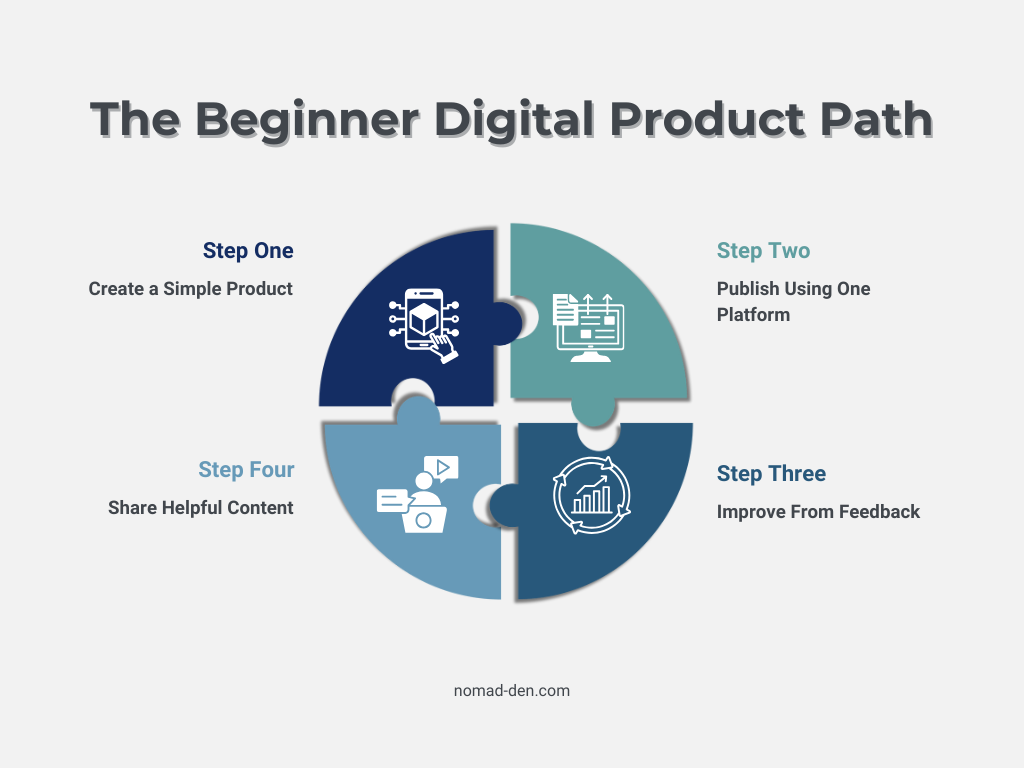
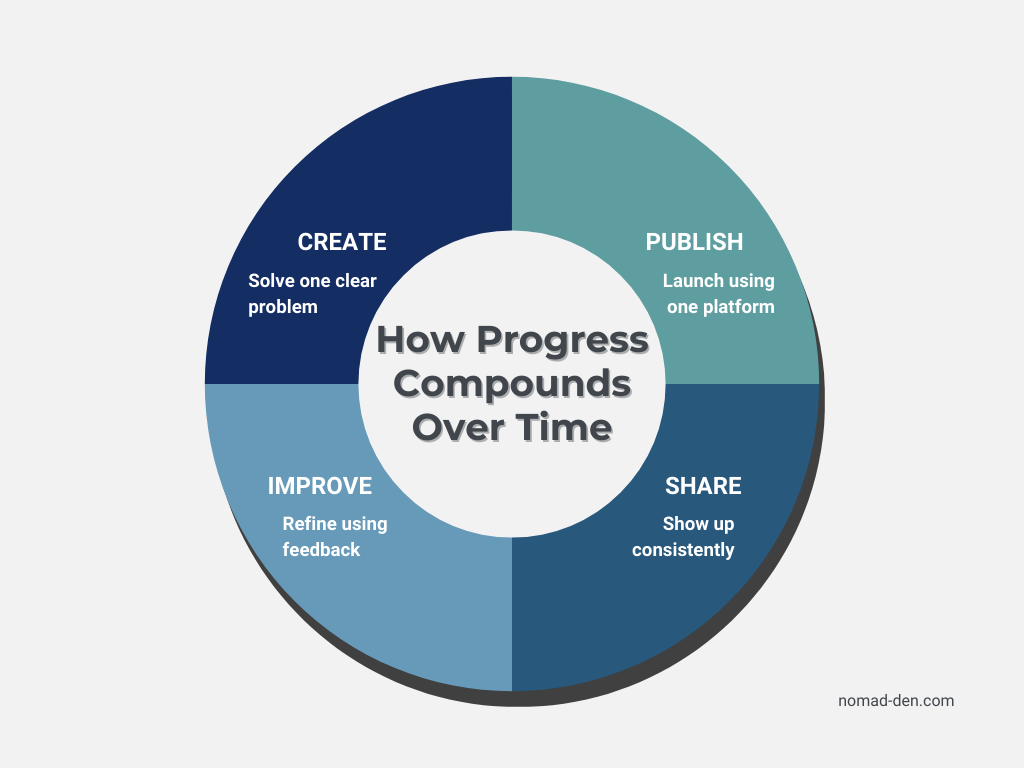
That schedule should look like this:
- Create a simple digital product.
Keep it focused and practical. It doesn’t need to be comprehensive, just focused enough to solve one clear problem for a specific type of person. - Publish it using one platform.
Using a single system keeps things straightforward and removes the friction that comes from trying to connect too many tools before you’ve even launched. - Share content consistently that relates to the product you created.
This is how people find you and understand what you offer. Showing up on a regular schedule teaches you faster and improves your skills more than any tutorial ever will. - Improve based on real feedback.
What people click, save, buy, or ask about tells you exactly what to refine next.
Each pass through this loop builds clarity. Each iteration builds confidence. That’s where momentum comes from. This is where things start to feel real.
Frequently Asked Questions
Conclusion
Selling digital products doesn’t require complex systems, paid ads, or years of experience. It requires clarity, consistency, and a simple setup you can actually maintain.
When you focus on one product, one platform, and one or two channels, you remove the noise that causes most beginners to stall. You learn faster, build confidence sooner, and create momentum through real-world feedback instead of theory.
This is how digital products are built sustainably and how real progress compounds over time.
Some links in this post may be affiliate links. I may earn a commission at no extra cost to you. Learn more here.
Continue Reading Related Posts
How to Validate a Business Idea Before Wasting Months Building It
When you come up with an idea for an online business, you’re anxious to make…
6 Affiliate Niches That Last (And Beginners Can Start Today)
Most people pick an affiliate niche based on what’s trending right now. While that may…
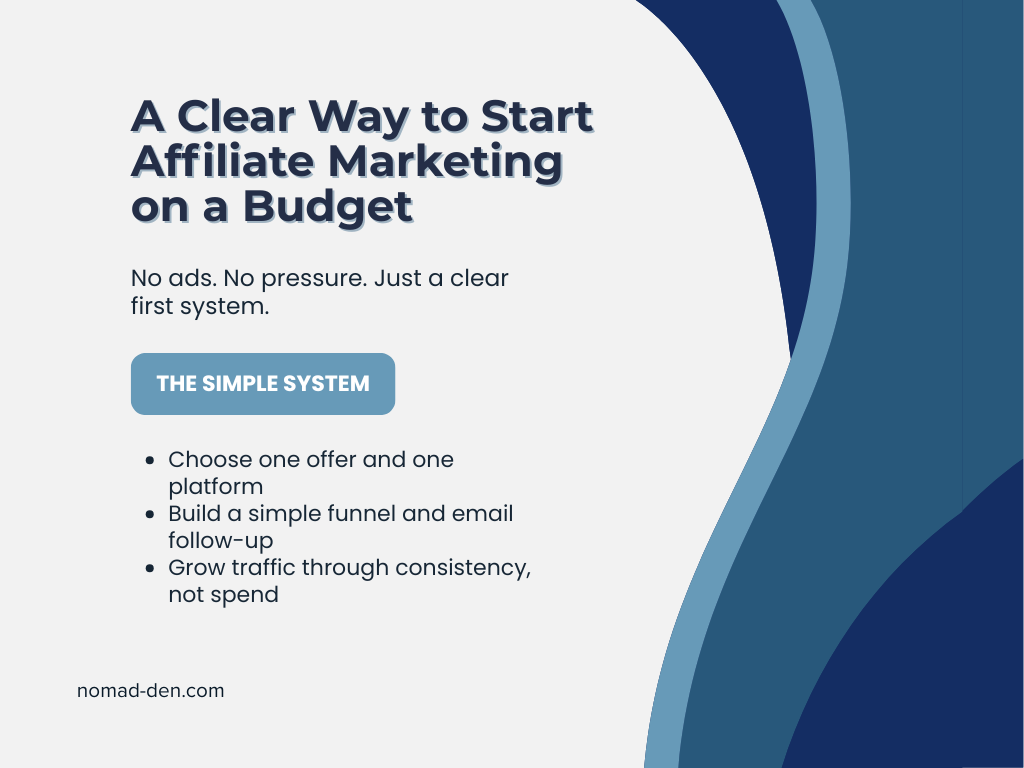
How to Start Affiliate Marketing For Less Than $50 (Beginner Guide)
Affiliate marketing is one of the most affordable and accessible ways to start earning income…
E-Commerce Basics: 15 Terms That Explain How Online Stores Work
E-commerce refers to any transaction made online — buying or selling products, services, or digital…
How to Make Money on Pinterest (Without Spending Any)
Most people group Pinterest in with social media, but that comparison undersells what it actually…
Digital vs. Physical Products: Which E-Commerce Path Is Right for You?
E-commerce lets you sell products and generate income online without a physical storefront, set hours,…