

Affiliate marketing terms are the core vocabulary that explains how the business model works, including how links are tracked, how commissions are earned, and how performance is measured. This post covers 17 of the most foundational terms, organized by category.
Affiliate marketing is one of the most common ways beginners start earning income online. It is a massive industry, projected at over $17B globally and estimated to exceed $36B by 2030, used regularly by millions of people. Success and income vary widely, and there are no guarantees, but the long-term earning potential is very real for those who approach it correctly.
One of the biggest challenges is learning how to be effective enough to earn consistently and sustainably. Like any profession, affiliate marketing rewards education, patience, and a solid understanding of the fundamentals. These terms form the foundation of how affiliate marketing actually works and will help you evaluate programs, track performance, and make better decisions as you build toward consistent, sustainable income.
Core Affiliate Marketing Roles & Structure
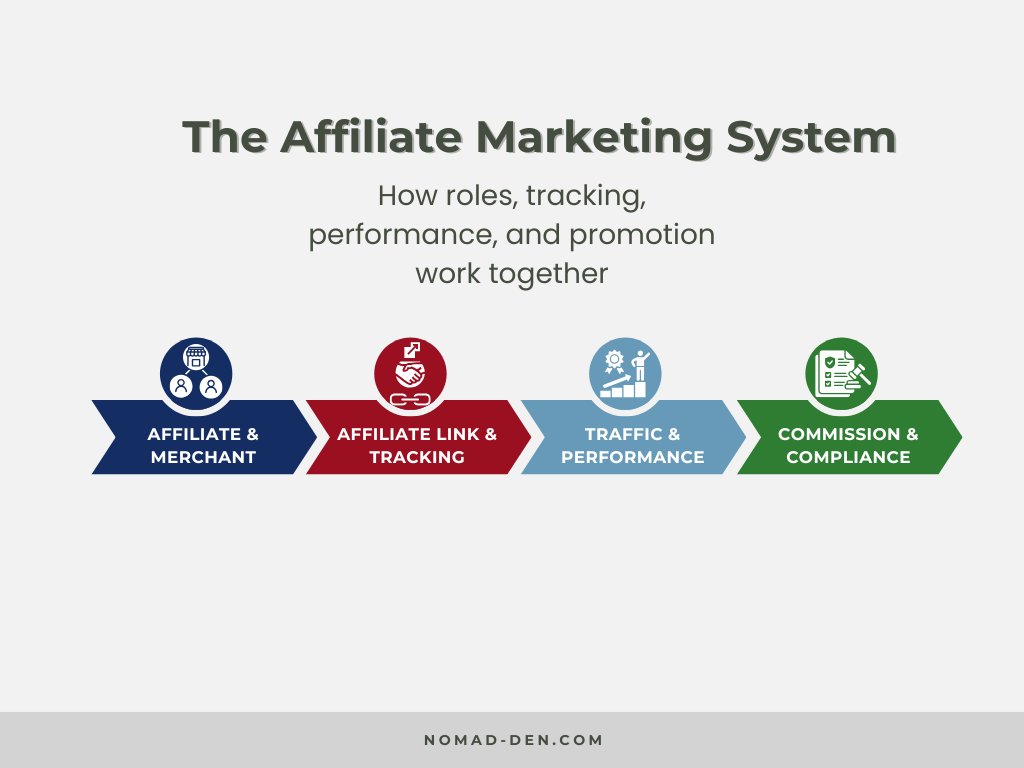
Before diving into links, metrics, and commissions, it’s important to understand the basic structure of affiliate marketing. This section covers the core roles involved and how affiliate relationships are organized, so you have a clear picture of who does what and how the system works.
Affiliate Marketing
Affiliate marketing is a performance-based business model where individuals promote products or services and earn a commission when a specific action is completed, such as a sale, signup, or lead.
Affiliate (Publisher)
The affiliate, sometimes called the publisher, is the person or business promoting an offer. They are referred to as publishers because they create and distribute content on behalf of one or more merchants. This promotion can take place through a blog, social media, email marketing, video content, or paid advertising.
Merchant (Advertiser)
The merchant, also known as the advertiser, is the company or individual that owns the product or service being promoted. Affiliate marketing allows merchants to promote their products through third-party publishers, paying only when a specific action or result is achieved.
Affiliate Program vs Affiliate Network
These two terms are frequently used interchangeably, but they describe different setups. An affiliate program is a direct partnership between a merchant and an affiliate, where the merchant manages tracking, payments, and reporting internally. An affiliate network acts as an intermediary, hosting multiple programs on a single platform and handling those same functions for both parties.
Networks simplify access for affiliates who want to manage multiple partnerships in one place, while direct programs often offer more control or higher commissions.
Now that the core roles are clear, the next step is understanding how affiliate activity is tracked. This includes the links, cookies, and attribution methods that determine whether an affiliate gets credited for a result.

Tracking, Links, & Attribution
This section explains how clicks, actions, and commissions are actually tracked and credited. Understanding these basics helps prevent common misunderstandings about why a commission was or wasn’t earned.
Affiliate Link
An affiliate link is a unique URL assigned to an affiliate that tracks traffic and actions sent to a merchant. When someone clicks this link, it allows the system to identify which affiliate referred the visitor.
Tracking & Attribution
Tracking and attribution refer to how clicks and actions are recorded and attributed, or credited, to a specific affiliate. This process typically uses cookies and tracking pixels to connect user activity back to the affiliate who referred it.
Cookie Duration
Cookie duration is the length of time a tracking cookie remains active after someone clicks an affiliate link. If the person completes a tracked action, such as a purchase or signup, within that time frame, the affiliate receives credit. Longer cookie durations generally improve the chances of earning a commission.
Together, these elements explain how affiliate activity is tracked and credited. Next, we’ll look at how that tracked activity translates into commissions and actual earnings.
Commissions & Payment Models
This section explains how affiliates get paid and what the numbers you see actually mean. Understanding these terms makes it easier to judge offers realistically, instead of relying on inflated income claims.
Commission
A commission is the amount an affiliate earns when a tracked action is completed. Commissions may be a flat dollar amount or a percentage of a sale, and can vary significantly depending on the affiliate program.
CPA (Cost Per Action)
CPA means an affiliate earns a commission when a specific action is completed, not just when someone clicks a link. This action might be a purchase, a signup, or filling out a form, depending on the offer.
EPC (Earnings Per Click)
EPC measures the average amount earned per click sent to an offer. Because it factors in both conversion rates and commission values, EPC is often more useful than raw commission percentages when comparing affiliate offers.
While commissions explain how affiliates earn money, the next section focuses on how performance is measured. We’ll look at the numbers used to understand traffic and results.
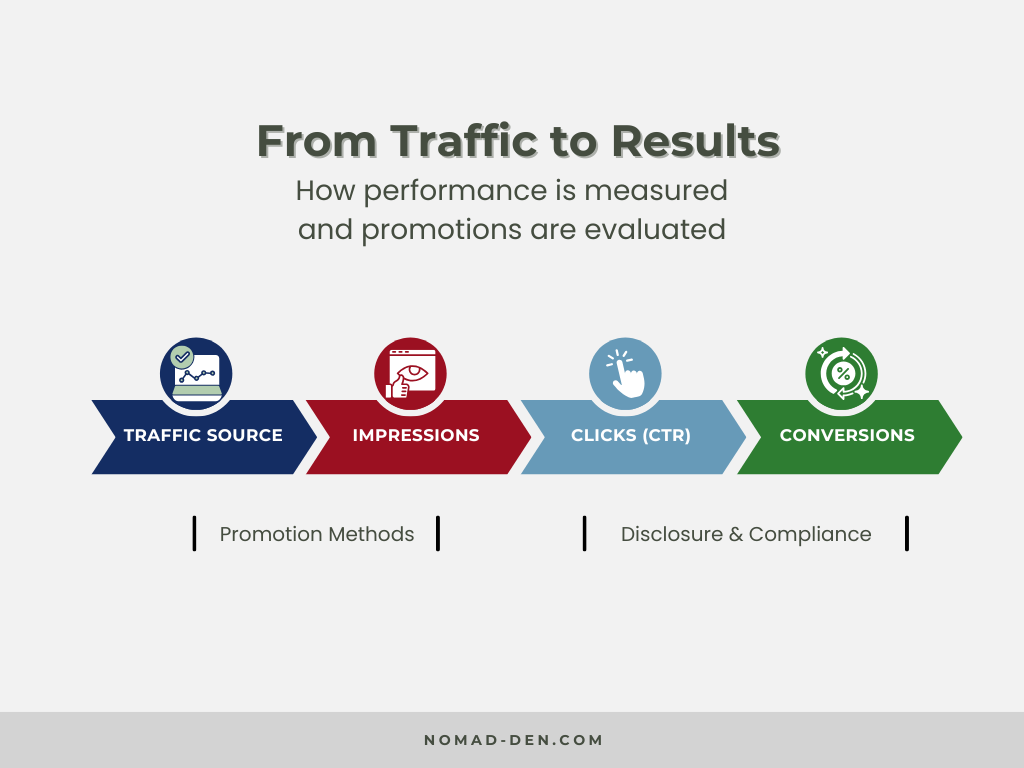
Traffic & Performance Metrics
This section explains how affiliate performance is measured, from where traffic comes from to what happens after someone clicks. These numbers help you understand what’s working and what needs adjustment.
Traffic Source
A traffic source is where visitors come from before clicking an affiliate link. These include search engines, social media, email, videos, and paid ads. Different traffic sources often perform very differently, even for the same offer.
Impressions
Impressions refer to how many times your content, link, or ad is shown to people. An impression does not mean someone clicked, only that it was displayed.
CTR (Click-Through Rate)
CTR shows the percentage of people who clicked your link after seeing it. For example, if 100 people see a link and 2 click it, the CTR is 2%. CTR helps indicate how compelling your content or message is.
Conversion Rate
Conversion rate measures how often clicks turn into completed actions, such as a purchase or signup. If many people click but few convert, the issue is usually the offer, the audience, or the landing page, not the traffic itself.
Traffic and performance numbers show what is happening, but how you promote offers also matters. The next section covers basic promotion methods and the rules affiliates need to follow.
Promotion & Compliance Basics
This section covers two important concepts related to how affiliates promote offers and the responsibilities that come with doing so. These basics help protect both the affiliate and the audience.
PPC (Pay-Per-Click)
PPC is a promotion method where affiliates pay to display ads and are charged each time someone clicks. While PPC can drive traffic quickly, it also carries risk, since affiliates pay upfront without guaranteed returns. Many affiliate programs place restrictions on how PPC can be used, making it important to review program rules carefully.
Affiliate Disclosure
An affiliate disclosure is a clear statement informing readers that an affiliate may earn a commission from links or recommendations. Disclosures are required by law in many regions and help maintain transparency and trust with an audience. They should be easy to notice and written in plain language.
Frequently Asked Questions
Conclusion
Affiliate marketing can seem confusing at first because so many moving parts work together behind the scenes. Understanding how links are tracked, how commissions are credited, how traffic is measured, and how promotions should be handled responsibly removes much of that uncertainty.
With a clear grasp of these core terms, it becomes easier to evaluate affiliate programs realistically, set better expectations, and focus on what actually moves results forward. These fundamentals form the foundation for building sustainable affiliate income, whether you’re just getting started or planning to expand later.
Continue Reading Related Posts

Affiliate Marketing Scams: How to Spot Them (and Protect Your Own)
Affiliate marketing is a legitimate, commission-based business model, not a scam, that predates the internet…

Affiliate Marketing Networks Compared: Which Ones Are Actually Worth Joining?
An affiliate network is a middleman platform that connects you to multiple merchants or vendors…

6 Affiliate Niches That Last (And Beginners Can Start Today)
Most people pick an affiliate niche based on what’s trending right now. While that may…

How to Start Affiliate Marketing For Less Than $50 (Beginner Guide)
Affiliate marketing is one of the most affordable and accessible ways to start earning income…
ClickBank for Beginners: Step-by-Step Tutorial to Your First Commission
ClickBank is a digital marketplace where product creators list offers and affiliates earn commissions by…

How Amazon Associates Actually Works: A Beginner’s Guide
Amazon has evolved into the world’s leading marketplace since its founding in the mid-’90s, commanding…