

Some links in this post may be affiliate links. I may earn a commission at no extra cost to you.
Table of Contents
- How Big Is the Affiliate Marketing Industry?
- How Do You Choose an Affiliate Marketing Niche?
- How to Validate Your Niche Before You Commit
- Choosing Quality Products and Vendors
- Do You Need a Website to Start Affiliate Marketing?
- Should You Bother With Email Marketing?
- Building Your Audience Through Content
- FAQs
- Conclusion
- Continue Reading Related Posts
Affiliate marketing lets you earn a commission by recommending other people’s products, using a tracked link that credits you when someone buys. There’s no inventory to manage, no product to build, and no shipping to deal with, just a referral that pays when it converts.
How Big Is the Affiliate Marketing Industry?
Estimates of the industry’s size vary depending on what’s being measured, but current figures put the global market at roughly $20 billion in 2026, projected to reach nearly $28 billion by 2027. Affiliate-driven purchases already account for roughly 16% of U.S. e-commerce transactions, a figure that’s held steady across most current industry data.
If you’re wondering how to start affiliate marketing as a beginner, you’re in the right place. It’s a flexible, scalable path you can build around your own schedule, whether you want some extra income on the side or eventually replace a full-time job.
How Do You Choose an Affiliate Marketing Niche?
Your niche determines everything downstream: which products you can promote, which audience you can reach, and how much competition you’re up against. Choose based on genuine expertise or interest, not just perceived profitability, that’s what keeps you creating content long after the novelty of starting wears off.
There are over 100 viable affiliate marketing niches, and many overlap. Health and wellness, for example, covers sub-niches like fitness, nutrition, mental health, and natural remedies. When comparing options, weigh commission rates and payout structure alongside how much you already know about the topic. A niche with high payouts but no real interest behind it tends to stall out fast.
Here are a few of the most consistently profitable niches to consider, particularly if you’re just starting out:
- Health and Wellness: Beyond supplements, think sleep tech, mental health apps, and recovery gear like massage guns or red light therapy.
- Wealth: Budgeting apps, investing platforms, and side-income courses tend to convert better than generic “get rich” offers.
- Relationships: Dating coaching, couples therapy apps, and curated gift services are underused compared to dating apps themselves.
- Travel: Travel insurance, packing gear, and remote-work-friendly accommodations, especially relevant if your audience overlaps with digital nomads.
- Pets: Pet insurance, subscription treat boxes, and training courses, a category with unusually loyal repeat buyers.
- Video Games: Peripherals, subscription services, and coaching or boosting platforms for competitive titles.
- Finance: Tax software, credit monitoring, and small business banking tools, higher price points than most niches on this list.
- Technology: VPNs, productivity software, and smart home devices, broad enough to overlap with several other niches here.
- Lifestyle: Home organization, productivity planners, and personal styling services.
- Education: Online course platforms, tutoring services, and certification prep tools.
There’s no obligation to choose any of these, they’re simply meant to help narrow the field. For a longer list of niches that hold up over time, see our breakdown of the best long-term affiliate niches. Once you’ve narrowed it down, here’s how to validate your idea before building around it.
How to Validate Your Niche Before You Commit
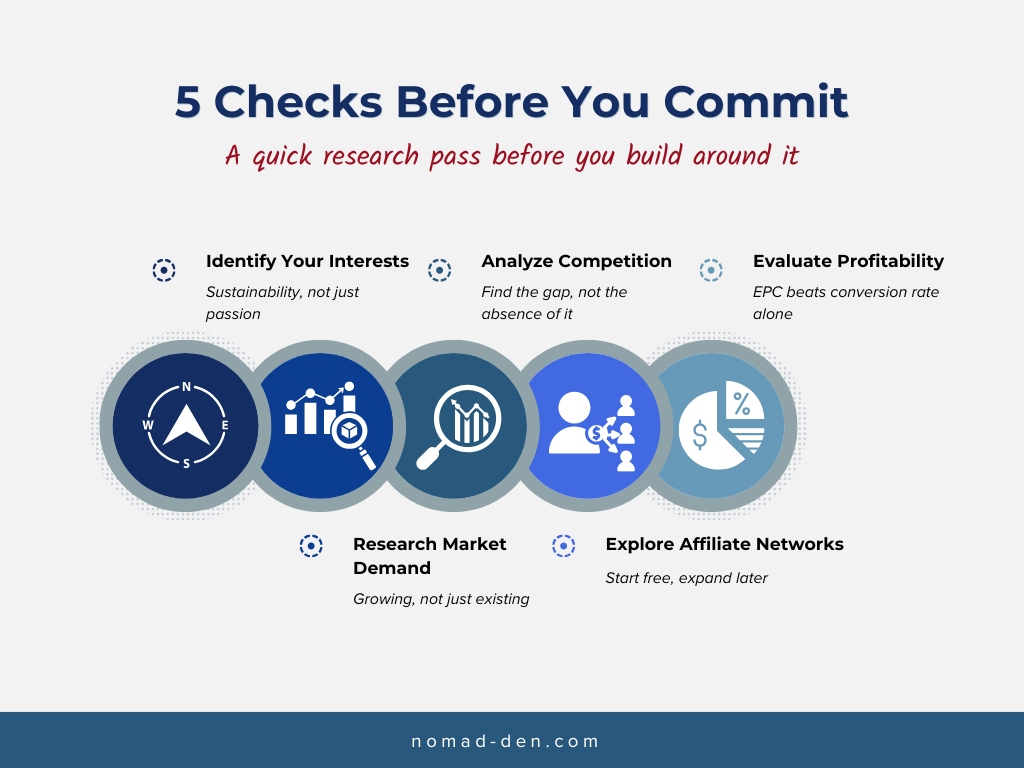
When researching your potential niche, follow these five essential steps to give your business the best chance at long-term success:
1. Identify Your Interests and Expertise
Start with what you know and love. This will keep you motivated and allow you to create content that is authentic and engaging.
2. Research Market Demand
Use tools like Google Trends and keyword research tools like Mangools to gauge interest levels and track emerging trends within your niche. For a deeper walkthrough of this process, see our guide to keyword research. Look for niches with a growing audience and sufficient interest, this increases your odds of success before you’ve invested real time.
3. Analyze Competition
While competition often indicates profitability, study the landscape to find underserved segments, potential gaps in the market, or unique angles that can help you stand out.
4. Explore Affiliate Networks
Affiliate networks are platforms where you can find products and services to promote. There are even ways to start affiliate marketing with no money by using free tools and networks like Systeme.io and ClickBank, whose broad digital product selection and user-friendly payouts make it a common starting point. If you’re considering ClickBank specifically, here’s a full walkthrough of how to get set up.
Each network has different requirements and access levels, some require applying separately to individual programs, with approval criteria varying by program. For a side-by-side look at how the major networks stack up, see our affiliate network comparison.
Need help finding a trustworthy affiliate program to get started? Check out this list of 5 free affiliate programs that are beginner-friendly and vetted for legitimacy.
5. Evaluate Profitability
Consider the potential for earning commissions. Look at the types of products or services available in the niche, their price points, and the commission rates offered by affiliate programs.
These affiliate marketing websites and programs are where beginners often get started:
- Amazon Associates: Widely recognizable and easy to get approved for, a common first program for beginners. Our full breakdown covers commission rates and what actually sells well through the program.
- Clickbank: Known for classic “make money online” and info products; a common starting point for digital-first marketers.
- Warrior Plus: Similar to ClickBank, but often leans more toward digital-marketer-specific tools and courses.
- MaxWeb: Wellness-heavy, high-converting, digital-adjacent offers.
- Digistore24: Also info-product-heavy, especially in MMO niches. If you’re wondering whether it’s legit, yes, it’s a reputable global network with thousands of offers, including Commission Hero, a well-known affiliate marketing course and one of the network’s top programs.
- Awin (formerly ShareASale): A broad network of real-world merchants, well-suited to blogs and niche sites. The two networks merged in recent years, so you may still see ShareASale referenced elsewhere under the Awin name.
- PartnerStack: Built around SaaS and B2B software partnerships, worth exploring once you’re ready to promote tools rather than consumer products.
- CJ (formerly Commission Junction): Higher barrier to entry, premium brands, best suited for affiliates ready to scale.
By carefully selecting programs that align with your niche, you can increase your chances of success. Remember, each network and program might have specific requirements, so take the time to review and understand them before applying.
Choosing Quality Products and Vendors
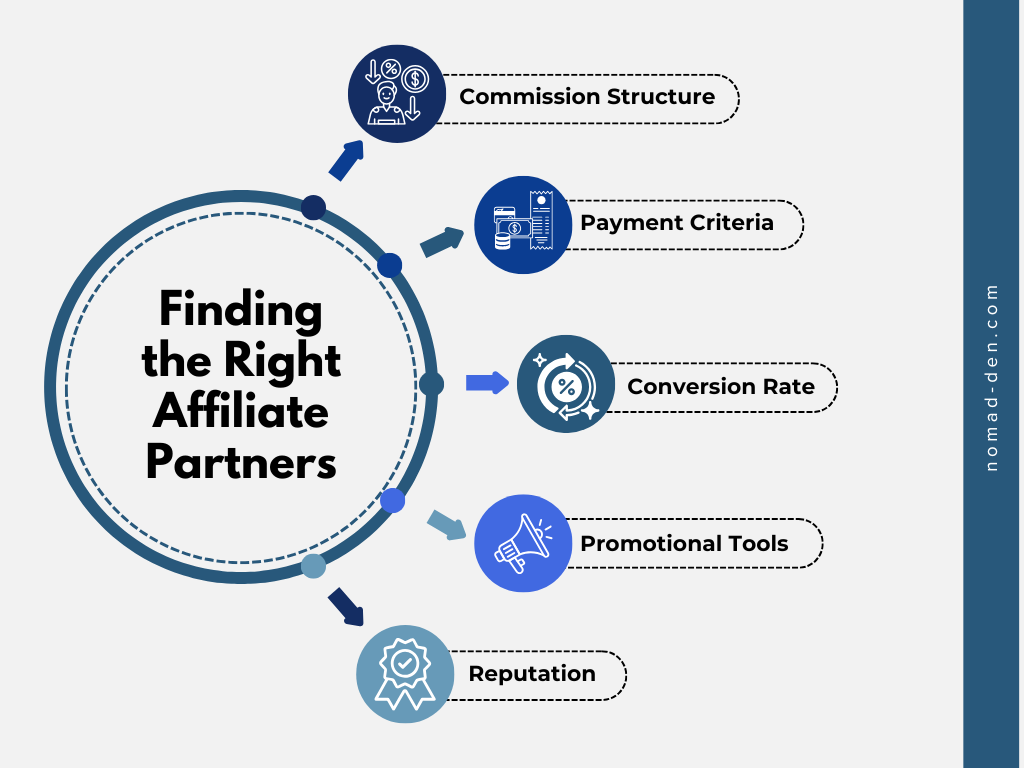
After researching your niche and exploring affiliate networks, the next step is selecting the products and services you’ll actually promote. Consider these factors when choosing your affiliate partners and offers. New to some of the terminology below? Our beginner’s glossary of affiliate marketing terms covers the vocabulary you’ll run into across networks.
Commission Structure
Flat Rate vs. Percentage: Some programs offer a flat commission per sale, while others offer a percentage of the sale. Understanding this can help affiliates estimate their potential earnings. Other programs also offer recurring commissions vs. one-time payments. This can provide more consistency in your earnings, helping you manage your expenses more effectively.
Payout Threshold and Methods
Minimum Payout: Consider the minimum payout threshold required to receive earnings. Lower thresholds can be more appealing to new affiliates.
Payout Methods: Look for programs that offer flexible payout options, such as direct deposit, PayPal, or checks.
Conversion Rate
Average Conversion Rate: Most networks display EPC (earnings per click) alongside each program, a more useful number than conversion rate alone since it accounts for both how often people buy and how much you earn when they do. A high EPC with low competition is often a better signal than a well-known brand with a thin margin.
Promotional Materials Provided
Marketing Resources: Good programs often provide high-quality banners, email templates (swipes), and other promotional materials that make it easier to promote their products.
Note: Some companies will offer seasonal promotions with accompanying banners. It’s important to stay on top of these changes so you can take advantage of them, and remove outdated materials when the promotion ends.
Reputation of the Vendor
Trustworthiness: Vendors with a strong industry reputation tend to boost your credibility and conversions by association. Before promoting a product, check for verified reviews, transparent policies, responsive support, and a consistent track record of paying affiliates on time. Avoid vendors flooded with complaints, vague commission details, or hype that feels too good to be true.
Owning a domain doesn’t mean you need a website, it means you’re planning ahead.
Do You Need a Website to Start Affiliate Marketing?
Not necessarily. Some programs allow you to promote without one, through social media, email, or link-in-bio tools. Even if you’re not actively using a full website, many affiliate networks still require domain ownership. It’s important to note: owning a domain is not the same as having a website. A domain is simply your web address, a digital asset that can be linked to a variety of platforms.
Want to skip the website? Here’s how to get started without one.
That said, if you’re ready to build a stronger online presence and better support your brand, a dependable host like Hosting.com offers fast, secure, and affordable setup options.


If you need help choosing a provider, read my breakdown on domains and web hosting here.
Don’t give up yet—you’re almost there! Setting up the foundations of your online business may seem challenging, but you’re just a few steps away from being fully prepared to launch your email campaigns and start engaging with your target audience.
Should You Bother With Email Marketing?
Although email marketing is not a required element of successful business practices, it is highly recommended to include as soon as possible. Email marketing is an effective way to build brand awareness, improve customer loyalty, increase conversions, and has one of the highest ROIs in online marketing.
Why Email Marketing is Essential
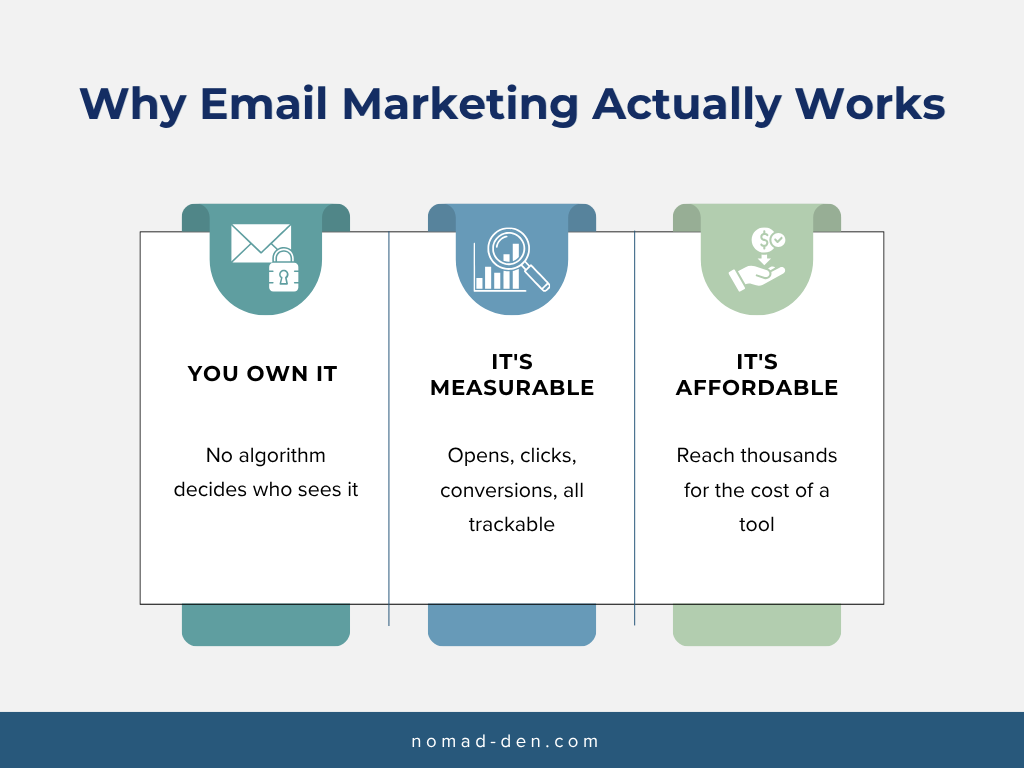
Email is one of the few channels you fully own, no algorithm decides whether your message reaches someone’s inbox. It’s inexpensive to run, and because you’re reaching people who chose to hear from you, it’s more targeted than a social post aimed at everyone at once.
It’s also the easiest channel to measure. Opens, clicks, and conversions are all trackable in a way that’s harder to pin down elsewhere, and that data compounds over time, showing you exactly what your audience actually responds to. If tracking and analytics feel unfamiliar, our beginner’s guide to digital marketing analytics breaks down what these numbers actually mean.
Understanding the Technical Essentials
Email authentication is a crucial step in setting up your email campaigns. It involves configuring DNS records, such as SPF, DKIM, and DMARC, which help protect your emails from being marked as spam or used in phishing attacks, ensuring they reach your recipients’ inboxes. Major email providers like Google and Yahoo now require proper authentication to maintain high email deliverability rates.
We won’t cover the specific setup here, since it varies by hosting provider. If technical setup like this isn’t your strength, here’s how to handle tech tasks you’d rather outsource, whether that’s your hosting provider’s support team or a freelancer. This is why choosing a reliable domain and hosting provider matters, their customer service can walk you through this if needed.
For a deeper dive into three top email marketing platforms, check out our full guide to email marketing to choose which one best fits your needs.
Building Your Audience Through Content
With the foundation of your online business in place, it’s time to attract your target audience. Content marketing is how you do that at scale, drawing people in through blogs, newsletters, and social media rather than paying for every visitor. Producing content consistently establishes authority, builds trust, and turns visitors into customers over time.
Wherever you decide to post, consistency and quality both matter more than speed. Rushing content out to keep pace with everyone else usually shows, take the time to make it genuinely useful, and it’ll earn more trust in the long run than volume alone.
While developing your content, include elements that help it get found: keywords, meta descriptions, and other SEO fundamentals. Mangools is a well-recognized company offering five easy-to-use SEO tools to help you get started.
Creating Content That Attracts and Converts
There are four main forms of content you can create, with plenty of apps and platforms available to help you produce them. Below, we’ll cover the most popular and effective types to consider:
- Blogging: Establish authority and develop your writing skills by sharing valuable insights and knowledge through blog posts.
- Email Newsletters: Keep your subscribers engaged and informed with regular emails that provide updates, tips, and exclusive content.
- Social Media Posting: Encompasses platforms like Facebook, Instagram, and Pinterest, where you can share a variety of content, including images, short clips, and slideshows.
- Video Content: Focuses on platforms like YouTube and TikTok, where video is the primary format, including longer-form videos and short clips.
Want a more complete picture of what content creation actually involves? Here’s our full breakdown.
Wherever you choose to share your content, remember that while you’re not obligated to stick with just one platform, it’s often recommended when starting out. Focusing on one allows you to create higher-quality content and build confidence without spreading yourself too thin. Once you’ve developed your skills and systems, you can expand at your own pace.
FAQs
Conclusion
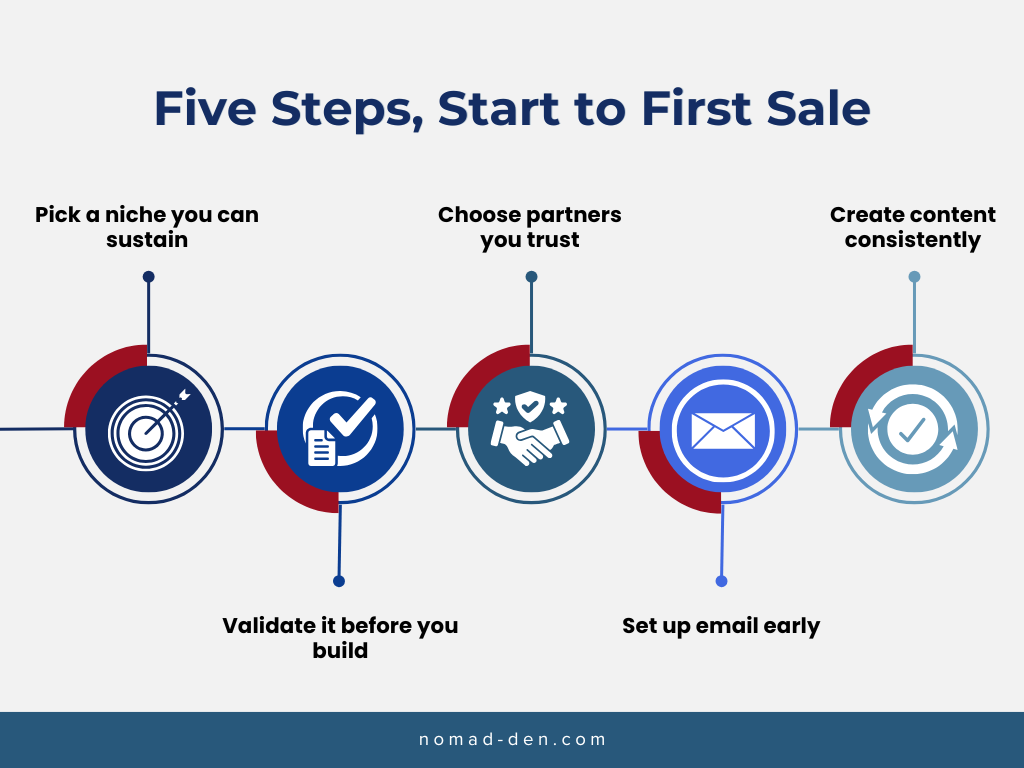
Building an online business through affiliate marketing isn’t about quick wins. It’s about creating value, building trust, and staying consistent. Always disclose your affiliate links clearly, here’s how to write one that meets FTC requirements. By focusing on fundamentals like choosing a niche, developing content, and optimizing your online presence, you’re laying the foundation for long-term growth. Keep showing up, keep learning, and remember: small steps lead to big results.
Some links in this post may be affiliate links. I may earn a commission at no extra cost to you. Learn more here.
Continue Reading Related Posts

Affiliate Marketing Scams: How to Spot Them (and Protect Your Own)
Affiliate marketing is a legitimate, commission-based business model, not a scam, that predates the internet…

Affiliate Marketing Networks Compared: Which Ones Are Actually Worth Joining?
An affiliate network is a middleman platform that connects you to multiple merchants or vendors…

6 Affiliate Niches That Last (And Beginners Can Start Today)
Most people pick an affiliate niche based on what’s trending right now. While that may…
How to Start Affiliate Marketing For Less Than $50 (Beginner Guide)
Affiliate marketing is one of the most affordable and accessible ways to start earning income…

17 Affiliate Marketing Terms Beginners Need to Know
Affiliate marketing terms are the core vocabulary that explains how the business model works, including…
ClickBank for Beginners: Step-by-Step Tutorial to Your First Commission
ClickBank is a digital marketplace where product creators list offers and affiliates earn commissions by…