
Some links in this post may be affiliate links. I may earn a commission at no extra cost to you.
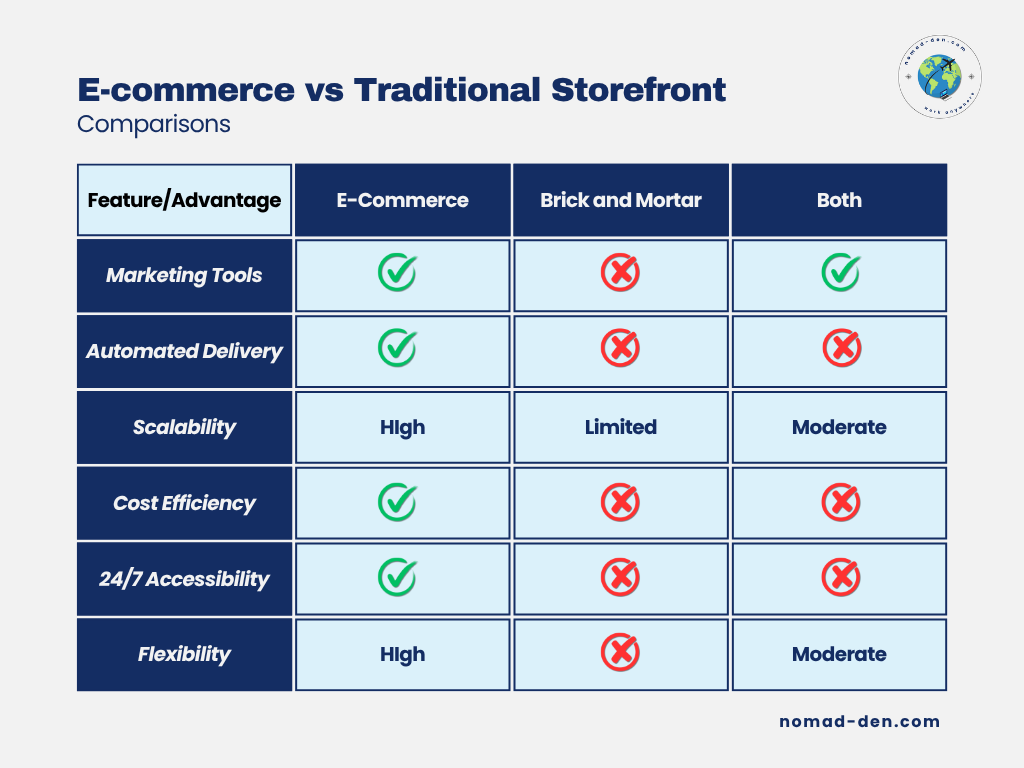
E-commerce lets you sell products and generate income online without a physical storefront, set hours, or the overhead of a traditional business. The first decision most people face is simple: physical goods, digital products, or both. Each comes with different costs, logistics, and platforms built around them.
This post breaks down the key differences and covers the most practical options for each, so you can start with a clear picture of what fits your goals.
New to e-commerce terminology? Start with the basics: E-Commerce Basics: 15 Terms That Explain How Online Stores Work
E-Commerce Platforms by Product Type
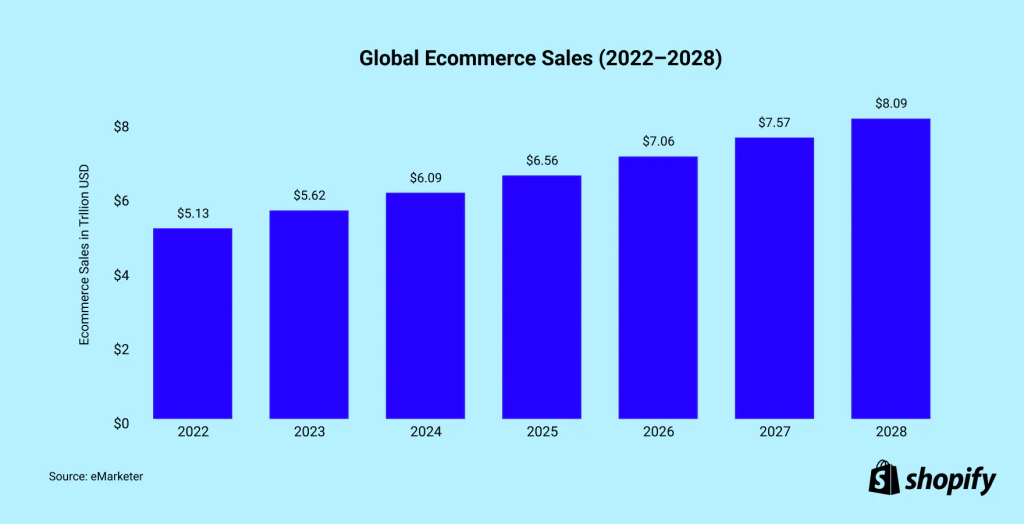
The internet now reaches more than 6 billion people worldwide (Source: Statista, 2025), and e-commerce has become one of the most accessible ways to build an online business. The two main paths are physical products (manufactured goods shipped to customers) and digital products (files, courses, or software delivered instantly online). Each has different costs and platform requirements, which is what the rest of this post covers.
Physical Product Platforms
Managing physical products comes with real overhead: inventory, warehouse and storage fees, shipping and handling, and returns. These costs vary but are consistently higher than digital product sales; and important consideration worth factoring in before choosing a path.
For a deeper dive into the various costs of starting an e-commerce business, check out this article by Forbes: 16 Key Costs To Consider When Starting An E-Commerce Business.
- Shopify: A scalable, user-friendly platform for creating online stores, with built-in tools for inventory management, payment processing, and integrations.
- Amazon Seller Central: The platform for selling directly on Amazon, with access to one of the largest customer bases in the world. Supports both FBA (Fulfilled by Amazon) and self-fulfilled shipping, with built-in tools for listings, inventory, and sales analytics.
- BigCommerce: Built to scale with tools for managing large inventories and multi-channel sales, ideal for expansion-focused businesses.
- WooCommerce: Customizable and WordPress-friendly, equipped with plugins to handle inventory, shipping, and other physical product needs.
Each of these platforms serves a different stage and scale of physical product business. Shopify and WooCommerce are strong starting points; BigCommerce and Amazon Seller Central are built to handle growth.
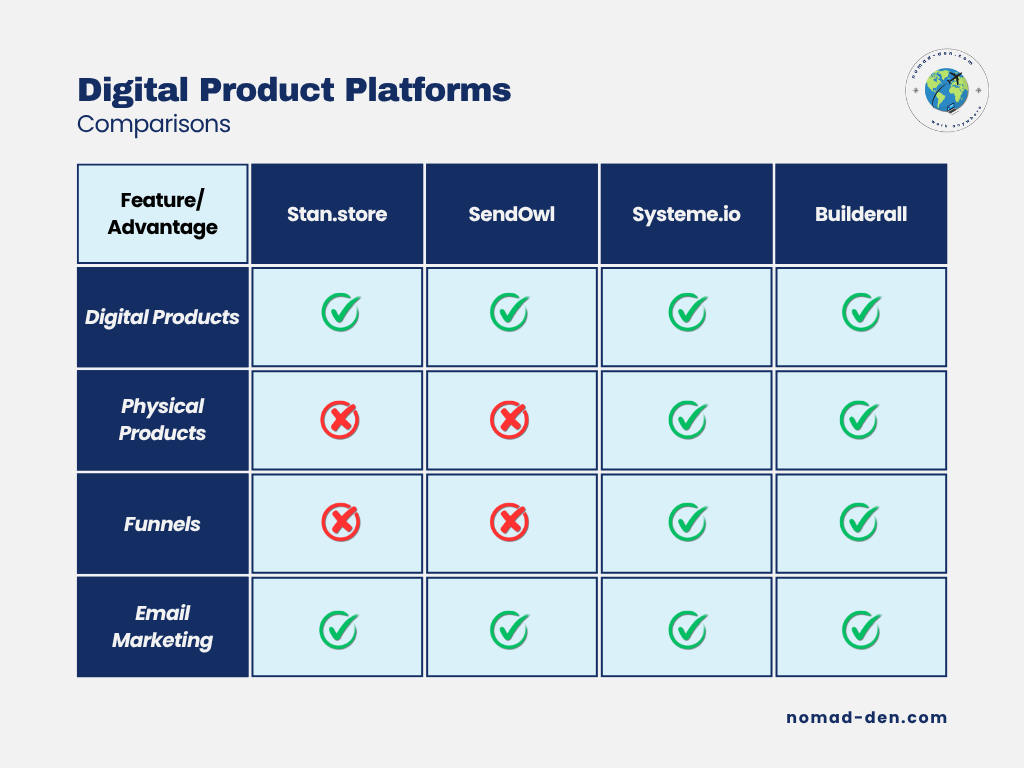
*Stan.store email marketing (Email Flows) is available on the Creator Pro plan ($99/mo). See Stan.store plans.
Digital Product Platforms
The clear difference between physical and digital products lies in operational costs. Learning how to create digital products and identifying the most in-demand digital products to sell can simplify your path to success. With digital products, there is no inventory, warehouse or store fees, shipping and handling costs, and product returns (if offered) can be simplified as part of the digital process.
Some of the most common types of digital products include eBooks, online courses, templates, and software. These are easy to distribute and require no inventory management, which makes selling digital products one of the most scalable business models today. Here are the platforms covered in this section:
- Stan.store: Effortlessly sell digital products with built-in analytics, affiliate tools, and customizable storefronts. Perfect for creators looking for a fast, user-friendly way to monetize their content.
- SendOwl:: Streamlined digital delivery with automated workflows, secure payments, and integrations for smooth sales. A simple yet powerful platform for selling eBooks, courses, and more.
- Systeme.io: A powerful all-in-one tool for funnels, email marketing, and product sales. Includes a free plan with no time limit, making it a strong option for entrepreneurs who want to test before committing.
- Builderall: Versatile and comprehensive, Builderall combines tools for websites, funnels, email campaigns, and more, all designed for digital marketing success.
Digital products remove most of the logistical friction that comes with physical goods. Most platforms above offer free plans or trials, so you can test before committing to anything.
Frequently Asked Questions (FAQs)
Conclusion
Whether you’re starting with digital products or building a physical product brand, the platforms above cover a range of budgets and business models.
Most support both product types, so your setup can grow with you, without switching platforms as your business evolves.
Some links in this post may be affiliate links. I may earn a commission at no extra cost to you. Learn more here.
Continue Reading Related Posts
How to Validate a Business Idea Before Wasting Months Building It
When you come up with an idea for an online business, you’re anxious to make…
6 Affiliate Niches That Last (And Beginners Can Start Today)
Most people pick an affiliate niche based on what’s trending right now. While that may…
Digital Marketing Guide: Where to Start and How It Works
Digital marketing is the promotion of products or services using digital channels such as search…
Content Creation vs Content Marketing: What’s the Difference?
Content creation is producing content. Content marketing is strategically using the content you produced to…
The Only Free Tools You Need to Launch (Before You Upgrade)
Having a limited budget — or the discipline to stick to one — is actually…
Beginner’s Guide to Selling Digital Products (Low-Cost)
One of the most practical ways to earn income online, whether you’re starting a side…