
Content creation is producing content. Content marketing is strategically using the content you produced to drive traffic, trust, and revenue.
They are related because they work together, but they are not the same.
Most people confuse the two. That confusion is why many creators stay busy but never build a business.
What Is Content Creation?
Content creation is the act of making content; the tangible output of your time and effort. It’s where most people start, and where many stay. Examples include:
- Writing blog posts
- Recording videos
- Designing Pinterest pins
- Posting on Instagram
- Publishing podcasts
Creation focuses on output. You’re making something that didn’t exist before. But without direction, even great content can go unnoticed.
For a deeper dive into content creation, read our full breakdown here.
What Is Content Marketing?
Content marketing is the strategy behind the content. It’s the difference between publishing and building. It includes:
- Keyword targeting
- Search intent research
- Distribution strategy
- Funnel alignment
- Conversion optimization
Marketing focuses on results. You’re not just creating. You’re positioning each piece to reach the right person at the right time and move them toward a decision.
Content marketing goes hand-in-hand with understanding SEO and how it has evolved. For more detail on effective content marketing strategies, read our full guide here.
The Core Differences
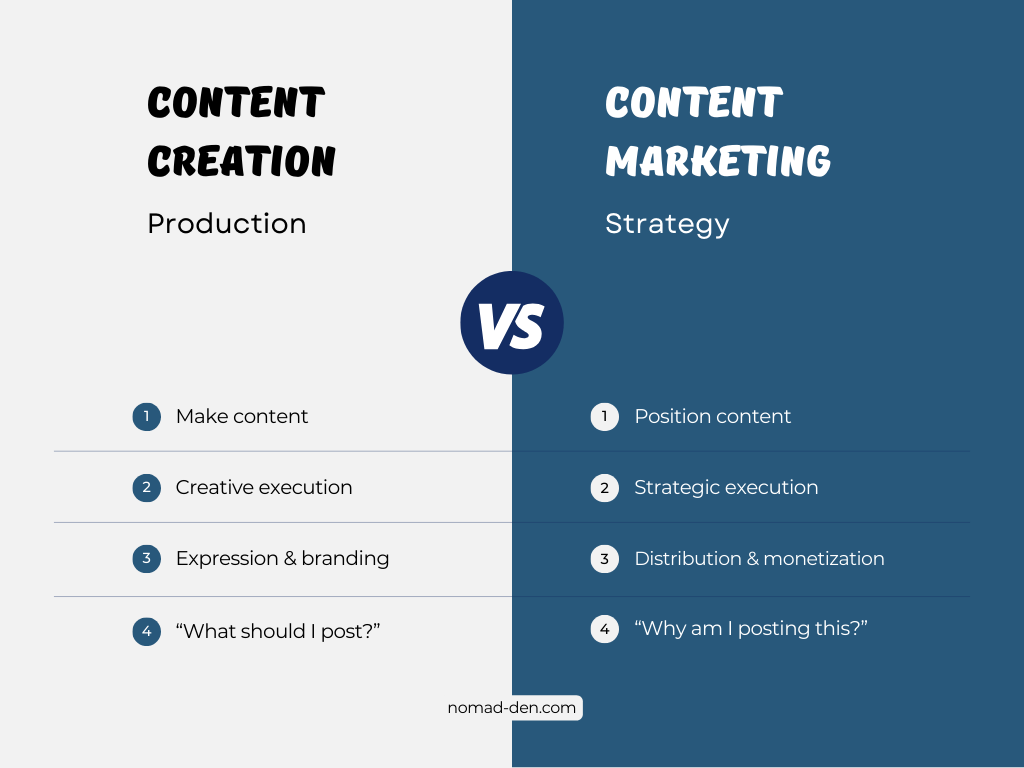
| Content Creation | Content Marketing |
|---|---|
| Focuses on producing content | Focuses on producing outcomes |
| Creative activity | Strategic activity |
| Can exist without revenue | Designed to generate revenue |
| “What should I post?” | “Why am I posting this?” |
Creation is art. It is the style, the design, your branding.
Marketing is intent. Who are you trying to reach? What problem are you solving?
You need both. Creation and marketing work together to build long-term brand recognition and results.
Why Most Creators Stay Stuck
Most creators are busy but not strategic. They post whatever feels relevant that week, chase trends that don’t fit their niche, and publish without any connection between their content and an actual offer. There aren’t any internal links, funnel, or clear reason why someone should take the next step.
Activity feels productive, but activity without intent doesn’t build a business. The fix isn’t more content. It’s a clearer purpose behind what you’re already making.
How to Turn Content Into Marketing
If you want results, you need to be more intentional with how you create and use content:
- Start with a problem people are already searching for.
- Create one focused piece that solves it.
- Align that piece with one clear offer.
- Add internal links to related content.
- Track what converts.
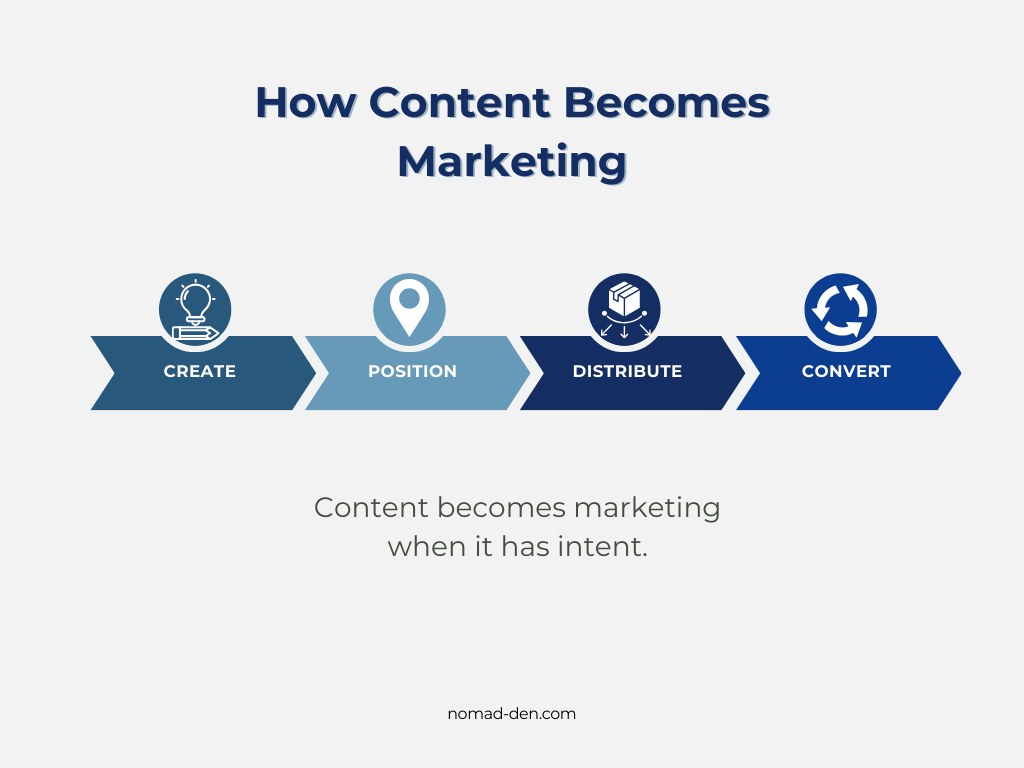
Now your content has a job. It’s no longer just content.
A Simple Example in Action
You write a post about “Email Account Security.” (This is a problem people are actively searching for).
Creation: You explain how to secure an inbox.
Marketing:
- You target the keyword intentionally.
- You link to a VPN or password manager.
- You add a CTA.
- You position it inside a broader cybersecurity category.
For a simple way to secure your accounts, consider using a password manager like NordPass.
The content is the same, but the outcome is different. The strategy is what separates information from results.
FAQ
Summary
Content creation gets attention. Content marketing builds results. If you want to grow, you don’t need more content. You need better intent behind it.
Some links in this post may be affiliate links. I may earn a commission at no extra cost to you. Learn more here.
Next Steps in Building Your Strategy

White Hat vs. Black Hat SEO (and the Gray Area In Between)
SEO tactics fall into three categories: white hat, black hat, and a shrinking grey area…
Keyword Research for Beginners: How to Find What People Are Searching For
Keyword research in 2026 isn’t about ranking on Google anymore. It’s about understanding what a…
How to Use Social Media Scheduling Tools to Grow Without Being Online 24/7
There’s a version of social media growth that gets sold constantly: post more, post everywhere,…

How to Validate a Business Idea Before Wasting Months Building It
When you come up with an idea for an online business, you’re anxious to make…
Digital Marketing Analytics for Beginners: Stop Guessing, Start Tracking
When I first launched Nomad Den, I was publishing posts, building out a network of…
Lead Magnets That Convert in 2026 (And What to Build First)
Building an email list sounds straightforward until you actually try it. The real challenges aren’t…