
Having a limited budget — or the discipline to stick to one — is actually an advantage. You don’t need more tools. You need fewer.
If you’re trying to build a business online and feel overwhelmed, it’s not because you lack premium software. It’s usually because you have too many options.
Premium tools promise leverage, but without the experience to use them, they create friction more often than results. More dashboards, more features, and more decisions pile up before you ever publish anything.
A limited budget isn’t a disadvantage. It’s a filter that forces focus, cuts out the noise, and narrows your path to what actually matters.
In this post, I’ll show you the smallest — and most affordable stack you need to launch before you upgrade.
What “Launch” Actually Means
We’re not launching a rocket into space, but are moving with the same intentional progress. We’re introducing your product or service to your potential audience. To launch your online business means you have the minimum structure in place to:
- Validate an idea at a basic level through simple research or due diligence
- Build a landing page (website not needed at this stage)
- Collect emails
- Create simple marketing assets
- Track traffic behavior to measure what converts and what doesn’t
That’s it. If a tool doesn’t support one of those outcomes, it isn’t required in the beginning. Ideally, your stack should help you move through those five actions without adding unnecessary complexity. Launch isn’t about polish. It’s about functionality.
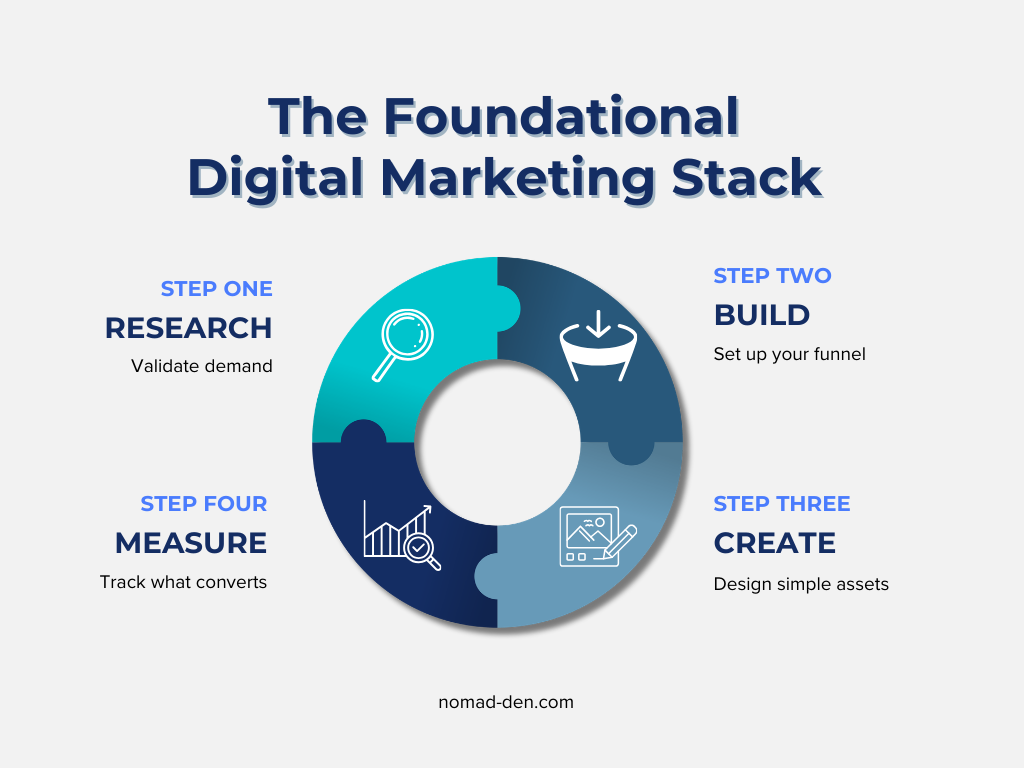
The Foundational Digital Marketing Stack
If your goal is to launch without overspending or overcomplicating your setup, these few tools form the smallest complete stack. Each one is explained with one goal in mind: clarity. For each one, you’ll see:
- What role it plays in the launch process
- Why it matters at the beginner stage
- When (or if) it makes sense to expand beyond it
Some tools have options to upgrade. Others don’t. The focus is simply this: does it help you launch?
Tool 1: Platform Research
Before building anything, validate your idea directly on the platform where you plan to publish (Pinterest, Instagram, YouTube, a blog, a forum, etc.). You don’t need a dedicated research tool. You need observation and action. What you want to look for are:
- What topics are already gaining engagement
- What formats are working
- What questions people are asking
- What offers are being promoted
Use the search bar, comments, and trending sections. Post, observe the response, and look for patterns. At this stage, the platform itself provides the signals.
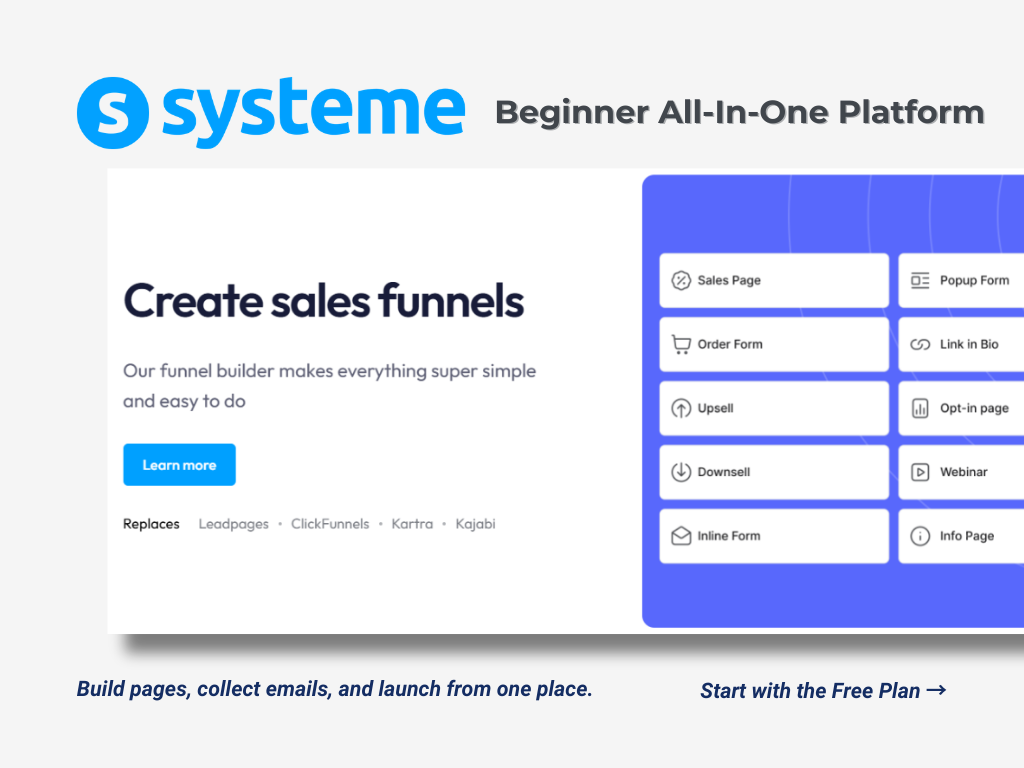
Tool 2: Systeme.io
What it does
Systeme.io is an all-in-one platform that allows you to build landing pages, collect emails, create simple funnels, and connect affiliate offers without stitching together multiple tools.
Why it matters at the beginner stage
Beginners don’t need advanced automation or complex integrations. They need one place to build, collect, and follow up. Consolidation reduces friction and decision fatigue.
Why the free plan is enough
The free version allows you to create landing pages, run email campaigns, and automate basic follow-ups. There is no limited trial period pushing you into an upgrade before you’re ready.
When to upgrade
Upgrade when you’re consistently generating leads or commissions and need more automation, higher email limits, or expanded functionality.
Tool 3: Canva
What it does
Canva allows you to create simple visual assets without needing design experience. You can build social media graphics, lead magnets, thumbnails, PDFs, and basic branding materials from one platform.
Why it matters at the beginner stage
Early on, clarity and consistency matter more than advanced design. Canva makes it easy to produce clean, readable graphics that support your message. You don’t need custom branding or complex layouts. You need visuals that communicate quickly and build trust.
Why the free plan is enough
The free version includes thousands of templates, fonts, images, and export options. At the launch stage, that is more than sufficient. You don’t need premium stock libraries or brand kits to validate an idea or generate your first leads.
When to upgrade
Upgrading makes sense when you want advanced brand controls, additional asset libraries, team collaboration, or time-saving features. Until your content volume or brand needs expand, the free plan does the job.
Tool 4: Google Analytics
Google Analytics shows you how people interact with your pages once they arrive. It reveals where your traffic comes from, what pages they visit, and whether they take action.
At the beginning, analytics eliminates assumption and speculation. You don’t need advanced dashboards or complicated breakdowns. All you need to know is:
- Are people showing up?
- Where are they coming from?
- Are they clicking or converting?
Many platforms (like Pinterest, Instagram, and YouTube) provide basic built-in analytics dashboards. Google Analytics gives you deeper insight across all traffic sources in one place.
Even small amounts of data help you make better decisions. If you prefer a privacy-focused alternative, tools like Matomo offer similar tracking capabilities with more control over data collection.
Tools You Do NOT Need Yet
Once you start learning about digital marketing, you’ll quickly see recommendations for dozens of additional tools. Most of them are unnecessary at the launch stage. Beginners often spend money on:
- Premium funnel builders
- Paid keyword research suites
- Expensive CRM software
- Social media schedulers before they have traffic
- AI automation stacks
- Enterprise analytics platforms
These tools aren’t inherently bad, they’re just premature. Until you’re generating consistent traffic or revenue, complexity slows you down. Every added feature is another decision, and more decisions mean more friction before you ever see results.
At the beginning, simplicity wins. Add tools when your results demand them, not when marketing suggests them.
Frequently Asked Questions
Summary
Launching an online business doesn’t require a stack of premium software. It requires clarity and a willingness to start before everything feels ready.
You validate your idea on the platform where you plan to publish. You build a simple landing page, collect emails, create clean marketing assets, and track what happens. That’s the entire loop: research, build, create, measure.
Add tools when your results demand them, not when marketing suggests them. Launch first. Upgrade later.
Some links in this post may be affiliate links. I may earn a commission at no extra cost to you. Learn more here.
Continue Reading Related Posts
How to Use Social Media Scheduling Tools to Grow Without Being Online 24/7
There’s a version of social media growth that gets sold constantly: post more, post everywhere,…
SEO Tools for Beginners (Free + Paid): The Only Stack You Need (2026)
As long as people are searching for information online, SEO (search engine optimization) will remain…
Digital Marketing Guide: Where to Start and How It Works
Digital marketing is the promotion of products or services using digital channels such as search…
Top 5 Tools Every Online Business Owner Needs
Most online businesses are built on five foundational tool categories: a domain and hosting, a…
Build an Online Business (Free) With Systeme.io
Systeme.io is a free all-in-one marketing platform that consolidates the tools most online entrepreneurs need…
Email Marketing Essentials: Platforms, Automation, and List Hygiene
Email marketing means sending targeted messages directly to people who’ve opted in to hear from…