Some links in this post may be affiliate links. I may earn a commission at no extra cost to you.
Your personal information is being bought and sold right now, and you almost certainly didn’t agree to it.
Every time you fill out a form, register an account, make a purchase, or simply browse the web, pieces of your life get quietly collected, packaged, and resold to companies you’ve never heard of. They’re called data brokers, and there are more than 4,000 of them operating worldwide. Together they run an industry valued at over $300 billion, built almost entirely on your information.
The good news is you can fight back. Removing your data from the internet isn’t simple, and it isn’t permanent without ongoing effort. But it is possible to significantly shrink your exposure, and the steps are more accessible than most people think.
Here’s what this guide covers:
- What are data brokers, and what do they actually know about you?
- Can you remove your personal data from the internet?
- Is it worth paying for a data removal service?
- Why does this matter?
The privacy-conscious movement is growing fast, and for good reason. Apple’s ongoing “Privacy on iPhone” campaign has been running for years, most recently showing online data trackers as chrome-clad figures literally following people around until they switch to Safari. The point Apple is driving home: Google’s entire business is built on monetizing user interests and activity, and Chrome exists in part so Google wouldn’t be at the mercy of anyone else’s browser. When major corporations start spending ad budgets telling you your data isn’t safe, it’s worth paying attention.
Why This Matters
Your data isn’t just sitting somewhere collecting dust. It’s actively being used — to target you with ads, to profile you for credit and employment decisions, and in the wrong hands, to scam, stalk, or impersonate you.
The data broker industry was valued at over $303 billion in 2024 and is growing at nearly 10% per year. More than 4,000 of these companies operate worldwide, and one of the largest, Acxiom, holds over 2.5 billion consumer records globally.
The consequences for individuals are concrete. Americans filed more than 1.1 million identity theft reports in 2024 and lost over $12.5 billion to fraud; a 25% jump from the prior year. The Identity Theft Resource Center tracked a record 3,322 data compromises in 2025, the highest annual total in the 20-year history of its reporting, a 79% increase over five years.
Victim notices from data compromises increased 312% from 419 million in 2023 to more than 1.7 billion in 2024. The 2024 National Public Data breach alone exposed 2.7 billion records: full names, Social Security numbers, addresses, and birth dates, with 272 million unique SSNs representing roughly 80% of the US population.
Beyond identity theft, there are more immediate personal risks. Even something as seemingly minor as an old phone number or a previous address can be used by malicious actors to harass, stalk, or dox someone. People search sites have made it remarkably simple for anyone to pull together a surprisingly complete picture of a private individual with very little effort. Employers, landlords, and clients increasingly judge people based on what their public digital footprint shows, and outdated or inaccurate broker data can follow you into job applications and rental decisions long after you’ve moved on.
What Is a Data Broker?
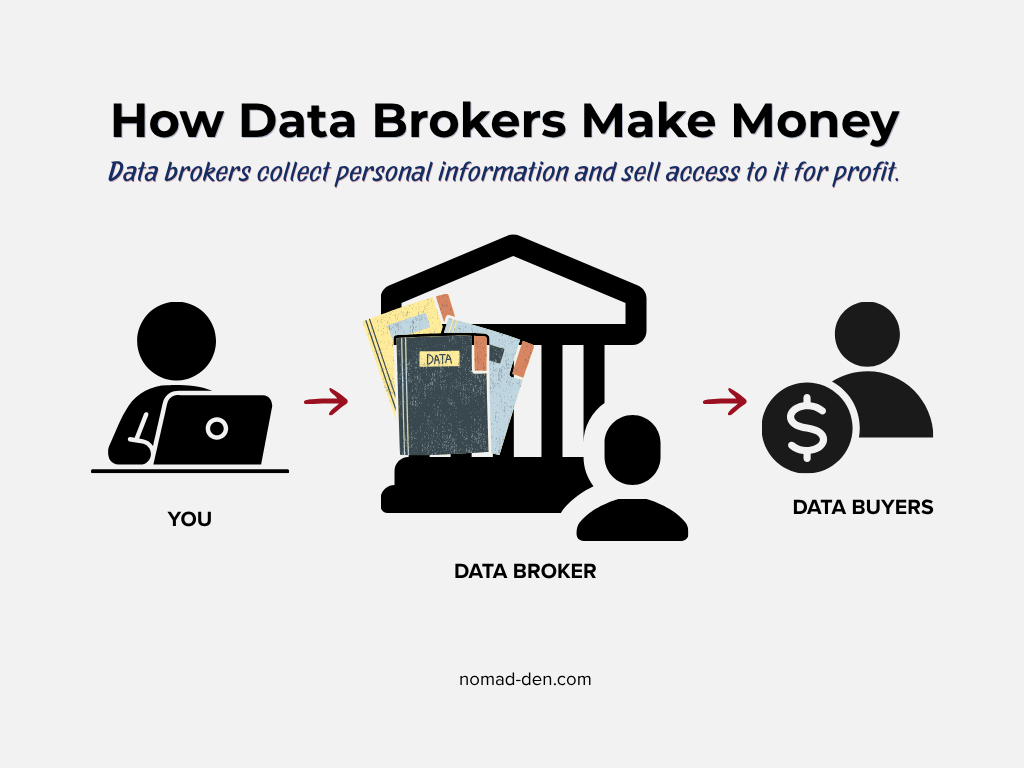
A data broker is a company whose entire business model is built on collecting personal information about you and selling it to whoever is willing to pay. They don’t offer you a product or service you signed up for. You are the product.
These companies pull from dozens of sources simultaneously: public records, social media profiles, loyalty programs, purchase histories, web browsing activity, and data-sharing agreements with other companies. They combine everything into detailed consumer profiles and sell access to those profiles to advertisers, employers, landlords, political campaigns, debt collectors, and more.
What Do They Actually Know About You?
More than most people realize. Data brokers collect and sell:
- Full name, current and past addresses, phone numbers, and email addresses
- Browsing history, purchase history, and app usage
- Precise geolocation data
- Social media activity
- Voter registration, court records, and property records
- Interests, political affiliation, and religious beliefs
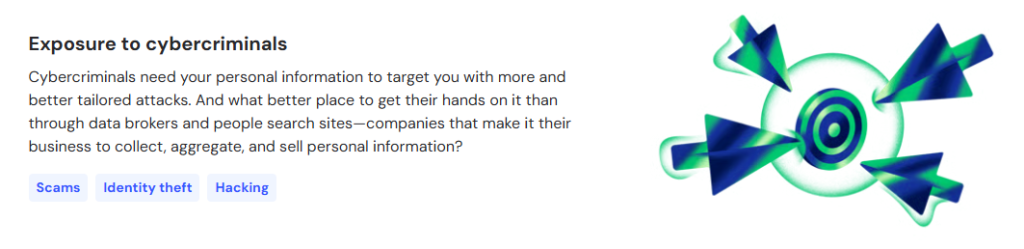
After processing that raw data, many brokers can also infer sensitive details you never directly shared: reproductive health status, financial distress, creditworthiness, and family details including divorce. And it isn’t only advertisers buying this. Malicious buyers sometimes include scammers, hate groups, and hostile foreign governments.
How Did They Get It?
A few common routes:
You gave consent without realizing it. When you signed up for a sweepstakes, free trial, or newsletter, the fine print likely allowed your information to be shared with “partners.” Most people skip past it.
Public records. Court records, census data, voter registration, property records, and marriage certificates are legally accessible and regularly scraped.
Web scraping. Specialized software pulls information directly from websites you visit and social media profiles you leave public.
Data purchases. Brokers buy data from other companies, including the ones you actually do business with. Your grocery store loyalty card, streaming service, and credit card company may all be feeding the same pipeline.
What You Can (and Can’t) Remove
Before getting into the steps, it’s worth setting realistic expectations. Complete erasure is not possible, and anyone claiming otherwise is overselling.
Some public records are legally mandated to remain public. Court filings, property records, bankruptcy filings, liens, and judgments exist to ensure transparency and accountability. You generally cannot delete those from official government sources, though you can take steps to limit how widely they spread.
Criminal records can sometimes be expunged or sealed depending on your state and the nature of the offense. Some states do this automatically after 7–10 years; others require petitioning the court.
What you can do is significantly reduce how widely your data circulates. You can remove yourself from data broker databases, people search sites, and Google search results. You can delete old accounts and lock down active ones. You can make it considerably harder for scammers, stalkers, and advertisers to build a comprehensive picture of you, and you can build habits that slow down how fast new data accumulates.
That is what the rest of this guide covers.
How to Remove Your Personal Data from the Internet
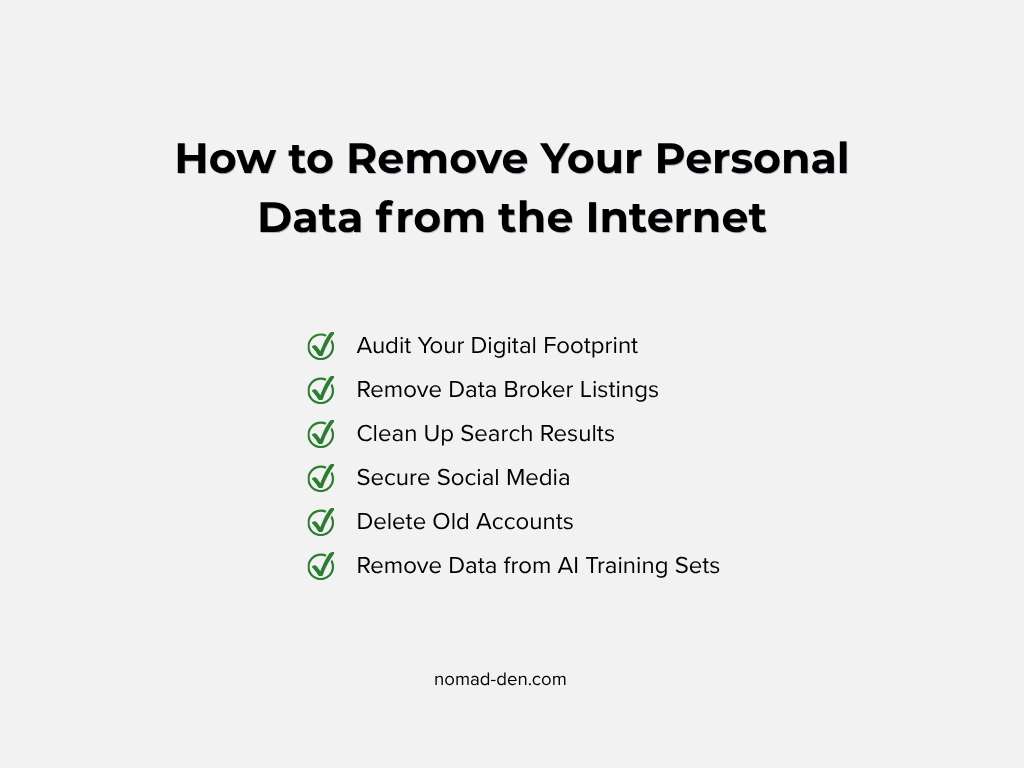
Step 1: Audit Your Digital Footprint
Start by searching your own name. Open a search engine and type your full name in quotation marks for more precise results. Add variations: name plus your city, name plus your employer, name plus your phone number. Write down every people search site or data broker that surfaces your information. Also search your email addresses and phone numbers directly. Brokers index by contact information as well as name, so running multiple searches gives you a more complete picture.
Make note of what’s out there before you start removing it. You’ll need those URLs when submitting opt-out requests, and it helps to know the full scope of what you’re dealing with.
Step 2: Opt Out of Data Broker and People Search Sites
This is the most labor-intensive part of the process, and the most important.
Each data broker has its own opt-out procedure, usually buried in their privacy policy or terms of service. The general flow: find your listing, locate the opt-out page, submit a request, and verify via email. Major sites to prioritize:
- Spokeo — spokeo.com/optout
- Whitepages — whitepages.com/suppression-requests
- BeenVerified — beenverified.com/opt-out
- MyLife — mylife.com/privacyrequest
- Intelius (PeopleConnect Suppression Center) — intelius.com/opt-out
- FamilyTreeNow — familytreenow.com/optout
- TruePeopleSearch — truepeoplesearch.com/removal
- PeopleFinder — peoplefinders.com/manage
- USPhoneBook — usphonebook.com/opt-out
- ThatsThem — thatsthem.com/optout
A few things to keep in mind as you work through this list:
Where possible, choose delete over opt-out. Opting out may only stop future sales, while deletion removes the broker’s existing record entirely. Use a dedicated email address when submitting requests. Creating a separate address for this process means your primary email isn’t further exposed in the process.
Set a calendar reminder for 30–45 days out. Data brokers regularly re-pull from source databases and relist people who have already opted out. If your listing reappears, submit a second request citing their privacy policy and applicable law. This is not a one-and-done process.
California residents: The state’s Delete Request and Opt-Out Platform (DROP) lets you submit simultaneous deletion requests to all data brokers registered in California, a significant time saver.

Step 3: Remove Your Information from Google Search Results
Removing your data from data broker sites is the priority, but those listings often show up directly in Google search results too. Google’s “Results About You” tool lets you request removal of search results that surface your personal contact information.
Here’s how to use it:
- Go to Google.com and tap your account profile photo
- Select “Results about you”
- Enter your name, phone number, home address, and email address
- Google scans its index and flags results containing your details
- Request removal of specific results from there
In February 2025, Google updated this tool to make the process faster. You can now click the three-dot menu next to any search result and submit a removal request in a few clicks.
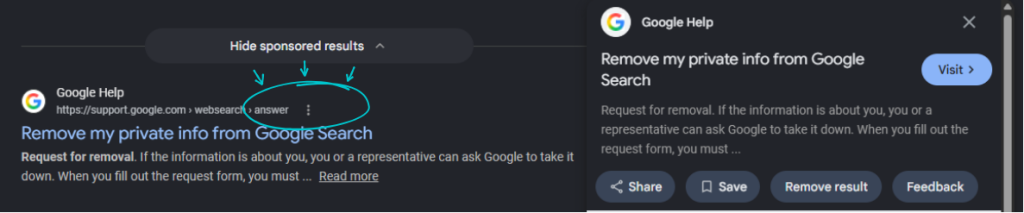
One important nuance: Google does not own or host most of the information in its search results. It indexes pages from across the web. Removing a result from Google means that link no longer appears when someone searches your name, but the original page on the data broker’s site still exists. This is why Step 2 matters. Google removal and broker opt-outs work together, not as substitutes for each other.
Step 4: Delete or Lock Down Social Media Accounts
Social media profiles are among the richest sources data brokers draw from. Public profiles, tagged photos, employer information, location check-ins, and relationship details are all fair game for scraping.
For accounts you no longer use, delete them outright. Deactivation hides your content but leaves your data on the platform. Deletion removes it permanently after the platform’s retention window. Platform-specific paths:
- Facebook: Settings > Your Facebook Information > Deactivation and Deletion > Delete Account
- X (Twitter): Settings > Your Account > Deactivate Account (permanent deletion occurs after 30 days)
- Instagram: Profile icon > Menu (three lines) > Settings and Privacy > Accounts Center > Personal Details > Account Ownership and Control > Deactivation or Deletion > Delete Account
- LinkedIn: Settings > Account preferences > Account management > Close account
Before deleting any account, revoke connected third-party app permissions in your privacy settings. Many apps retain access to your social data even after account deletion. For accounts you want to keep, tighten your settings, make profiles private, limit who can see past posts, turn off location tracking, and disable ad personalization.
Step 5: Delete Old Accounts Across the Web
Old forum accounts, dating profiles, gaming usernames, shopping accounts, and subscription services you forgot about are all sitting somewhere with your personal information attached, often including payment details from years ago.
A fast way to find them: search your inbox for keywords like “welcome,” “verify your email,” or “password reset.” That surfaces accounts you may have completely forgotten existed. Once identified, delete them properly rather than just abandoning them. Dormant accounts accumulate outdated personal data and are vulnerable to breaches at companies that may have poor security practices. A breach at a site you haven’t thought about in five years can still expose your email address, password, and whatever personal details you entered when you signed up.
Step 6: Remove Your Data from AI Training Sets
This is a newer front in the data removal effort, and one worth addressing while the opt-out mechanisms still exist.
ChatGPT / OpenAI: Submit both a “data removal request” and a “do not train on my data” request through OpenAI’s privacy portal.
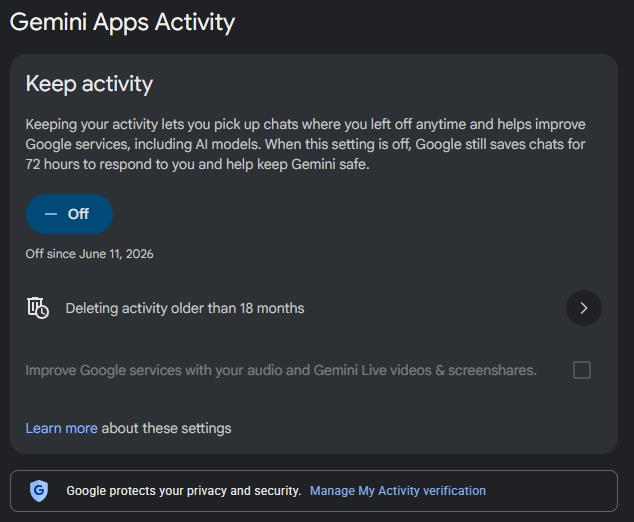
Google Gemini: Go to your Gemini activity page and delete your activity by time period or all at once.
Meta / Facebook: The most effective option is deleting your Facebook profile entirely. If that’s too drastic, turn off Facebook’s “Off Facebook Activity” tracking: tap the three lines > Settings and Privacy > Settings > Security > Off Facebook Activity > Disconnect Future Activity.
Keep in mind that opt-outs may reduce future use but won’t erase past training effects. These mechanisms are also evolving quickly, so it’s worth revisiting them periodically.
DIY vs. Automated Removal
Working through the steps above will make a real difference. But there’s a catch: data brokers don’t stay opted out. They continuously re-pull from source databases (public records, social media, third-party data purchases) and relist people who have already requested removal. Your information can reappear within weeks of being removed.
Staying clean requires ongoing monitoring and repeated submissions, not a single cleanup session. That’s the core trade-off: the manual route is free but ongoing. The automated route costs money but runs in the background without you.
When a Data Removal Service Makes Sense
If you’d rather not spend weekends submitting opt-out forms, and doing it again every few months, a service like Incogni is worth a look.
Incogni is built by the team behind Surfshark and works by acting as your authorized representative with data brokers. You provide your identifying information, and Incogni uses that authorization to send deletion requests to 420+ data brokers and people search sites on your behalf, leveraging GDPR, CCPA, and other privacy laws to legally compel removal. It then follows up every 60–90 days to catch relisted data before it accumulates. By mid-2025, Incogni had processed over 245 million successful removal requests, and its practices were independently verified in a Deloitte assurance report published in August 2025.
Stop managing opt-outs manually. Let Incogni handle them automatically, repeatedly, and on your behalf. Get Started with Incogni.

No service can guarantee permanent removal. However, for the time investment involved in doing this manually and repeatedly, the automation pays for itself quickly for most people.
Your Legal Rights Around Personal Data
You have more legal standing here than most people realize, and invoking it tends to get faster results.
In the United States
The US has no comprehensive federal privacy law. California has the most robust protections through the California Consumer Privacy Act (CCPA), which gives residents the right to know what data is collected about them, request deletion, and opt out of the sale of their personal information. Businesses have 45 days to comply with deletion requests. California’s DROP platform goes further, allowing residents to submit simultaneous deletion requests to all registered data brokers in the state. Beginning in 2028, all California data brokers will face mandatory compliance audits every three years.
Virginia, Colorado, Connecticut, and a growing number of other states have passed their own consumer privacy laws with similar deletion rights, though none are as expansive as California’s.
In Europe
The EU’s General Data Protection Regulation (GDPR) provides the strongest individual privacy protections currently in force anywhere in the world. Under Article 17 (commonly called the ‘right to be forgotten’) companies must delete your personal data upon request when it’s no longer necessary for its original purpose, or when you withdraw consent. Companies have one month to comply.
The gap between US and EU privacy rights is not subtle. It’s a deliberate policy choice, not an oversight. Europe’s approach treats privacy as a fundamental right. The US, broadly speaking, treats it as a market preference.
How to Use These Rights Effectively
When submitting opt-out or deletion requests, explicitly cite the applicable law: CCPA if you’re in California, GDPR if you’re in the EU. Data brokers are more likely to comply promptly when they understand you know your rights. If a broker refuses or ignores a lawful request, you can file a complaint with your state Attorney General (US) or your national data protection authority (EU).
How to Stop Your Data from Accumulating Again
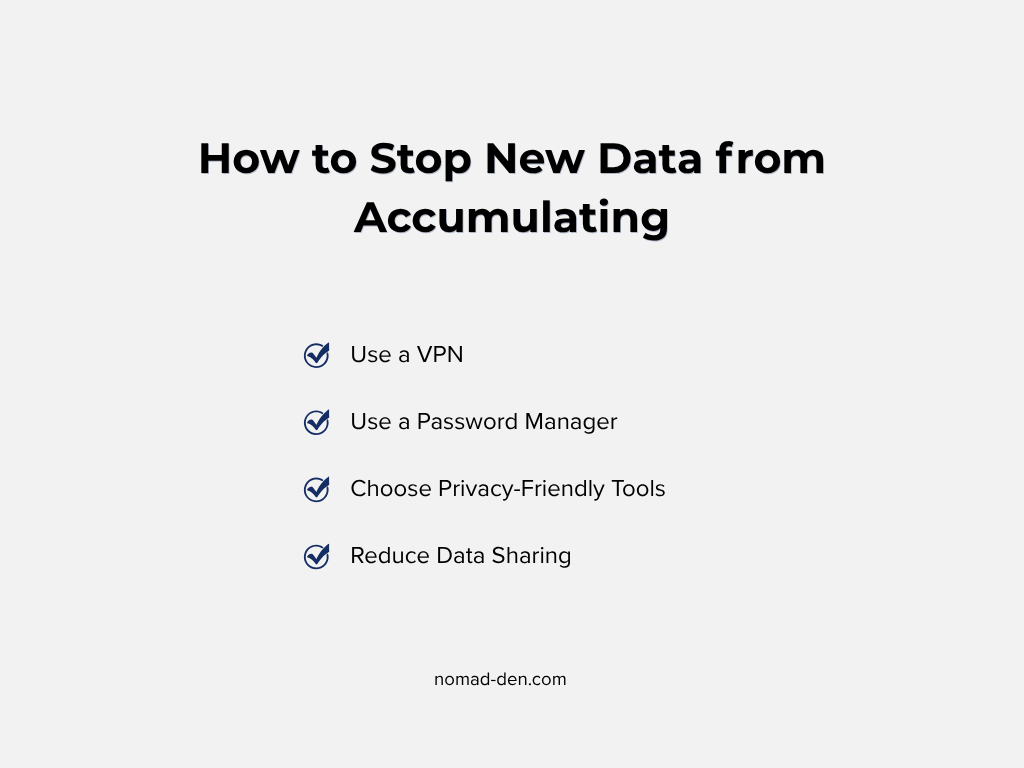
Removing existing data is only half the job. The other half is making it harder for new data to accumulate at the same rate.
Use a VPN
Data brokers build behavioral profiles from your browsing activity and IP address. A VPN encrypts your internet traffic and masks your real IP address, cutting off one of the main passive collection pipelines. If you’re new to VPNs, our guide to choosing one covers what matters most.
NordVPN is among the most thoroughly audited options available. Its no-logs policy was verified for the sixth time by Deloitte in late 2025, and its Threat Protection Pro feature actively blocks third-party trackers, malicious ads, and malware downloads. Headquartered in Panama, it operates outside the jurisdiction of surveillance alliances like Five Eyes.
Stop data brokers from tracking your browsing. NordVPN encrypts your traffic and blocks third-party trackers before they build a profile on you. Get NordVPN →

Use a Password Manager with Breach Monitoring
Data breaches are one of the primary reasons personal information ends up in broker databases in the first place. A strong, unique password on every account significantly limits the damage any single breach can do. If you’re not sure where to start, our breakdown of the best password managers covers what to look for.
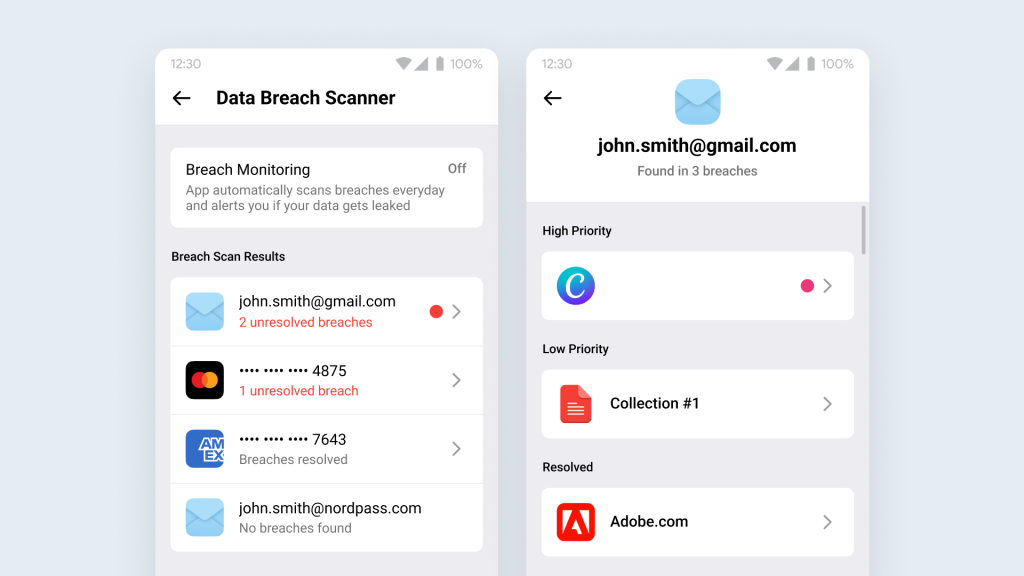
NordPass includes a Data Breach Scanner that alerts you if your credentials appear in a known breach, along with an Email Masking feature that’s especially relevant here. When you sign up for a new service using a masked email alias instead of your real address, your actual email never enters the data supply chain to begin with.
NordPass monitors your emails and credit cards for breaches automatically, and masks your real address so it never gets exposed in the first place. Try NordPass →
Switch to Privacy-Respecting Tools
The broader trend here (often called the DeGoogle movement) is about recognizing that the tools most people use by default were built on a data collection model, not a privacy model. Google’s dominance of search, browsers, email, maps, and productivity software means that opting out of Google alone removes a significant collection layer from your digital life. But the principle applies broadly: when a product is free, your data is usually what’s paying for it. And Google has more free products than almost anyone.
Switching doesn’t require going off the grid. It just means choosing tools that aren’t financially incentivized to harvest your information. For a full breakdown of privacy-respecting alternatives across browsers, search engines, email, and more, check out our Privacy-Friendly Google Alternatives page.
Other Habits Worth Building
Think before you post. Public posts, location tags, and employer information are exactly what data brokers scrape. Even minor details like city, workplace, and relationship status combine into profiles that are surprisingly complete.
Limit third-party logins. “Sign in with Google” or “Sign in with Facebook” connects your accounts and shares more data than a standard email signup.
Use a PO Box for public-facing forms. Business registrations, permits, and other documents that become public records don’t need your home address.
Clear cookies and browsing history regularly. Or use a privacy-focused browser that blocks trackers by default. Brave and DuckDuckGo are free alternatives that do this automatically with no technical setup required.
Frequently Asked Questions
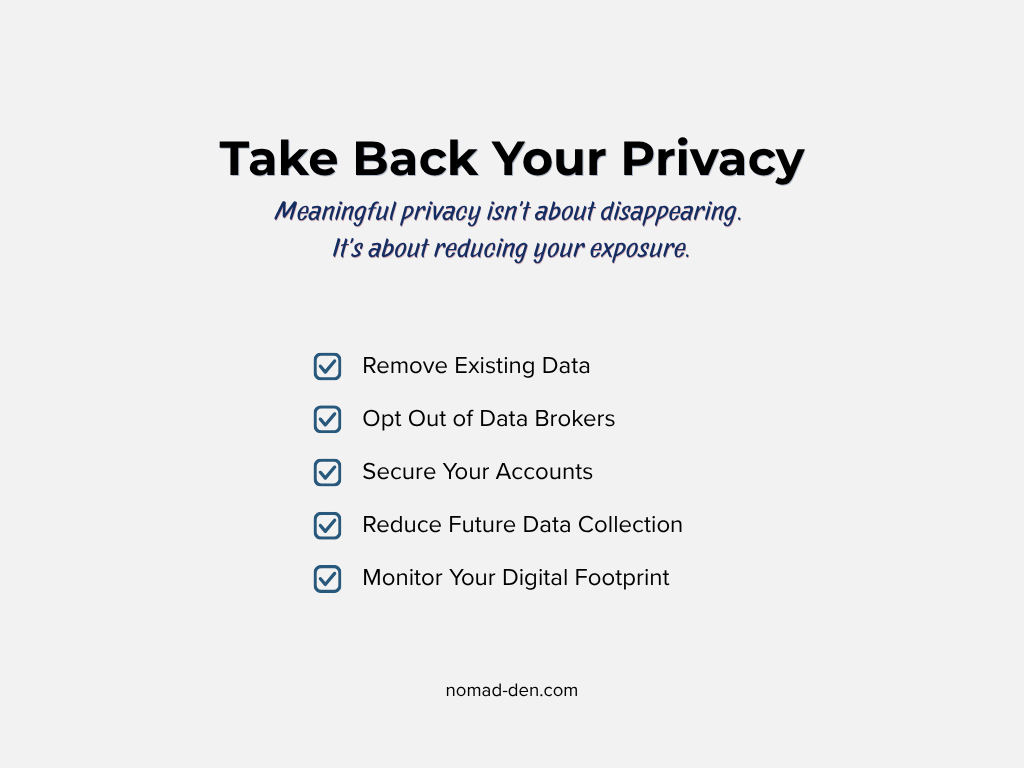
Take Back Your Privacy
Your personal data has been collected, packaged, and sold for years, mostly without your knowledge and almost entirely without your consent. That system isn’t going away. But your exposure to it is something you can actively manage.
The steps in this guide won’t make you invisible, and your information will reappear over time if you don’t maintain the effort. What they will do is significantly shrink the profile that data brokers, scammers, and advertisers have on you, and make it meaningfully harder for that information to be used against you.
Start with the audit. Work through the opt-outs. Delete what you no longer need. And if the ongoing maintenance feels like too much to keep up with manually, Incogni handles the repetitive work so you don’t have to.
Privacy isn’t about having something to hide. It’s about having something to protect.
Some links in this post may be affiliate links. I may earn a commission at no extra cost to you. Learn more here.
Continue Reading Related Posts
WordPress PHP Version: How to Check It After PHP2Shell
PHP2Shell is a pair of critical security flaws in PHP, the software every WordPress site…
Freelance Scams: How to Spot a Fake Client Before It Costs You
A fake-client scam is when someone poses as a paying client to take your money,…
Best Free Tools for Content Creators (and What They Really Cost)
The best free tools for content creators cover four main jobs: planning what to make,…
Private Browsers and Search Engines Worth Switching To
Google Chrome accounts for roughly 69% of the world’s web page views, and Google handles…

When to Start Outsourcing: How to Vet Your First Virtual Assistant (or Freelancer)
Outsourcing makes sense the moment a task is both teachable and consistently the thing standing…

17 Cybersecurity Terms Every Online Business Should Know (Part 2)
Cybersecurity terms for online business owners cover the threats, compliance requirements, and protective habits that…