
Some links in this post may be affiliate links. I may earn a commission at no extra cost to you.
If you’ve searched for anything online today, you’ve used a search bar. 🔎 And that alone proves something important: SEO isn’t dead. It’s just changed. These five principles reflect modern search engine optimization best practices used across every major platform.
People aren’t only searching on Google anymore. They’re looking things up on TikTok, YouTube, Pinterest, Bing, and now AI tools like ChatGPT and Perplexity. The rules for SEO have changed, and evolved into what many call Search Everywhere Optimization, and for AI tools specifically, Answer Engine Optimization (AEO).
So what does that mean for content creators and online business owners? It means the game isn’t over… it simply plays differently now. And in this post, we’re breaking down how SEO has shifted, why it still matters, and what you need to adapt to moving forward.
How Do I Optimize for Search Engines Today?
SEO today isn’t about mastering one algorithm. It’s about understanding how people search across different platforms, and how each platform surfaces content. That means the old playbook still matters, but it’s no longer the whole game.
With social media being used by billions of people every day, search intent and discovery changes and many are seeking multiple touch points before making a decision to move forward on a particular product or service. In order to optimize an omnichannel approach, you need to understand how other channels operate.
Rule 1: Optimize for Platform Intent
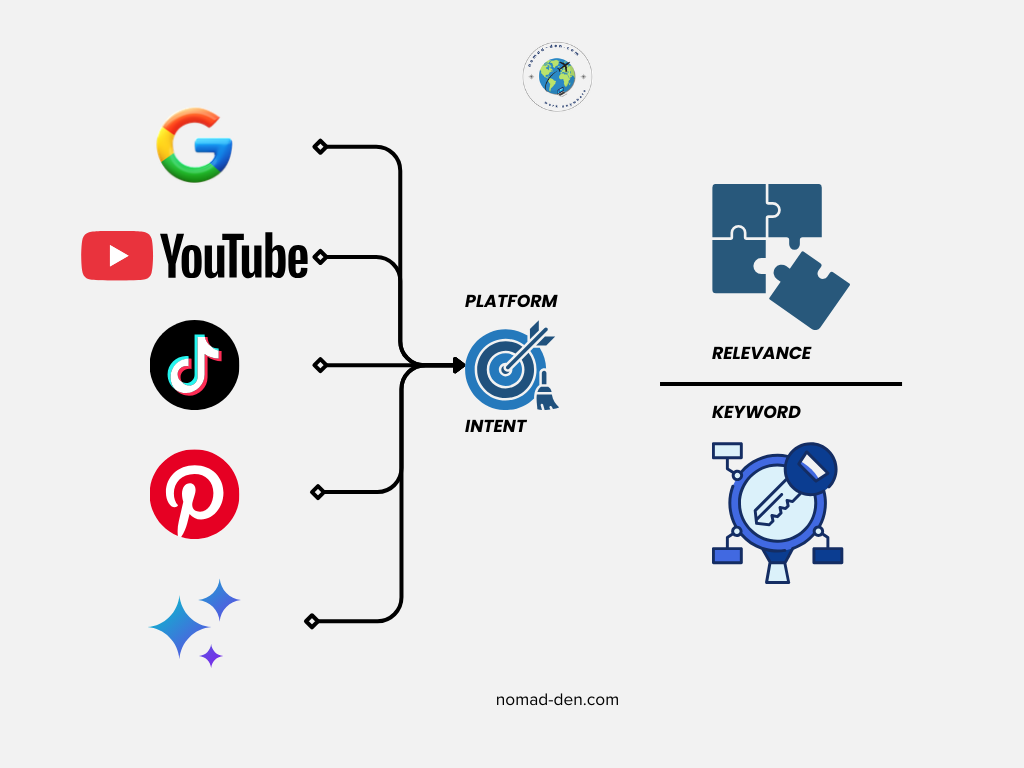
What are users trying to accomplish when they search on these different platforms? Every platform uses its own form of site search optimization to surface content that best matches a user’s intent. Here’s how intent breaks down by platform:
- Google – still dominates global searches (around 90% as of 2024). People come here for questions, research, comparisons, and detailed information.
- TikTok – one of the fastest-growing search platforms, especially for Gen Z. Ideal for quick solutions, trends, and visual discovery.
- Pinterest – a visual search engine that receives 570M+ monthly active users. People save ideas, plan ahead, and return to content over time.
- YouTube – still the leading destination for long-form education. Perfect for walkthroughs, tutorials, and deep-dive content.
- AI – the newest search method, especially for younger users. People submit long “prompts” and receive synthesized answers that pull insights from multiple sources.
Rule 2: Relevance > Keywords
Conducting keyword research helps you understand what your audience is looking for. As algorithms evolve, they reward content that actually answers the user’s intent, not content stuffed with keywords. All platforms now prioritize:
- Topical depth – the measure of how thoroughly a website covers a specific subject, which is a key component of topical authority in search engine optimization (SEO).
- Clarity – how easily both human users and search engine algorithms can understand your website’s content, structure, and intent.
- The user getting what they came for – meaning your content satisfies their search intent quickly and accurately, without forcing them to dig for the answer.
For a beginner-friendly keyword research tool, I recommend Mangools KWFinder. It’s one of the most approachable options out there for creators just getting started with SEO.
Rule 3: Metadata Is Foundational for Search Visibility
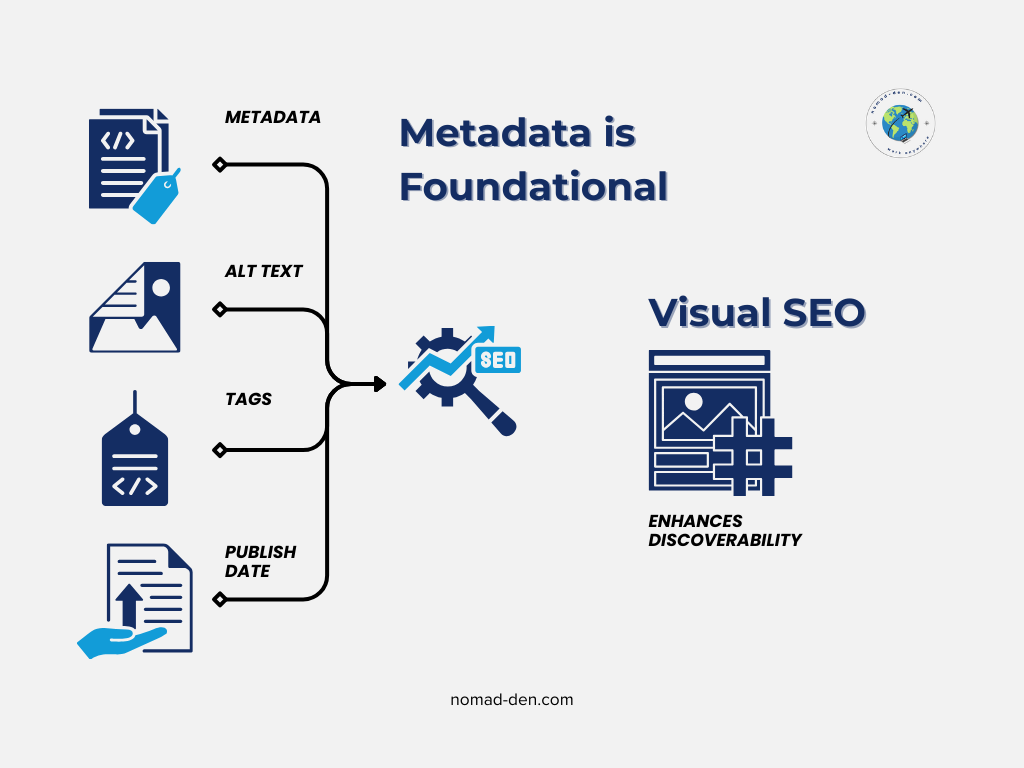
Metadata gives platforms extra context about your content: what it’s about, who it’s for, and how it should be categorized. Think of it like the label on a file folder: clear metadata helps platforms understand what your page is about so they can rank it accurately in the SERPs. There are a few types of metadata creators use every day (even if they don’t realize it):
- Descriptive metadata – titles, captions, alt text, tags, and meta descriptions (including what a meta description is in SEO).
- Structural metadata – how your content is organized, like headings, sections, and internal links. This helps platforms map your content.
- Administrative metadata – things like publish date, author, and file details. Google uses this to understand freshness and credibility.
These signals exist across every major platform, which is why metadata is one of the few SEO rules that hasn’t changed. It applies everywhere now.
Pinterest titles, TikTok captions, YouTube titles, Google titles, blog headings are all forms of metadata. And when they’re clear and specific, your content becomes much easier to discover. For more context, you can read the full metadata definition here.
Rule 4: Visual SEO Is the Cue to Action
Visual SEO is all about making your images and thumbnails work for you. On platforms like TikTok, Pinterest, YouTube, and Instagram, the thumbnail is SEO. It’s often the very first signal a user sees before they decide whether to click, save, or scroll past. Strong visuals improve user experience (UX), increase brand visibility across platforms, and help your content stand out in crowded feeds.
Good design provides instant context, triggers curiosity, and gives users a reason to see more. This is why well-designed thumbnails can significantly improve click-through rate (CTR). Just make sure to avoid clickbait, it may generate short-term clicks, but it damages trust long-term, and it hurts the credibility of the entire field.
If you don’t want to design every thumbnail yourself, Fiverr is an excellent resource for design work like this, and for many other micro-jobs that help keep your business moving for a fraction of what you’d pay elsewhere.

Rule 5: AI is Now a Search Engine (with its own signals)
Traditional search engines like Google and Bing still dominate, but AI tools are quickly becoming a second place people turn to for answers. In fact, 71.5% of users now rely on AI for certain types of queries. Many prefer AI for complex questions because it can summarize information rapidly. Even so, AI search isn’t a full replacement yet; it works best as a supplement, not a stand-in for traditional search engines.
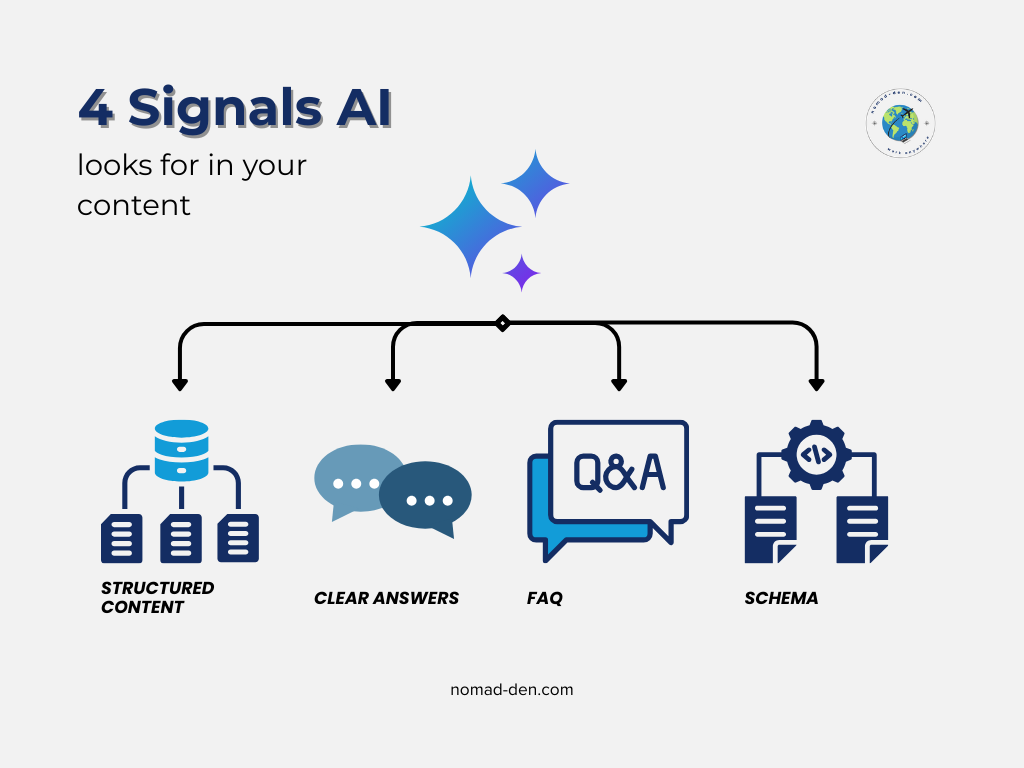
- Structured content
AI performs better when your content follows a clear hierarchy (H2s, H3s, short paragraphs). It makes your ideas easier for AI to analyze and summarize. - Clear answers
Direct, plain-language explanations help AI tools extract accurate responses. Avoid burying your key point deep in long paragraphs. - FAQs
Answering common questions in a simple Q&A format gives AI clean, ready-made snippets to pull from are great for helping AI tools include your content in their responses. - Schema
Adding schema markup (structured data) helps AI understand the purpose and layout of your page, improving how your content is used in AI-generated answers.
All of these elements make it easier for AI tools to understand, categorize, and surface your content in their results. This shift toward AI search optimization means your content structure matters more than ever before.
Frequently Asked Questions about SEO
Conclusion
In summary, if anyone has told you that “SEO is dead,” they’re misinformed. SEO is still very much alive, it has simply evolved. At its core, SEO is about understanding the intent behind someone’s search and delivering the most useful, concise answer you can.
These five rules make it easier to improve SEO on any platform without chasing algorithms; whether it’s Google, YouTube, Pinterest, TikTok, or AI tools. When your content gives people what they came for, it naturally leads them to your offers, landing pages, or your next piece of content.
For a deeper, beginner-friendly explanation of SEO fundamentals, check out Mangools’ Complete SEO Guide for Beginners.
Some links in this post may be affiliate links. I may earn a commission at no extra cost to you. Learn more here.
Continue Reading Related Posts

White Hat vs. Black Hat SEO (and the Gray Area In Between)
SEO tactics fall into three categories: white hat, black hat, and a shrinking grey area…
Keyword Research for Beginners: How to Find What People Are Searching For
Keyword research in 2026 isn’t about ranking on Google anymore. It’s about understanding what a…
Digital Marketing Analytics for Beginners: Stop Guessing, Start Tracking
When I first launched Nomad Den, I was publishing posts, building out a network of…
SEO Tools for Beginners (Free + Paid): The Only Stack You Need (2026)
As long as people are searching for information online, SEO (search engine optimization) will remain…
Remote Work Skills That Actually Pay (2026)
Working remotely isn’t a backup plan anymore. It’s not something people do when they can’t…
17 SEO Terms Every Beginner Should Know
If you’re new to SEO, the most important terms to understand include keywords, search intent,…