Some links in this post may be affiliate links. I may earn a commission at no extra cost to you.
Table of Contents
- Why a Tight Budget Is Not a Deal-Breaker
- What You Actually Need (And What You Don’t)
- The $0–$50 Stack (Simple on Purpose)
- Choosing Your First Affiliate Offers
- Driving Traffic Without Spending Money
- A Realistic First-Month Setup (Under $50)
- Common Budget Mistakes to Avoid
- What to Add Later (When Money Comes In)
- Frequently Asked Questions
- Conclusion: Start Small, Build Intentionally
- Continue Reading Related Posts
Affiliate marketing is one of the most affordable and accessible ways to start earning income online. While it is one of the most common entry points., it can also be overwhelming. With so much information being shared about how to get started, it can easily be confusing, especially with some of it being misleading or completely untrue.
What matters more than affordability is how a tight budget shapes better decisions. While a larger budget can provide an advantage, a clearly defined budget often leads to better outcomes by narrowing your options. When your path is more narrow, there is one clear direction.
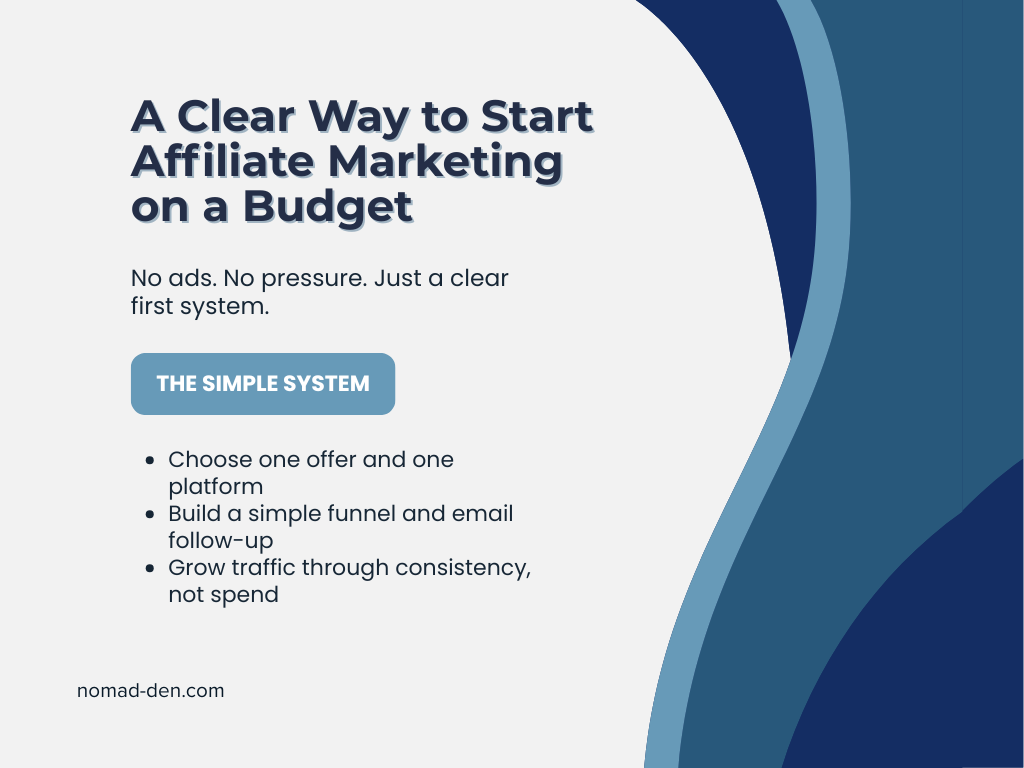
The purpose of this post is to paint a clear roadmap from start to launch. By focusing on a small set of essential, foundational steps, you’ll build a repeatable strategy you can apply across your online business journey.
Why a Tight Budget Is Not a Deal-Breaker
Starting affiliate marketing on a tight budget can feel limiting at first. It’s easy to assume that the people getting results must be spending money on ads, fancy software or coaching, from day one.
But in most cases, beginners don’t fail because they start small. They fail because they overspend early, scatter their attention, and burn themselves out and quit before they ever build momentum.
When you’re new, it’s tempting to chase the shiny red ball and distract your focus with the latest “hack” to quick success. Buying things before you have a simple process is one of the fastest ways to get stuck. You end up constantly setting things up instead of building, scattered across five methods instead of learning one well.
Affiliate marketing rewards consistency more than capital. Showing up regularly, learning what your audience responds to, and improving over time is already the hardest part. Money can speed certain things up later, but it can’t replace the foundational work of creating helpful content, earning attention, and building trust.
Starting lean also forces better habits early. A tight budget makes you ask the right questions:
- What am I actually trying to accomplish this week?
- What’s the simplest way to capture interest and follow up with people?
- What can I do consistently without relying on motivation or money?
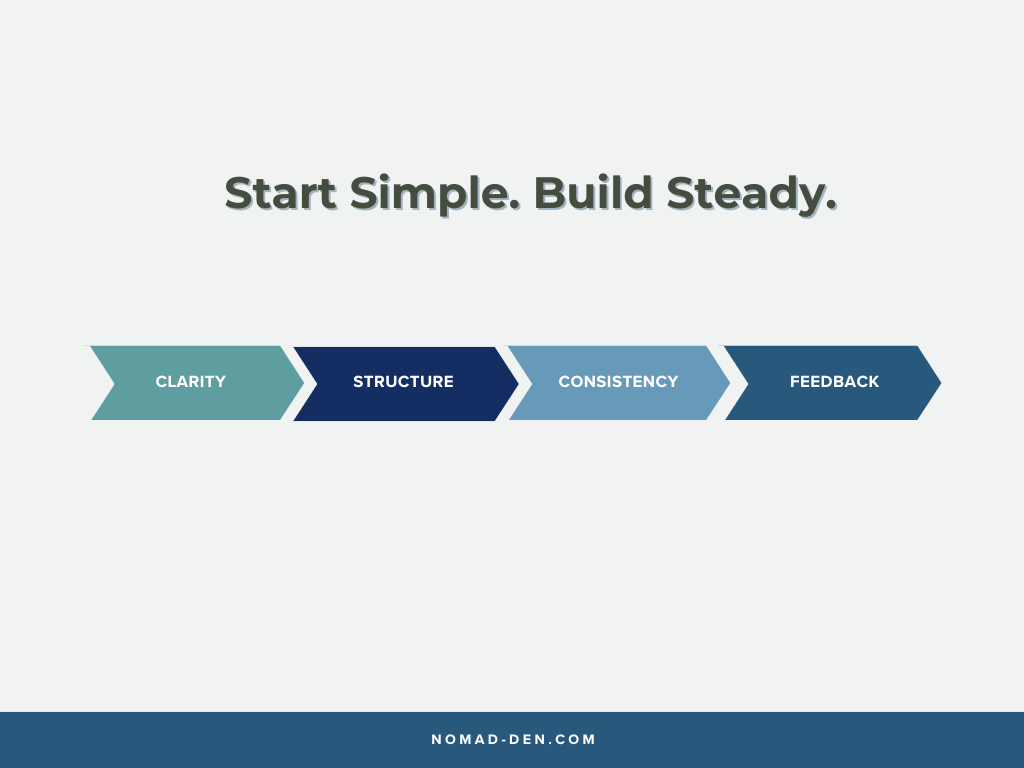
This post is built around a simple idea: you don’t need more options. You need a clear direction. With a small budget, the goal isn’t to build the perfect business. It’s to build a basic, repeatable system you can improve over time.
What You Actually Need (And What You Don’t)
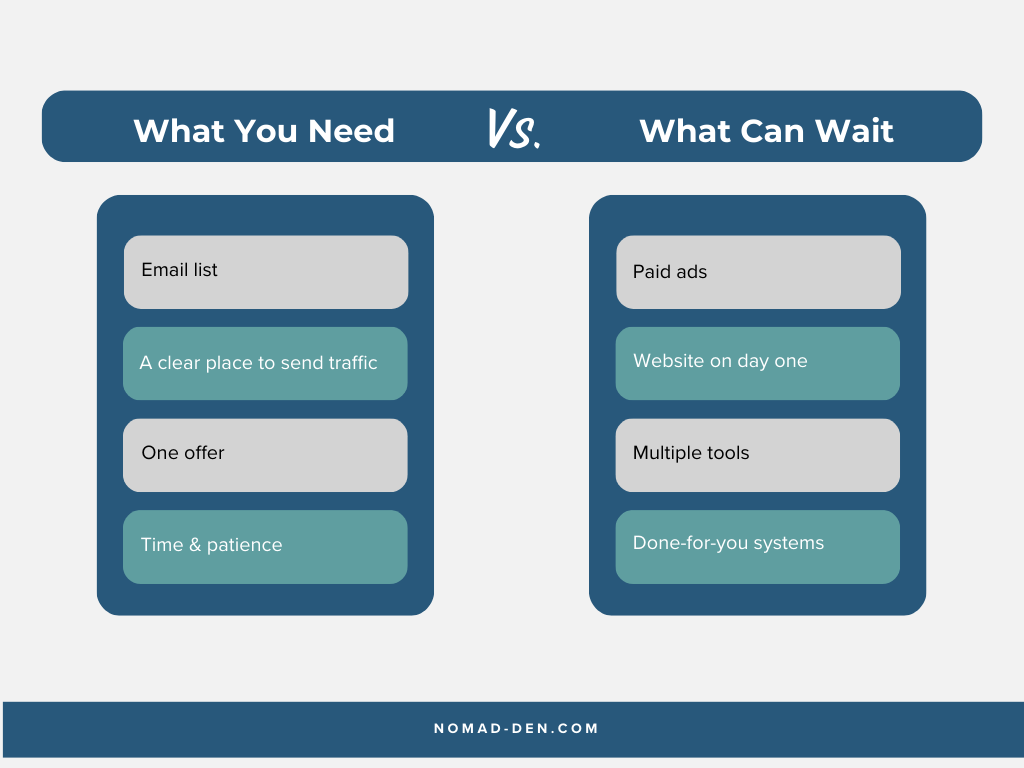
One of the biggest reasons beginners overspend is because they confuse requirements with nice-to-haves. When you strip affiliate marketing down to its basics, the list of what you actually need is surprisingly short.
What You Need
You don’t need a full setup to start. You need just enough structure to take action consistently. Foundationally, these elements include:
A way to collect emails
At some point you need a direct line to people who showed interest. Social platforms change, accounts get restricted, and algorithms shift without warning. An email list is the one asset you actually own and control, regardless of what any platform does later.
Read our previous post to learn why email marketing remains one of the most valuable assets in an online business.
A place to send traffic
This doesn’t have to be a full website. It just needs to be somewhere clear and intentional where people land, understand what you’re offering, and know what to do next. A simple landing page built in Systeme.io covers this completely at the start. The goal is function, not polish.
One offer to start with
Starting with a single offer keeps your messaging focused and makes it easier to learn what actually works. When you promote one thing consistently, you start to understand how people respond to it, what questions they have, and how to talk about it more clearly over time. That feedback is what you’re really after early on.
Time and patience
This part isn’t optional. Results rarely come from the first few posts or links. They come from repetition, feedback, and small adjustments over time. Most people quit before the process had a chance to work.
What You Don’t Need
This is where most beginners go wrong. You don’t need paid ads, a website on day one, multiple tools, or “done-for-you” systems. None of these are bad. They’re just premature.
Buying things before you understand your own process often creates more confusion, not clarity. It adds pressure to “make it work” instead of letting you learn at a natural pace. At this stage, simplicity is not a limitation. It’s a safeguard. The goal isn’t to build something impressive. It’s to build something usable.
Once you understand how traffic, offers, and follow-up work together, adding tools becomes a strategic choice, not a reaction to frustration.
The $0–$50 Stack (Simple on Purpose)
When you’re starting on a tight budget, your main goal should be to a clear: the fewer moving parts you have, the easier it is to take action and stick with it. That’s why this setup focuses on one platform that can handle the basics without forcing you to upgrade immediately.
One Platform to Tie Everything Together
This is where Systeme.io makes sense for beginners on a budget. Instead of piecing together multiple tools, an all-in-one platform lets you create simple pages, collect email addresses, send follow-up emails, and connect offers without any technical overhead. On a tight budget, that consolidation matters more than features.
What it replaces
Using one platform removes the need for separate page builders, standalone email tools, and basic automation software. That alone saves money and, more importantly, prevents the mental exhaustion of managing multiple systems.
At this stage, the priority isn’t optimization but repetition. You want a setup that lets you practice the fundamentals without constantly switching tools or troubleshooting integrations.
Since there is no trial period, there is no pressure to upgrade early. If and when your system starts working, you’ll know exactly why you’re upgrading and what you’re gaining by doing so.
That’s how tools are meant to support a business, not distract from building one. For beginners on a tight budget, this is exactly why Systeme.io works as a starting point.
Choosing Your First Affiliate Offers
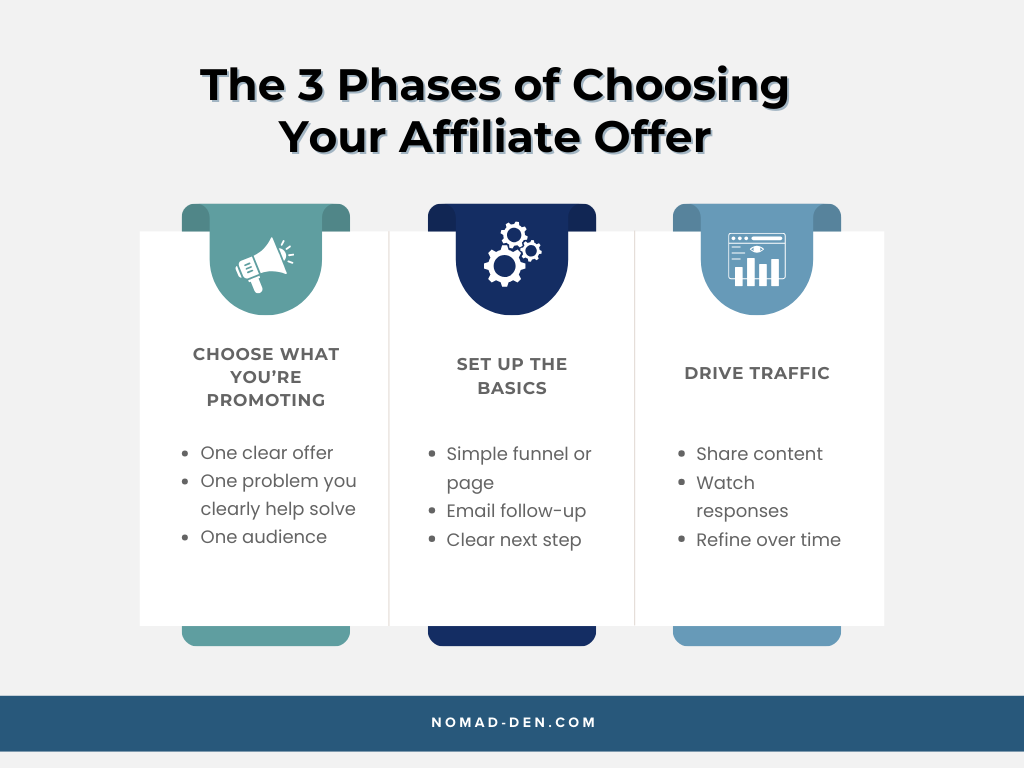
Once you have a simple way to collect emails and a clear place to send traffic, the next step is choosing something to promote. This is where many beginners overcomplicate things again by trying to keep too many options open, when the real goal is simply to choose one offer that lets you learn the process.
Why Beginner-Friendly Networks Matter
When you’re just getting started, accessibility matters more than prestige. Beginner-friendly networks make it easier to get approved quickly, explore offers without pressure, and understand how commissions, tracking, and payouts work.
This removes unnecessary friction early on and keeps your focus on learning, not navigating complex approval processes. For a deeper breakdown, check out our previous post on the top beginner-friendly affiliate networks.
Why Digital Products Pair Well With Funnels
Digital products tend to work well for beginners because they’re easy to deliver, often come with clear messaging, and don’t require inventory, shipping, or customer support on your end. They also pair naturally with simple funnels, where the goal is to introduce an idea, build interest, and guide people to a decision.
This isn’t about chasing commissions. It’s about choosing an offer format that fits a lean setup. Read our previous post for more detail on how digital products are an excellent strategy for online income.
Avoiding Analysis Paralysis
It’s easy to get stuck comparing offers, commission rates, and product niches before you’ve ever sent real traffic anywhere. The truth is, most early mistakes don’t come from picking the “wrong” offer. They come from never picking one at all.
An Optional Learning Layer
Some platforms also offer optional training or guidance alongside their marketplaces. These can be helpful, but they are not required to get started. If you choose to explore them, treat them as support, not a prerequisite.
It’s worth stressing this clearly: you do not need to buy anything to begin. The goal here is exposure and experience, not perfection.
Driving Traffic Without Spending Money
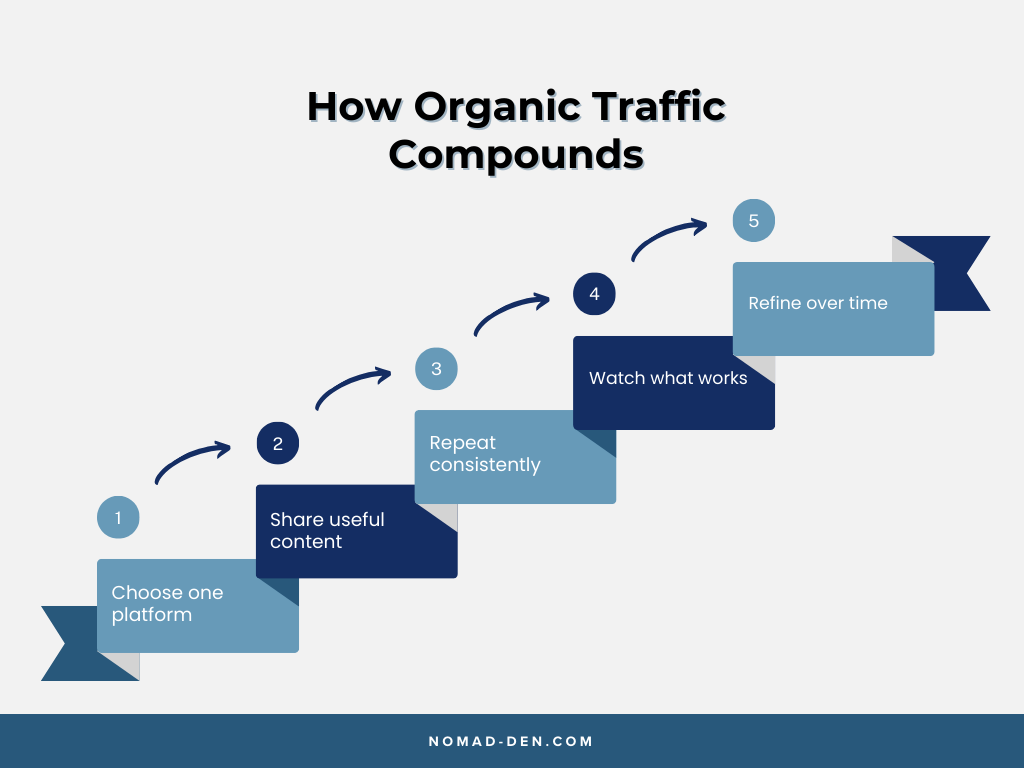
When money is tight, traffic often feels like the biggest obstacle. Paid ads are out of reach, SEO feels slow, and social platforms can seem unpredictable. The mistake most beginners make is assuming that “free traffic” means doing everything at once.
It doesn’t, and free traffic works best when it’s focused. Pick one platform you can realistically use consistently, somewhere your audience already spends time and where you can show up without forcing yourself into a style that doesn’t fit. Show up regularly, share useful content, and point people toward a simple next step.
Over time you’ll see what lands, what gets ignored, and what feels natural to create. That’s what makes free traffic so valuable early on: it teaches you how to earn attention instead of buying it, and that foundation matters when you eventually add SEO, email sequences, or paid traffic later.
A Realistic First-Month Setup (Under $50)
When you’re starting on a tight budget, momentum comes from clarity, not speed. The goal of your first month isn’t to perfect anything. It’s to move through the process once, end to end, without overwhelming yourself.
Think of this as a gentle orientation, not a launch countdown.
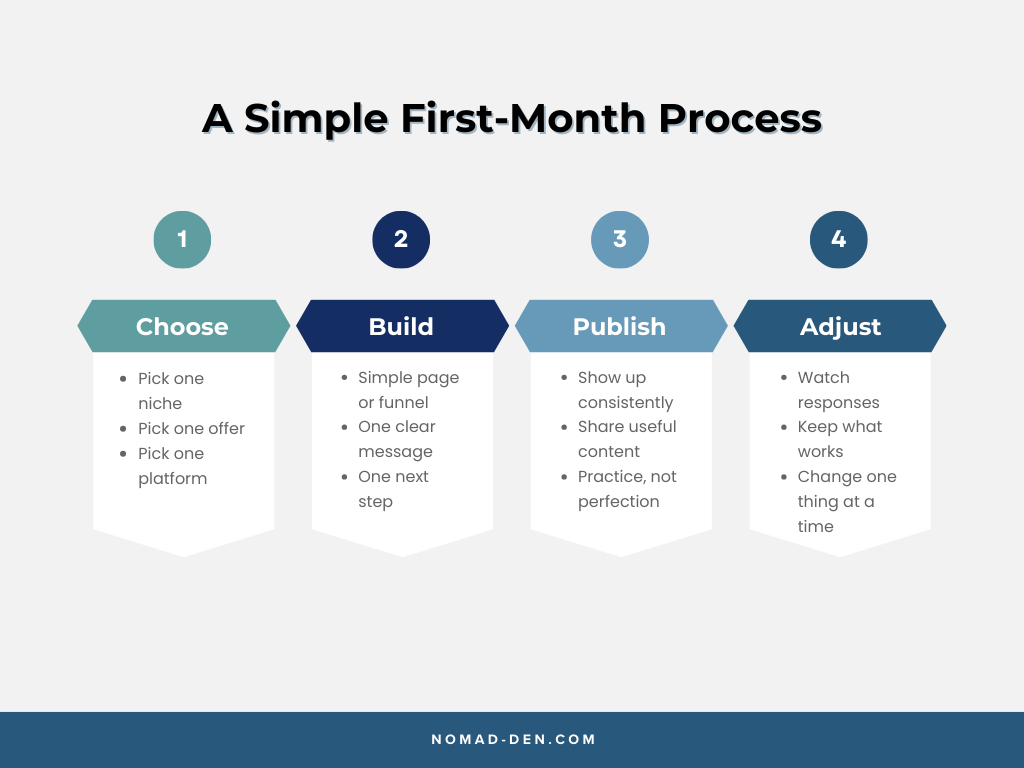
Week 1: Pick a Niche and One Offer
Start by choosing a single niche you can talk about comfortably and one offer that fits it. This doesn’t need to be permanent. It just needs to be clear enough that you know who you’re speaking to and what problem you’re helping with.
Avoid the temptation to “future-proof” this decision. You’ll learn more by taking action than by researching endlessly.
Week 2: Build a Simple Funnel
Your funnel doesn’t need to be clever or complex. One page, one clear message, and one next step is enough. The purpose here is function, not polish. This is simply a place where interested people can land, understand what you’re about, and stay in touch if they want to.
Week 3: Publish Consistently
Choose one platform and start showing up. Focus on consistency over creativity. Your job this week is to practice sharing ideas, not to impress anyone.
Each post is an experiment. Some will land. Most won’t. That’s normal.
Week 4: Adjust Based on Feedback
By now, you’ll have something to look at. Maybe a few clicks. Maybe a comment. Maybe nothing obvious at all. That’s still feedback.
Pay attention to what felt natural, what felt forced, and what you can realistically keep doing. Small adjustments here matter more than big changes.
This first month isn’t about results. It’s about orientation.
If you can move through these steps once without burning out or overspending, you’ve already done something valuable. You’ve built a foundation you can repeat, refine, and expand when the time is right.
Common Budget Mistakes to Avoid
When money is tight, the most costly mistakes are rarely obvious. They usually feel logical at the time.
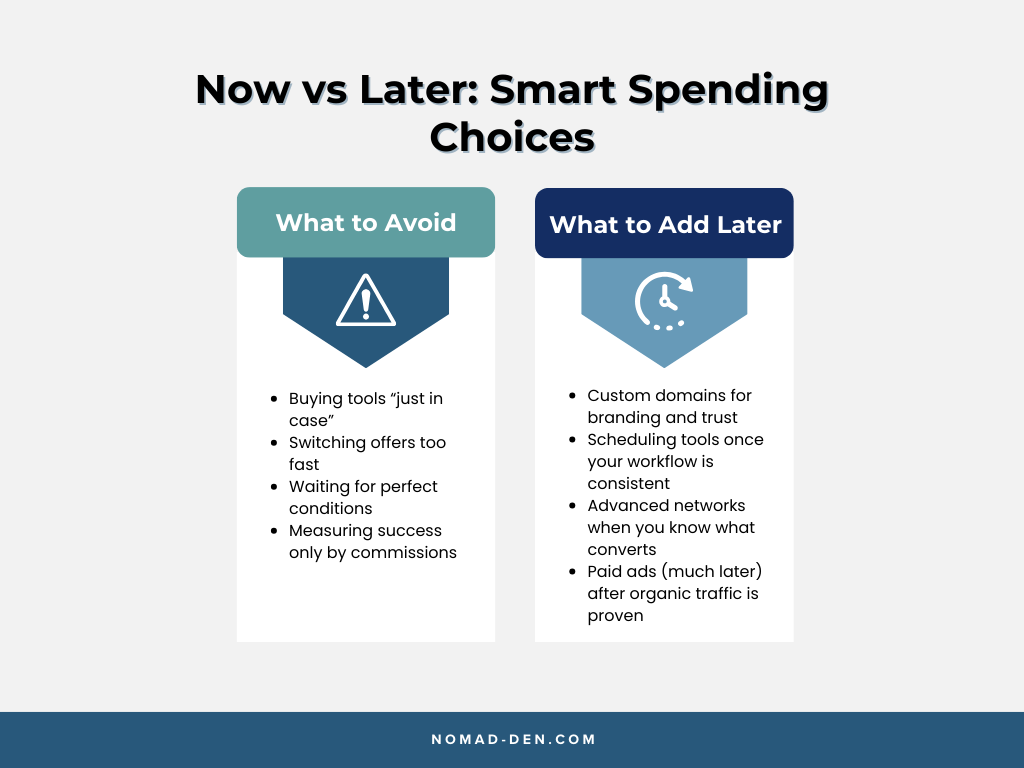
- Buying tools “just in case”
Purchasing things for a future version of your business often adds clutter before it adds clarity. Tools should support an existing process, not replace one. - Switching offers too quickly
Changing direction too fast makes it impossible to learn what’s actually working. Most offers fail from lack of consistency, not because they were wrong choices. - Waiting until everything feels perfect
Perfection delays feedback. Simple, imperfect setups teach you more than polished systems that never see real traffic. - Measuring progress only by commissions
Early signals often show up as clicks, replies, or engagement long before sales. Ignoring those signals leads many people to quit too early.
Avoiding these mistakes won’t guarantee results, but it will reduce wasted time, wasted money, and unnecessary frustration.
What to Add Later (When Money Comes In)
As your system starts to work and money begins to come in, there are things worth adding. Just not all at once, and not right away. Later upgrades might include:
- A custom domain or full website
Useful once you want a permanent home base, stronger branding, or long-term SEO. - Scheduling or workflow tools
Helpful when consistency becomes a strain and time management matters more. - Access to more advanced affiliate networks
Often easier to enter once you have traffic, data, or a track record. - Paid ads (much later)
Best treated as a way to amplify what already works, not to fix what doesn’t.
You’re not missing out by waiting. You’re timing things in a way that protects your budget and energy
Frequently Asked Questions
Conclusion: Start Small, Build Intentionally
Starting affiliate marketing on a tight budget doesn’t mean starting at a disadvantage, it means starting with more focus.
When you strip away the noise, the process becomes simpler than most people expect. Choose one offer, on one platform, and one place to send traffic. It all works together as one habit you can maintain without burning out or overspending. From there, everything else is optional and added with intention.
This approach isn’t flashy and it isn’t fast, but it’s repeatable, and repeatable systems are what last. Start where you are, use what you have, and build something you can sustain. Everything else comes later.
Some links in this post may be affiliate links. I may earn a commission at no extra cost to you. Learn more here.
Continue Reading Related Posts

Affiliate Marketing Scams: How to Spot Them (and Protect Your Own)
Affiliate marketing is a legitimate, commission-based business model, not a scam, that predates the internet…
Affiliate Marketing Networks Compared: Which Ones Are Actually Worth Joining?
An affiliate network is a middleman platform that connects you to multiple merchants or vendors…
6 Affiliate Niches That Last (And Beginners Can Start Today)
Most people pick an affiliate niche based on what’s trending right now. While that may…

17 Affiliate Marketing Terms Beginners Need to Know
Affiliate marketing terms are the core vocabulary that explains how the business model works, including…
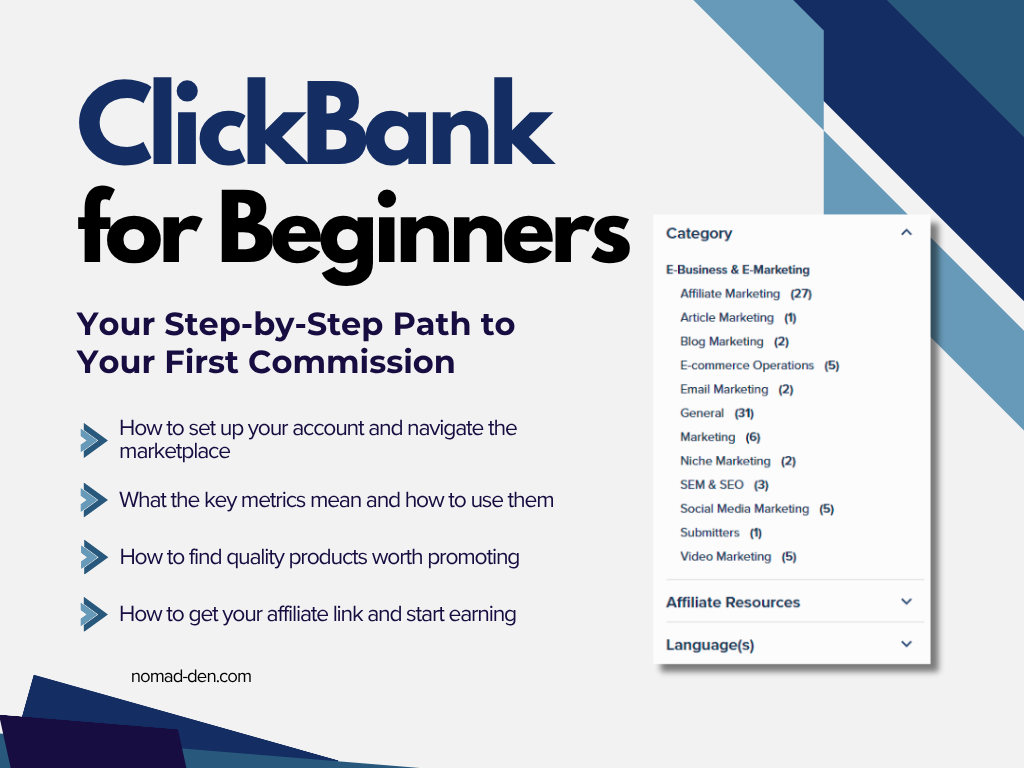
ClickBank for Beginners: Step-by-Step Tutorial to Your First Commission
ClickBank is a digital marketplace where product creators list offers and affiliates earn commissions by…
How Amazon Associates Actually Works: A Beginner’s Guide
Amazon has evolved into the world’s leading marketplace since its founding in the mid-’90s, commanding…