
Affiliate marketing is a legitimate, commission-based business model, not a scam, that predates the internet and powers nearly every major retailer, software company, and publisher on earth. Referral programs, partnerships, and affiliate relationships are just different versions of the same arrangement: you earn commission for successfully promoting a company’s products and/or services. Some companies offer just one of these, others offer all three, but the underlying mechanics stay the same either way.
Where it’s fair to be cautious is with the people and programs practicing it, not the model itself. The distrust attached to the term traces back to a specific, repeated pattern: creators who promise income they can’t substantiate, hide the fact that they’re being paid to recommend something, or build entire “opportunities” around recruiting more people instead of selling anything real.
Consumer research backs up how deep that damage runs. A 2025 survey from BBB National Programs’ National Advertising Division found that only 74% of consumers trust or somewhat trust influencer content, compared to 87% who trust general advertising, and just 5% trust it completely. The same survey found 70% of consumers report negative feelings toward influencers who are compensated for what they promote.
That gap between those metrics is a behavior problem, not a business-model problem. The rest of this guide separates the two: what a legitimate affiliate relationship looks like, the specific structures built to imitate one, and what’s actually happened when regulators stepped in.
What a Legitimate Affiliate Relationship Actually Looks Like
A legitimate affiliate program provides you with clear, specific terms before you promote anything: a stated commission rate, a defined payout schedule, a cookie duration, and a dashboard with near-live updates on the clicks and conversions your links generate. You get promotional assets or the freedom to build your own, and support that responds when something breaks. None of this is negotiable or vague. If a program can’t produce these basics, that’s already enough to be wary of.
Free to Join, No Exceptions
Legitimate affiliate programs are free to join, without exception. It’s the antithesis of the affiliate design itself. Why would you pay a program to get paid by promoting a program? See how confusing that is? If a program asks you to pay to become an affiliate, especially in cryptocurrency, that’s not a fee, it’s the business model.
Crypto payment requests specifically are a documented pattern because the transaction can’t be reversed once it’s sent, which is exactly why scammers prefer it. Ben McKenzie’s Easy Money looks at this same ‘pay first, ask questions later’ psychology across the crypto and NFT speculation bubble, if you want the full picture beyond affiliate marketing.

Programs That Look Like Affiliate Marketing (But Aren’t)
Not every program using affiliate-marketing language is actually running one. Two patterns show up often enough to name specifically.
Pay-to-Join and Recruitment-First Structures
Some programs flip the entire model. Instead of paying you to sell a product, they pay you to recruit other people who pay to join, and your earnings depend on how many recruits you bring in rather than anything sold to an actual customer.
Digital Altitude ran exactly this structure online: an internet business-coaching program that charged consumers up to $27,500 to unlock higher membership tiers, with earnings pitched as coming from recruiting others into those same tiers rather than from any real product or service. The FTC shut it down and returned nearly $4.7 million to victims. That’s the single clearest signal to watch for beyond the upfront-fee red flag already covered above.
Fake Gurus and Inflated Earnings Claims
The second pattern is a so-called expert selling access to their “system.” These offers lean on screenshots of unverifiable earnings, urgency (“doors close tonight”), and testimonials that are difficult or impossible to confirm. Automators followed this pattern with AI-powered e-commerce coaching, pitching passive income from Amazon and Walmart storefronts that clients paid tens of thousands of dollars to access. The FTC sued in 2023 and secured a 2024 settlement permanently banning the operators from selling e-commerce business opportunities or coaching, after finding most clients lost money instead of earning the returns promised.
The product is rarely the actual service promoted, it’s the course or coaching sold around it, and affiliates are often the ones spreading the earnings claims on the creator’s behalf. This is exactly the mechanism regulators have started targeting directly (see the enforcement section below).
When It Crosses Into Enforcement: Real Cases
The examples above show what happens to the companies and operators behind these schemes. This part is about a sharper edge: regulators holding the people who promoted the claims personally accountable, not just the businesses that made them.
MOBE (2018–2020)
My Online Business Education, known as MOBE, is the clearest example of affiliate marketing itself being the delivery mechanism for a scam rather than incidental to it. According to the FTC, the operation charged consumers as much as $60,000 for “mentoring” services built on false earnings claims, and a group of MOBE’s own affiliate marketers, not just the company, ultimately surrendered more than $4 million in assets to settle FTC charges over their role in promoting it.
The FTC’s Bureau of Consumer Protection director called it out directly: these affiliates helped MOBE take consumers’ money through claims the company’s own numbers didn’t support.
A 2026 Warning Sign for Affiliates and Influencers
In April 2026, the FTC took action against a high-level participant in two multi-level marketing programs for using social media and video to promote unsubstantiated six and seven-figure earnings claims. The case is technically an MLM matter, but the same reasoning applies just as directly to affiliate networks, publishers, and influencers who promote income opportunities, not only to MLM participants. That matters for anyone in this space right now: the FTC is actively expanding who it holds responsible for an earnings claim, beyond the company that made the offer.
Anik Singal’s Don’t Say That covers the other side of this: how to build earnings language that holds up under FTC scrutiny instead of triggering it.
What About Programs That Just Shut Down?
Not every large program that closes did so because they were legally forced to. Legendary Marketer, one of the most widely promoted affiliate and business-coaching programs of the pandemic-era digital business boom, announced its closure in February 2026, effective March 31, 2026. Founder David Sharpe framed it publicly as a voluntary decision made from a position of strength after a nine-year run, not the result of legal or regulatory action, and no FTC case or enforcement history turned up in researching this piece.
Closing voluntarily and being forced to close aren’t the same thing, and a program winding down isn’t automatically evidence of wrongdoing.

Protecting Your Own Affiliate Links and Accounts
Growing traffic and earning conversions is only half the job. The links and accounts behind that work are targets too, and protecting them deserves the same attention as anything else you’d guard in the business.
Link Hijacking and Cookie Stuffing
Your affiliate links can earn money for someone other than you, and you might never know it happened. Link hijacking covers any method that redirects your commission to someone else. The most common method is cookie stuffing, which plants tracking cookies on a visitor’s browser, sometimes without them clicking anything at all, so they get credit for a sale your content actually generated. Domain-lookalike sites and browser extensions that silently swap affiliate IDs work the same way: the sale happens, but the commission doesn’t land where it should.
Phishing and Account Takeover
The more direct threat targets you, not your traffic. Scammers build login pages that mirror real affiliate network dashboards and send urgent “verify your account” emails to get you there. Once your credentials are entered, the attacker logs into your real account and changes the payout banking details before you notice anything is wrong. A related version impersonates your own affiliate manager, sometimes CC’ing the real company’s email address to look legitimate, knowing that address won’t respond either way.
A password manager catches this automatically. It only autofills credentials on the exact domain it has saved, so on a lookalike page, nothing fills in, that’s your signal something’s wrong before you’ve typed a single character. Pairing that with app-based two-factor authentication instead of SMS codes closes the gap even if credentials do get phished, since SIM-swapping can intercept a text message but not an authenticator app. For a deeper walkthrough of setting both up, see the full account security guide.
Tools Some Networks Provide (and Some Don’t)
Some affiliate networks build link protection directly into their programs. Hosting.com’s affiliate program includes a deeplink generator (many programs offer this), sub-ID tracking so you can see exactly which link drove a given conversion, and a shared affiliate-platform tool called AffLinkProtector that generates a cloaked redirect page you host on your own domain, so a scraper or browser extension hits your redirect first instead of reading your raw affiliate ID directly out of the link.

Affiliate ID cloaked from this screenshot for my own account security.
CJ (Commission Junction) offers link encryption as a per-link option on the advertisers it manages, making the affiliate ID inside the URL harder to read and strip out.
Not every program offers this. Three programs I personally checked running on PartnerStack, including Nord Security’s programs, GetResponse, and Moosend, did not appear to include anything beyond custom link creation. That may come down to what each vendor chooses to enable on PartnerStack rather than a limit of the platform itself.
If your own networks don’t offer anything like this, a free plugin like Pretty Links lets you cloak and track your own links directly on your domain, closing that gap yourself regardless of what the network provides.
Affiliate Marketing Red Flags to Watch For
- No stated commission rate, payout schedule, or cookie duration
- Payment required to join, especially in cryptocurrency
- Earnings depend more on recruiting than on sales
- Unverifiable income screenshots or “proven system” language
- Urgency tactics pushing you to decide before you can research
- Login links arriving in unexpected emails instead of typed directly
None of these signals alone means a program is fraudulent, but more than one should be a signal to proceed with caution before you commit any time or money into them. Trust your own read of the numbers over anyone else’s hype about them.

FAQs
Conclusion
Affiliate marketing scams rely on borrowed trust, and once you can see the pattern, it stops being subtle. Awareness of the obvious signs has grown a lot since the earliest business-coaching cases in this space, but the underlying tactic keeps resurfacing under new packaging, whether that’s an “AI-powered” opportunity, a course, or a recruitment funnel dressed up as a referral program. Knowing what a legitimate program actually provides, and what it never asks for, protects your wallet before you ever click to join. The same awareness applies just as directly once you’re the one building affiliate relationships yourself.
Ready to build those relationships the right way? Read the affiliate disclosure guide next.
Related Posts
Affiliate Marketing Networks Compared: Which Ones Are Actually Worth Joining?
An affiliate network is a middleman platform that connects you to multiple merchants or vendors…

6 Affiliate Niches That Last (And Beginners Can Start Today)
Most people pick an affiliate niche based on what’s trending right now. While that may…
How to Start Affiliate Marketing For Less Than $50 (Beginner Guide)
Affiliate marketing is one of the most affordable and accessible ways to start earning income…

17 Affiliate Marketing Terms Beginners Need to Know
Affiliate marketing terms are the core vocabulary that explains how the business model works, including…
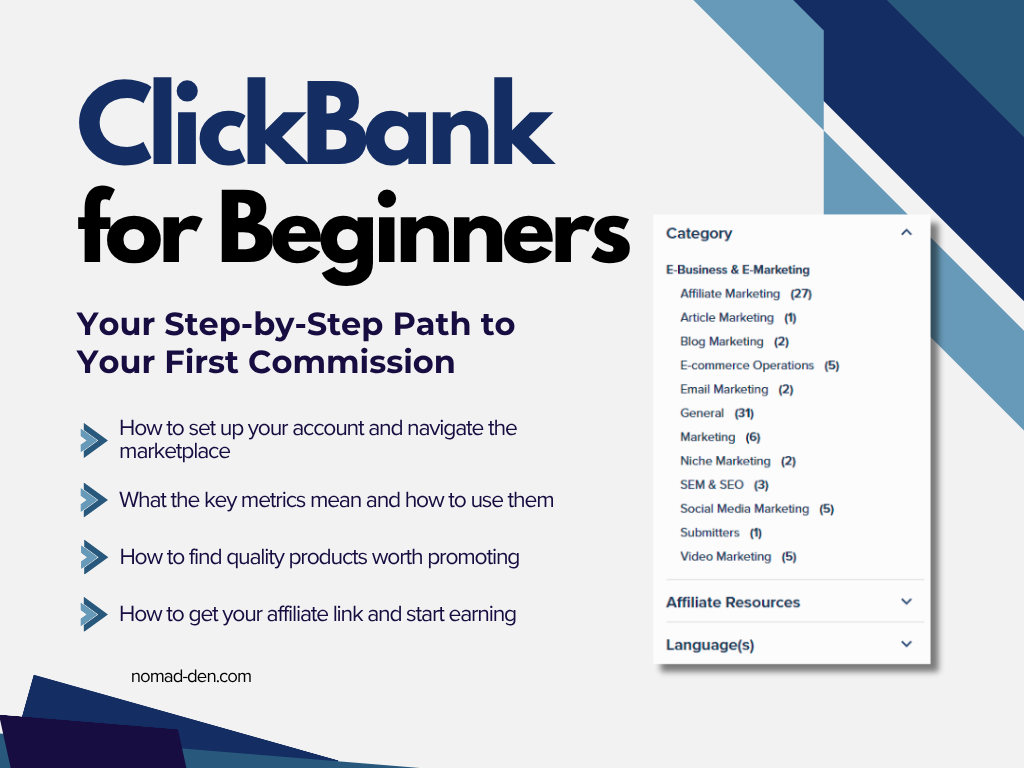
ClickBank for Beginners: Step-by-Step Tutorial to Your First Commission
ClickBank is a digital marketplace where product creators list offers and affiliates earn commissions by…
How Amazon Associates Actually Works: A Beginner’s Guide
Amazon has evolved into the world’s leading marketplace since its founding in the mid-’90s, commanding…