
If you’ve watched enough online business content, you’ve heard the familiar advice: “pick a niche and create content.” Good advice, but what usually gets skipped is everything that makes a business work: getting attention, earning trust, and handling the technical pieces that come with selling online, which consistently rank among the biggest challenges new businesses face.
This post is the third in our foundational series on online business, and it focuses on 15 terms that tend to confuse new creators, regardless of niche or business model. These are not advanced concepts, but they are concepts that show up everywhere, often used casually or treated as assumed knowledge, without clear explanations.
Getting familiar with them early helps you make clearer decisions, understand what people are actually talking about, and recognize what matters versus what doesn’t. Whether you’re building a blog, selling digital products, freelancing, or exploring e-commerce, these definitions apply broadly and will keep coming up as your business grows.
Think of this as a translation guide, not a glossary. The goal isn’t memorization, but clarity.
Foundational Online Business Terms
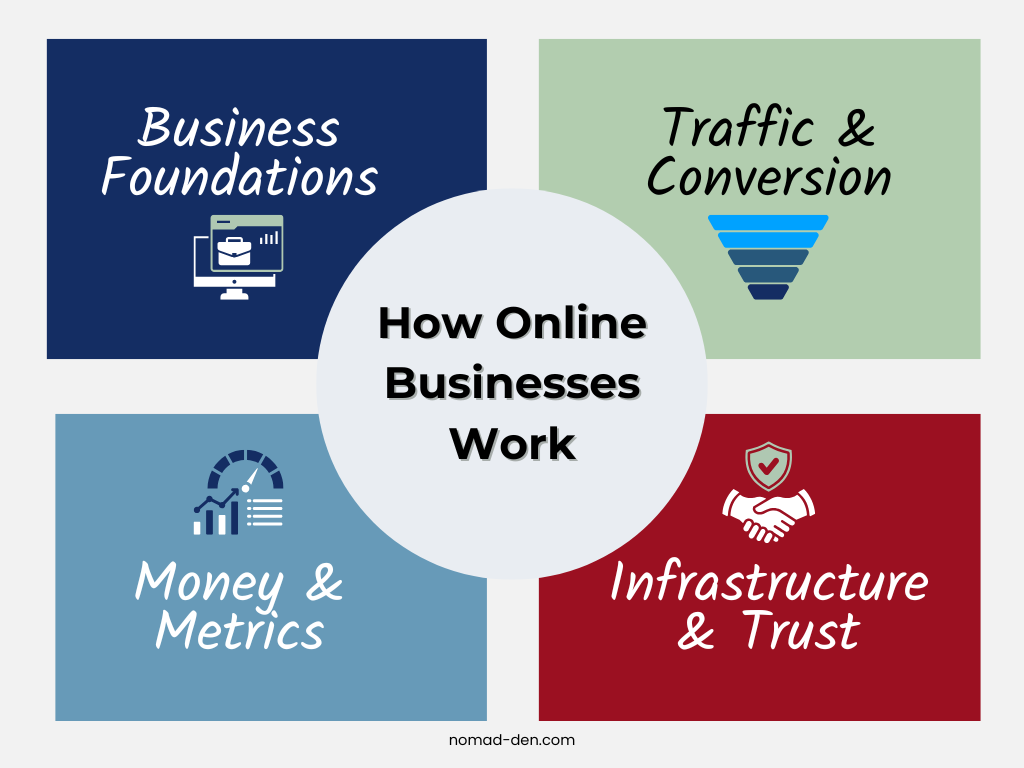
The terms below form a shared foundation across most online business models. Rather than listing them in a random order, they’re grouped by how they function in practice—so it’s easier to see how different concepts connect as you build and grow.
E-Commerce
E-commerce refers to buying and selling products or services online. This can include physical products shipped to customers, digital products delivered instantly, subscriptions, or services sold through a website or platform.
Learn more about the fundamentals of e-commerce here.
Business Model
A business model explains how a business makes money. It outlines what is being sold, who it’s sold to, and how revenue is generated. Understanding your business model helps you make clearer decisions about tools, content, and strategy.
Target Audience
A target audience is the specific group of people your business is meant to serve. Defining a target audience helps you communicate more clearly, create relevant offers, and avoid trying to appeal to everyone at once—which usually leads to weak messaging.
Digital Marketing
Digital marketing is an umbrella term that includes virtually any marketing or advertising done electronically. In online business, digital marketing is how most audiences are reached and engaged.
Understand how digital marketing can grow your online business.
With these foundations in place, the next step is understanding how attention turns into action; how people find your business and what happens once they do. That’s where traffic and conversion mechanics come in.
Traffic & Conversion Mechanics
How attention turns into action.
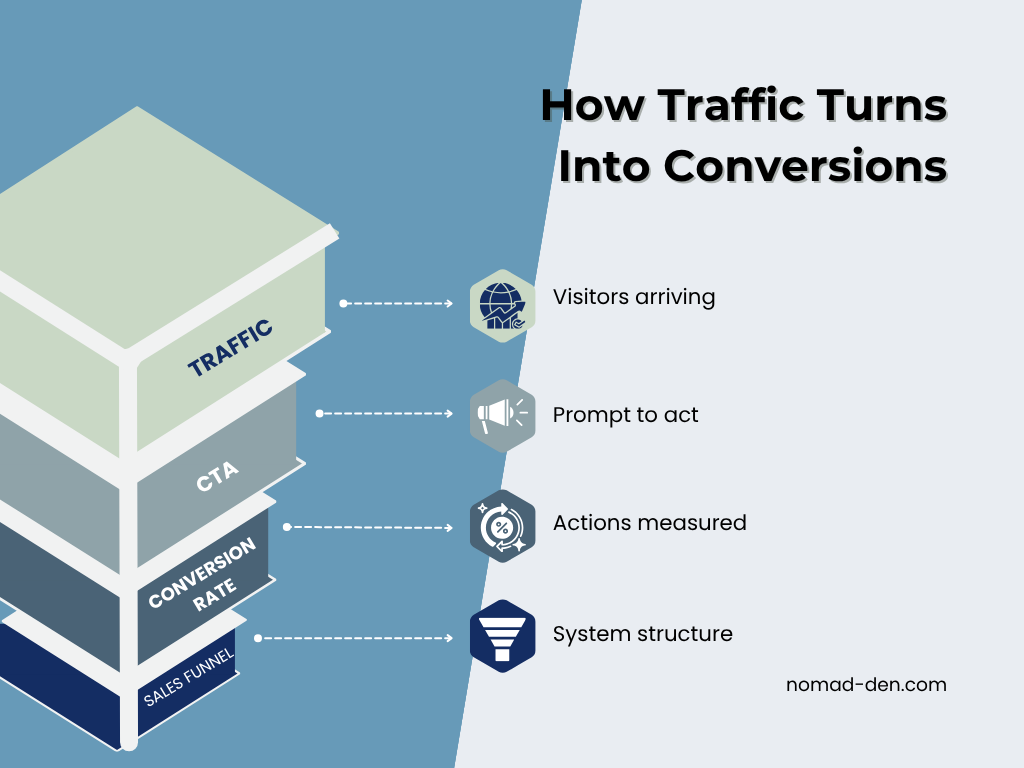
These terms describe what happens between someone discovering a business and taking a meaningful action. They’re often discussed together because each one affects the others.
Traffic
Traffic refers to the people who visit a website, page, or offer. It can come from many sources, but without traffic, nothing else in an online business can happen.
CTA (Call to Action)
A call to action is a prompt that tells someone what to do next. This might be to click a link, sign up, download something, or make a purchase.
Conversion Rate
Conversion rate measures the percentage of visitors who take a specific action. It helps show how effectively traffic is turning into results.
Sales Funnel
A sales funnel describes the path people take from first contact to final action. It’s a way to think about how awareness, interest, and decisions unfold over time.
If you want more context on how funnels have evolved over time, including flywheel and loop-based models, we cover that in our post on the history of sales funnels.
Once traffic and conversions are understood, the next step is measuring what those actions mean for the business financially.
Money & Performance Metrics
How success is measured (and misread)
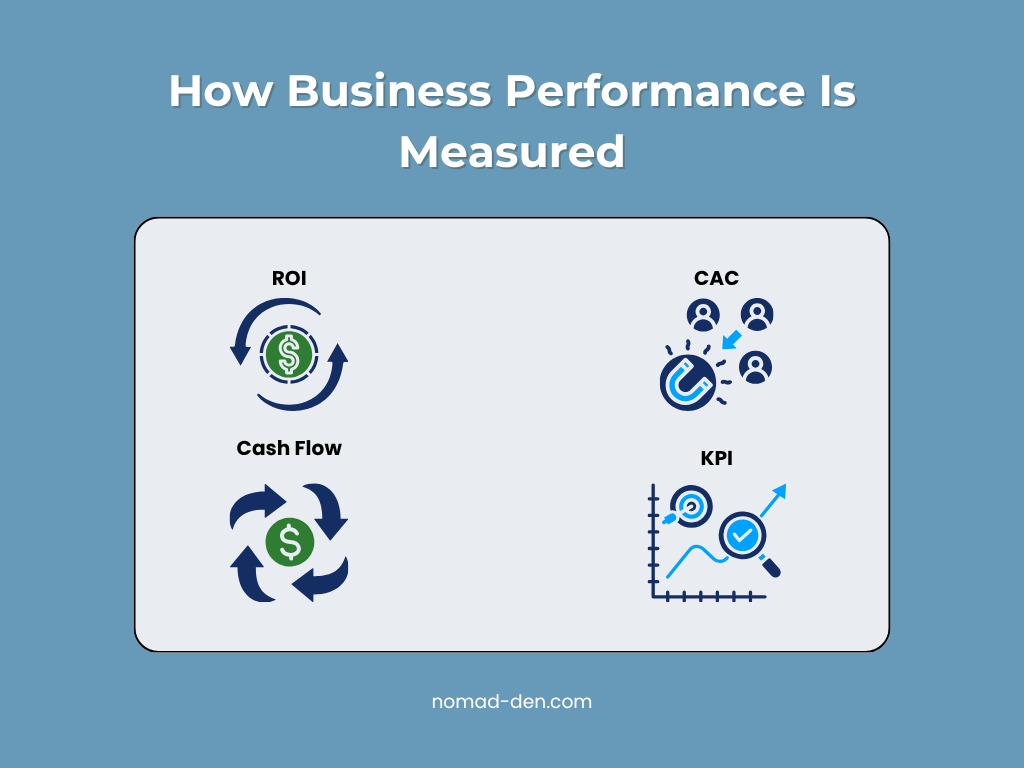
These terms are used to evaluate how well a business is performing financially. They’re often discussed together, but they measure different things—and confusing them can lead to poor decisions or unrealistic expectations.
ROI (Return on Investment)
ROI measures how much you gain compared to what you spend. It’s often used to evaluate whether a tool, campaign, or strategy is worth the cost.
Cash Flow
Cash flow refers to the movement of money in and out of a business. A business can appear profitable on paper while still struggling with cash flow if expenses are due before revenue arrives.
Customer Acquisition Cost (CAC)
Customer acquisition cost is how much it costs to gain a new customer. This includes marketing, advertising, and related expenses tied to acquiring buyers.
KPI (Key Performance Indicator)
A KPI is a measurable value used to track progress toward a specific goal. Different businesses track different KPIs depending on what they’re trying to improve.
Dive deeper into online business analytics here.
These metrics help you understand whether a business is working in theory and on paper. The next set of terms focuses on the systems that make an online business function in practice; how payments, trust, and delivery are handled.
Infrastructure, Trust & Delivery
What makes the business work in the real world
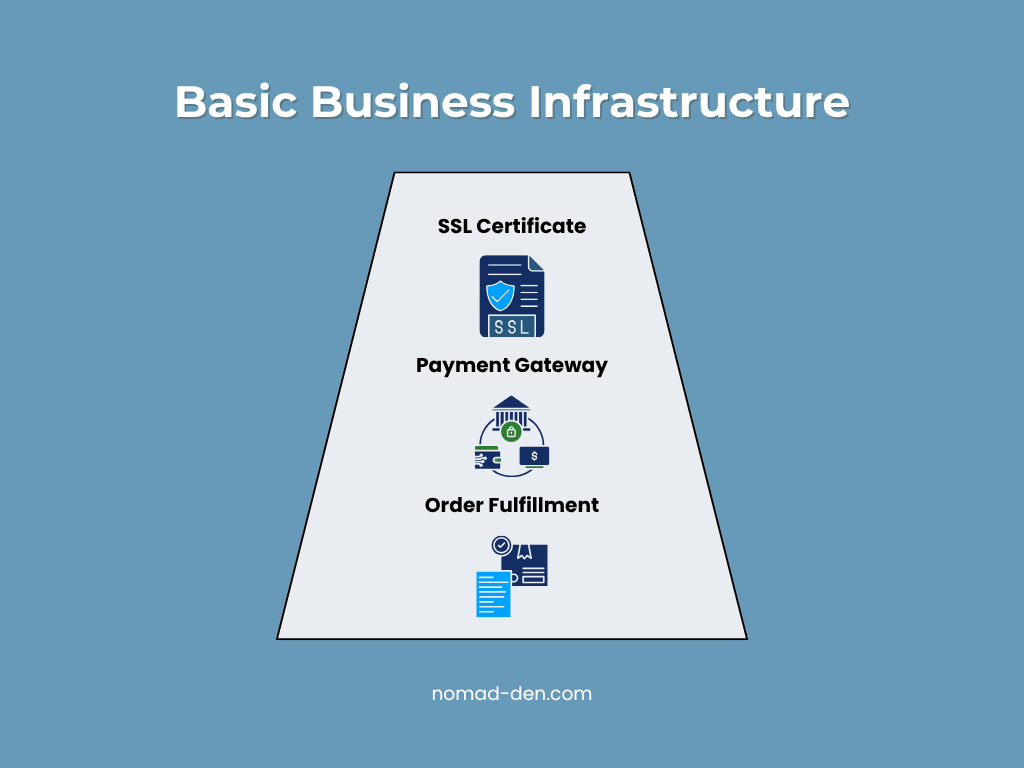
These terms cover the behind-the-scenes systems that allow an online business to operate smoothly. They’re often overlooked early on, but they play a major role in trust, reliability, and customer experience.
Payment Gateway
A payment gateway is the system that processes payments between a customer and a business. It handles transactions securely and allows customers to pay using methods like credit cards or digital wallets.
SSL Certificate
An SSL certificate encrypts data exchanged between a website and its visitors. It helps protect sensitive information and signals that a site is secure and trustworthy.
Order Fulfillment
Order fulfillment refers to what happens after a purchase is made. This includes delivering digital products, shipping physical items, or providing access to services as promised.
Conclusion
Understanding these terms won’t make or break a business on its own—but not understanding them often leads to confusion later. These concepts show up repeatedly across platforms, tools, and strategies, regardless of niche or business model.
You don’t need to master them all at once. Simply knowing what they mean—and where they fit—makes it easier to evaluate advice, spot gaps, and make more informed decisions as you move forward.
Continue Reading Related Posts

Private Browsers and Search Engines Worth Switching To
Google Chrome accounts for roughly 69% of the world’s web page views, and Google handles…

When to Start Outsourcing: How to Vet Your First Virtual Assistant (or Freelancer)
Outsourcing makes sense the moment a task is both teachable and consistently the thing standing…

How to Validate a Business Idea Before Wasting Months Building It
When you come up with an idea for an online business, you’re anxious to make…

6 Affiliate Niches That Last (And Beginners Can Start Today)
Most people pick an affiliate niche based on what’s trending right now. While that may…
Digital Marketing Guide: Where to Start and How It Works
Digital marketing is the promotion of products or services using digital channels such as search…
Content Creation vs Content Marketing: What’s the Difference?
Content creation is producing content. Content marketing is strategically using the content you produced to…