

Most people pick an affiliate niche based on what’s trending right now. While that may work temporarily, it won’t last. Trends fade; algorithms shift; and platforms change. So, what actually holds up? Niches tied to real human behavior and where more of life and work is moving online.
The problem isn’t just trends. It’s chasing things that only work under ideal conditions. If it were easy, everyone would be doing it. And anything worth building usually isn’t. What comes easy tends to disappear just as quickly. This post is here to cut through that.
I’m going to give you a simple way to evaluate whether a niche is actually worth building around long term, along with a handful that are positioned to last.
What Makes an Affiliate Niche “Built to Last”
Most people don’t have a clear way to evaluate a niche before committing to it. That’s where most mistakes happen. Not from lack of effort, but from choosing something without understanding what makes it sustainable in the first place.
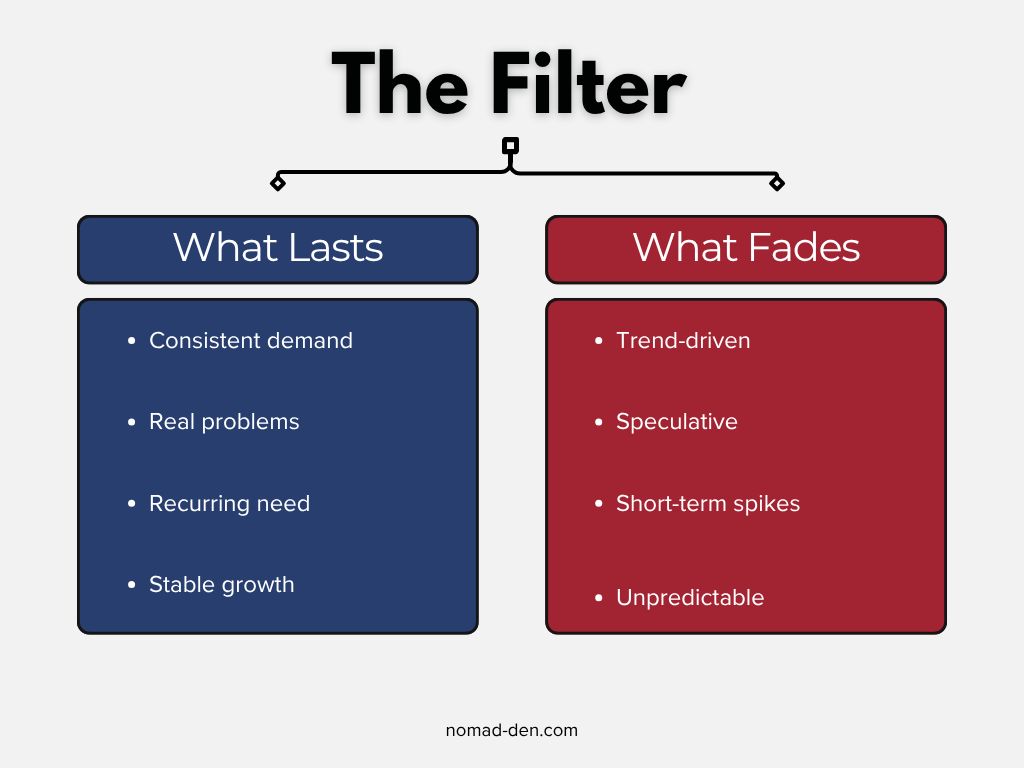
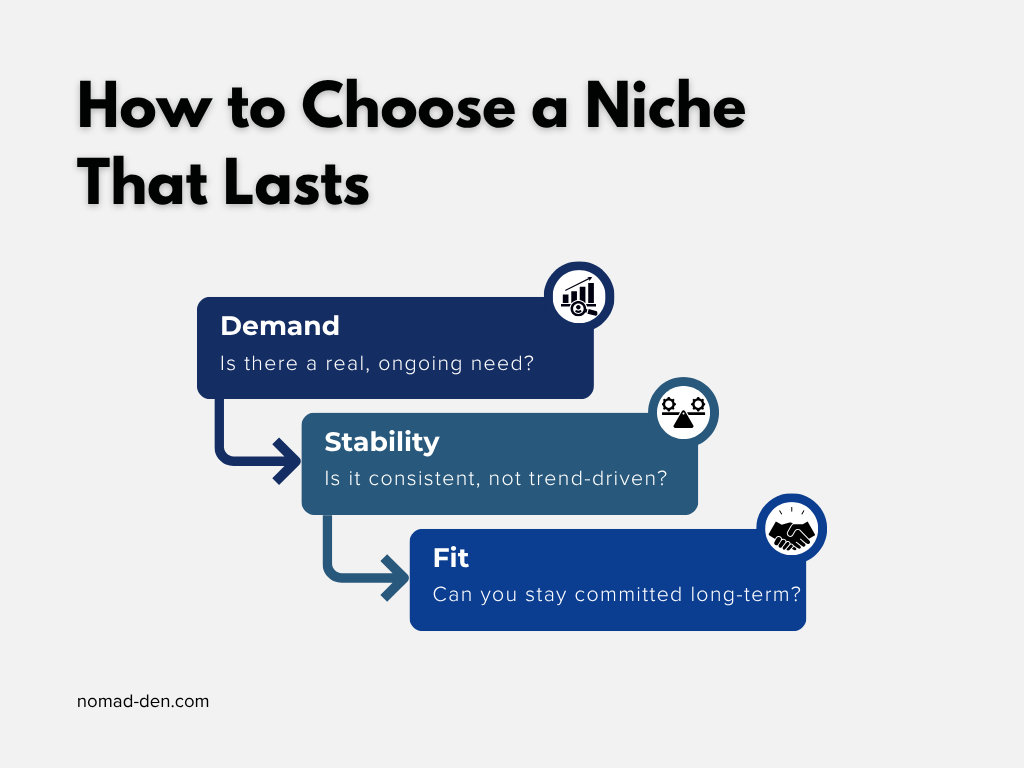
Before you commit to a niche, you need a way to evaluate it. Not based on hype or what’s trending this month. But on whether it actually holds up over time.
The niches that hold up tend to follow a few patterns. They solve problems people don’t just have once. They exist in areas where more of life and work is moving online, and they give you more than one way to create value, not just a single affiliate link.
This is the filter: if a niche doesn’t pass it, it’s probably not worth building around, no matter how popular it looks right now.
Affiliate Niches That Will Still Work in 2030
Now that you have the filter, here’s what it looks like in practice. These are niches that don’t rely on short-term spikes. They’re tied to real demand, and they’re positioned to hold up over time.
SaaS (Software as a Service) / Digital Products
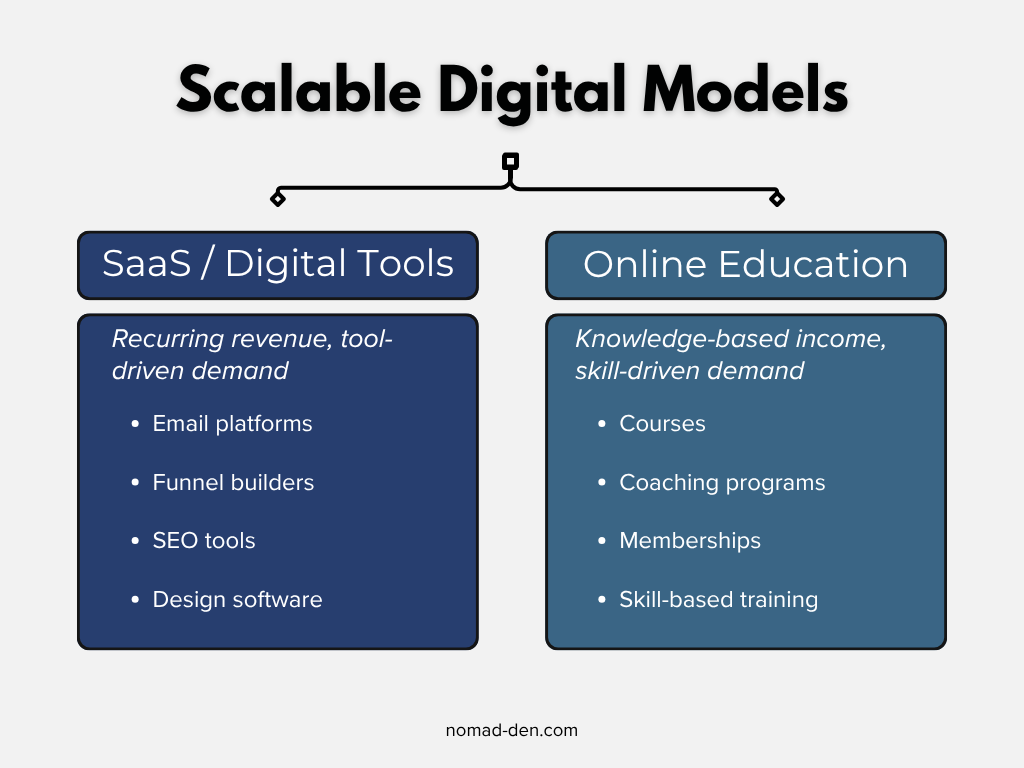
Software and digital products are some of the most reliable models online. What makes them different is how they’re sold. Most operate on subscriptions, which provides recurring revenue. Businesses rely on tools to run, while creators rely on tools to build. That demand doesn’t disappear. That’s what makes this niche hold up.
Systeme.io is a good example of this. It’s the platform I use to run my own email and funnel setup. It operates on a freemium model, which means I can send people there without asking them to spend anything upfront, and if they upgrade, I earn a recurring commission. That’s the model in action.
With digital products, there is no inventory to manage, and no physical production. Once a product is built, it can be sold repeatedly with minimal overhead. That makes it highly scalable compared to most traditional business models.
If you want a simple breakdown of how that actually works, I covered it here: Beginner’s Guide to Selling Digital Products (Low-Cost)
From an affiliate perspective, this is one of the strongest categories you can be in. Recurring commissions add up over time. Instead of earning once, you can earn monthly from the same referral. Tools for email marketing, funnels, SEO, and automation all fall into this category.
If your content helps people build or run something online, this fits naturally.
Online Education & Skill-Building
Online education continues to grow because people need skills that actually translate to income. Traditional education is slower, more expensive, and often disconnected from how people work today. Learning online removes a lot of that friction: it’s faster, more flexible, and easier to access. That shift isn’t going away.
What makes this niche durable is the constant need to learn new skills. Whether it’s marketing, tech, or freelancing, people are always trying to improve their skills and stay competitive.
I’ve gone through courses like The Roadmap myself. It wasn’t because I was paid to, but because I wanted to understand how online business actually works, without any hype or misleading claims. That firsthand perspective is what separates useful education content from filler.
That era also produced a lot of noise. The MRR wave that peaked around The Roadmap brought a flood of creators selling the lifestyle before they’d built anything. The audience caught on fast, and most of them are gone. What’s left are the people who had something real underneath the trend.
From an affiliate standpoint, this opens up multiple paths. Courses, platforms, certifications, and training programs all offer opportunities. Some are one-time commissions, while others include recurring elements or upsells.
If you’re looking for structured ways to build those skills, I’ve collected a growing list of platforms and training materials here: Education & Training Resources.
The only real challenge is follow-through. Information is easy to access. Applying it is where most people struggle.
Cybersecurity & Privacy
As more of life moves online, so does risk. Most people now manage dozens of accounts tied to personal, financial, and business information. That creates more points of failure, especially if basic security isn’t in place.
That’s where this niche stands out. The demand isn’t optional. It’s reactive. People don’t think about security until something goes wrong. Then it becomes urgent. That pattern isn’t changing.
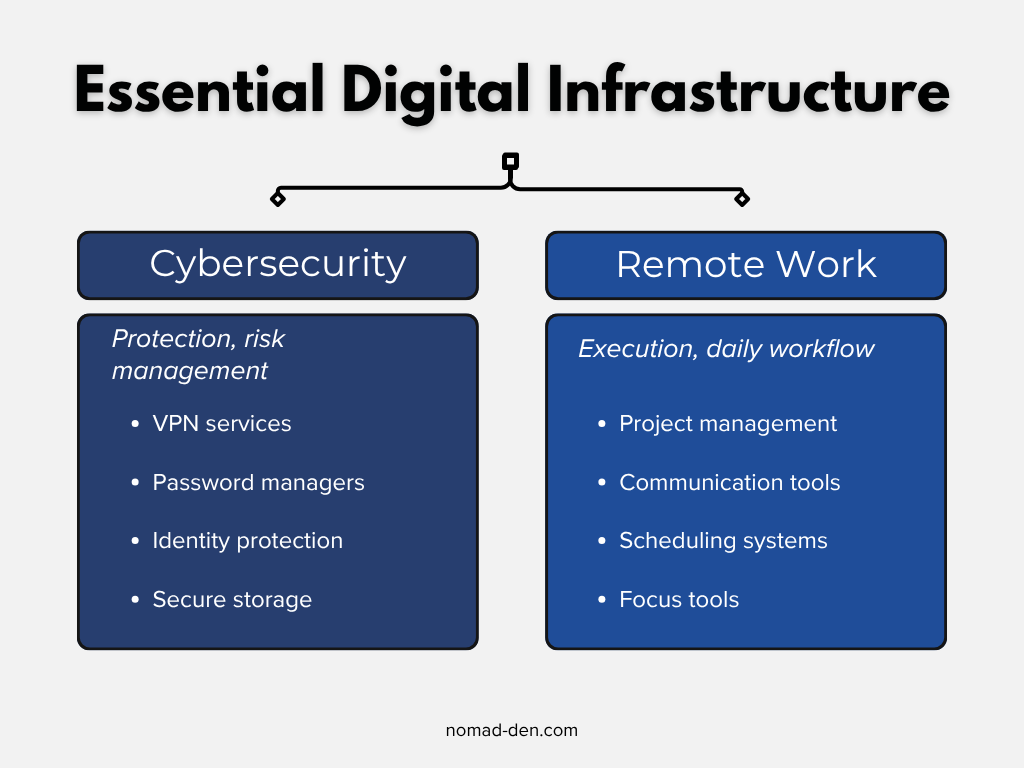
From an affiliate perspective, this category is strong because it connects directly to real problems. VPNs, password managers, identity protection, and secure storage all fall into this space. If your content touches online business, remote work, or even general internet use, this integrates naturally.
If you want a practical breakdown of how to secure your accounts and reduce those risks, I covered that here: Email & Account Security: Guard Your Data Online.
Remote Work & Productivity Tools
Remote work isn’t a trend anymore. It’s a shift in how people live and earn. The traditional office model is becoming less necessary for many types of work, especially those built online. More people are choosing flexibility over location, cutting out commutes, and building income from wherever they are.
That shift isn’t reversing. Working remotely, or as a digital nomad, requires a different kind of setup. You don’t have built-in structure or office systems. You have to create that yourself. That’s where this niche holds up.
Productivity tools, communication platforms, time management systems, and workflow automation all become essential. These aren’t “nice to have” tools. They’re what keep remote work functioning.
From an affiliate standpoint, this creates consistent demand across multiple categories. Project management tools, collaboration software, scheduling systems, and focus tools all fit here.
If you want a breakdown of tools that can help you stay organized and focused, I covered some of the most useful ones here: Top 7 Tools to Boost Your Productivity at Work.
Content Creation & Lead Generation
If you’re building anything online, you’re also creating content. There’s no real way around that. Whether it’s blog posts, videos, emails, or social media, content is how attention is earned and trust is built. And without attention, nothing else works.
That’s why this niche continues to grow.
If you want a clear breakdown of what content creation actually involves, I covered that here: What is Content Creation?
As more people try to build online income, the demand for tools that support content creation increases with it. Writing tools, design platforms, video editors, publishing tools, and email systems all fall into this category.
From an affiliate perspective, this space is strong because it connects directly to action. People aren’t just browsing. They’re trying to create, grow, and improve.
And once you understand that, this guide shows how to turn content into traffic and results: Content Marketing: Beginner’s Guide to Strategy.
Email marketing platforms, funnel builders, and content tools often include recurring pricing, which adds long-term earning potential on top of initial conversions.
If your content helps people build an audience or grow online, this niche fits naturally.
Website Infrastructure (Hosting, Domains, Performance)
Every online business needs a foundation. Before content, before traffic, before monetization, there has to be a place where everything lives. That’s where website infrastructure comes in.
Domains, hosting, site speed, and performance aren’t flashy topics, but they’re essential. And unlike trends, this layer doesn’t disappear. While you can start without a website, relying entirely on third-party platforms limits ownership, flexibility, and stability over time.
As more people move online, more websites get built. And every one of them needs reliable hosting and setup. That’s what makes this niche durable.
From an affiliate standpoint, this category is strong because it sits at the beginning of the journey. Many people make their first purchase here. Hosting, domain registration, and website tools are often entry points into building online income.
It also connects naturally to everything else. SEO, content creation, e-commerce, and email marketing all depend on a stable foundation.
If you’re looking for a starting point, this guide breaks down the top options: 7 Best Hosting Providers Compared for 2025.


If you’re helping people get started or improve their setup, this niche is a direct fit.
What to Avoid (or Watch Closely)
Not every niche that looks profitable actually holds up over time. Some are built on momentum, not durability.
Crypto and NFT-related niches are a good example. They can generate attention quickly, but they’re highly speculative and prone to sharp market swings, making them unreliable for long-term content.
Fast-moving physical product niches can fall into the same category. Trends shift, supply chains fluctuate, and margins can disappear quickly. What works one year may not work the next.
That doesn’t mean these niches can’t be profitable. It means they require a different approach. If you’re building for the long term, it’s safer to focus on niches tied to consistent demand rather than temporary spikes in interest.
Frequently Asked Questions
Final Thoughts
You don’t need the perfect niche. You need one that lasts and one you can actually relate to and genuinely care about. The more interested you are in your chosen niche, the longer you’re likely to commit.
The niches in this post aren’t based on what’s trending right now. They’re built around demand that doesn’t disappear and systems that continue to grow.
If you’re just getting started, focus on one area, learn it well, and build from there. You can always expand later.
Some links in this post may be affiliate links. I may earn a commission at no extra cost to you. Learn more here.
Continue Reading Related Posts

Affiliate Marketing Scams: How to Spot Them (and Protect Your Own)
Affiliate marketing is a legitimate, commission-based business model, not a scam, that predates the internet…
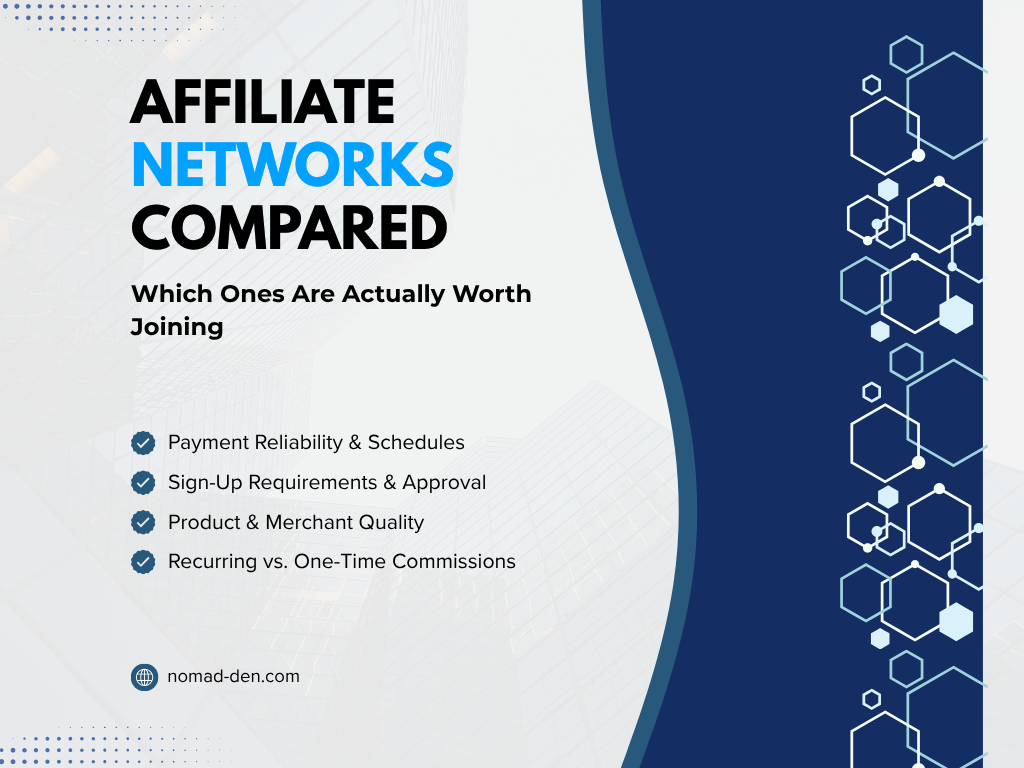
Affiliate Marketing Networks Compared: Which Ones Are Actually Worth Joining?
An affiliate network is a middleman platform that connects you to multiple merchants or vendors…
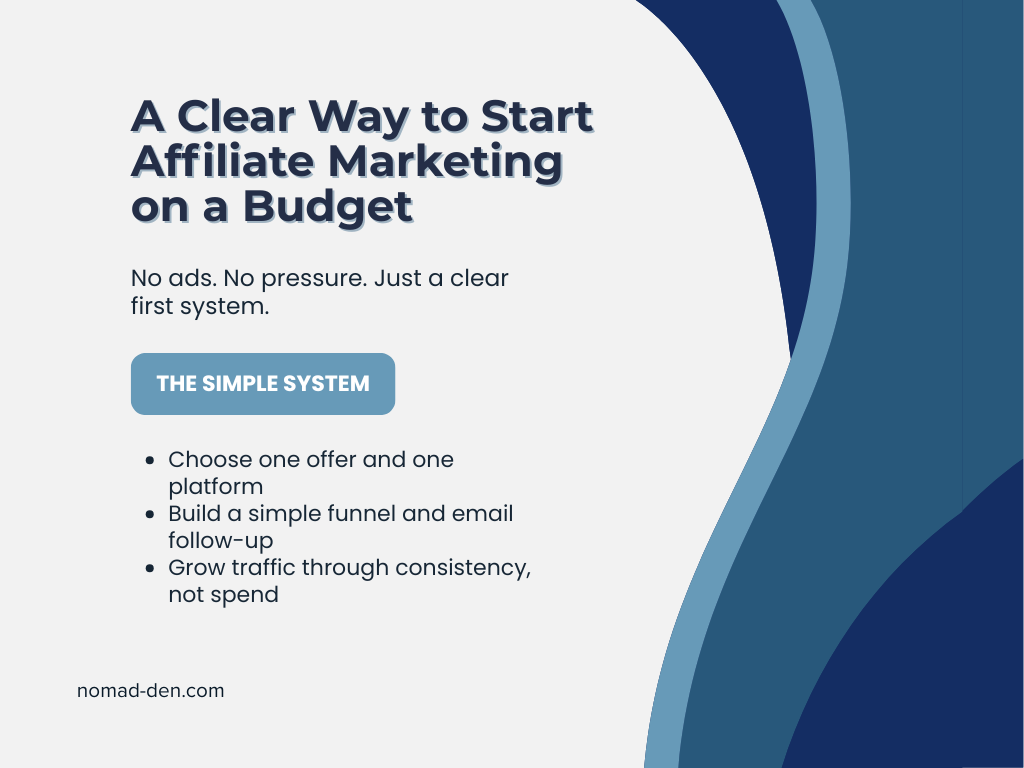
How to Start Affiliate Marketing For Less Than $50 (Beginner Guide)
Affiliate marketing is one of the most affordable and accessible ways to start earning income…

17 Affiliate Marketing Terms Beginners Need to Know
Affiliate marketing terms are the core vocabulary that explains how the business model works, including…
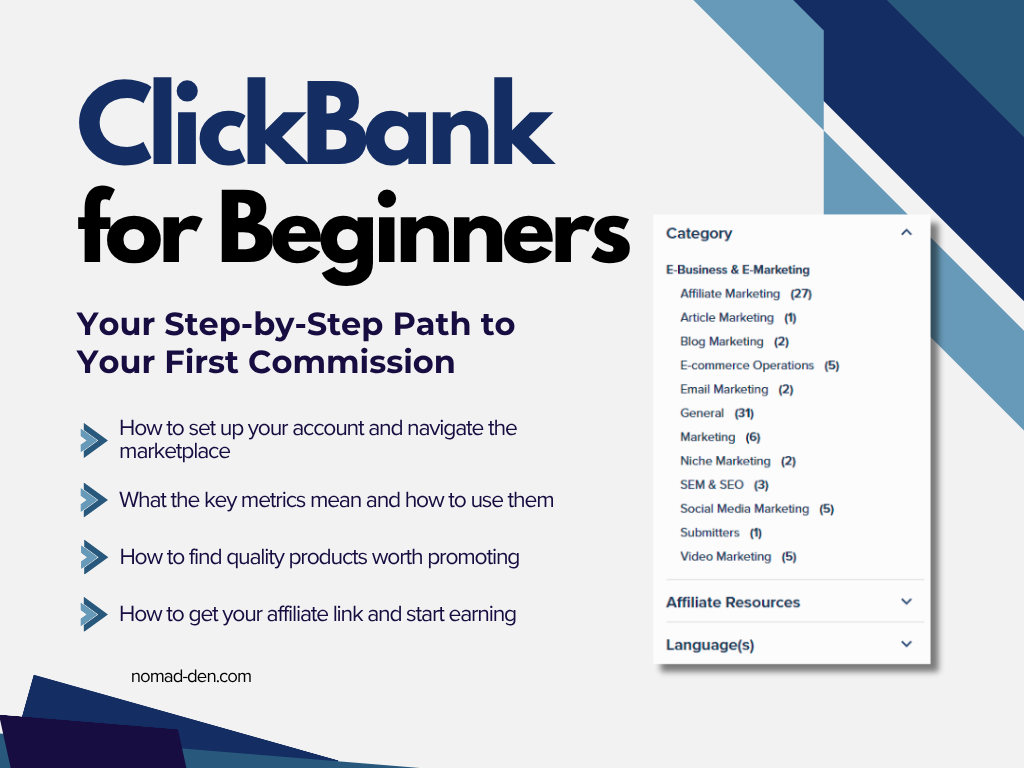
ClickBank for Beginners: Step-by-Step Tutorial to Your First Commission
ClickBank is a digital marketplace where product creators list offers and affiliates earn commissions by…

How Amazon Associates Actually Works: A Beginner’s Guide
Amazon has evolved into the world’s leading marketplace since its founding in the mid-’90s, commanding…