Digital marketing is the promotion of products or services using digital channels such as search engines, email, websites, social media, and paid ads. It allows businesses to reach targeted audiences online, track performance in real time, and optimize campaigns for measurable results.
In simple terms:
- Marketing is attracting attention, building trust, generating sales
- Digital means you’re using online tools and platforms
- Together, they produce scalable, measurable growth
This guide explains how digital marketing works, its core channels, how it differs from traditional marketing, and why it matters for modern businesses.
What Digital Marketing Actually Means
Digital marketing is the use of online platforms and digital technology to connect businesses with potential customers. Unlike traditional marketing, digital marketing:
- Targets specific audiences
- Tracks detailed data
- Allows rapid testing and optimization
- Works for both small businesses and global brands
It is not:
- Simply posting on social media
- Just running paid ads
- A guaranteed overnight income strategy
- A “set it and forget it” system
Digital marketing is a structured, ongoing strategy designed to drive business growth and build brand authority. When executed correctly, it generates measurable revenue and creates a scalable, sustainable business supported by the tools outlined here.
Common Misunderstandings About Digital Marketing
Is Digital Marketing Just Social Media or Paid Ads?
No. Social media and ads are only two components. Digital marketing also includes SEO, content marketing, email marketing, affiliate marketing, analytics, and website optimization.
Does Digital Marketing Guarantee Instant Results?
No. Paid advertising can generate traffic quickly. SEO and content marketing often take 3–9 months to show significant results. Digital marketing is iterative and long-term.
Is Digital Marketing Too Expensive for Small Businesses?
Not necessarily. While paid ads require a budget, SEO, content, and email marketing can be started with minimal financial investment. Skill and consistency often matter more than spending money on ads.
If I Build a Website, Will Customers Automatically Come?
No. A website without SEO, content, or promotion will remain invisible. Traffic must be earned or acquired through strategic marketing efforts.
Is Email Marketing Dead?
Not at all. Email remains one of the highest-converting digital marketing channels because it enables direct communication with an owned audience. It supports personalization, automation, and long-term relationship building, making it one of the highest-ROI marketing tools available.
Now that we’ve addressed common misconceptions, let’s examine the core channels of digital marketing and how they work together to move audiences from awareness to action.
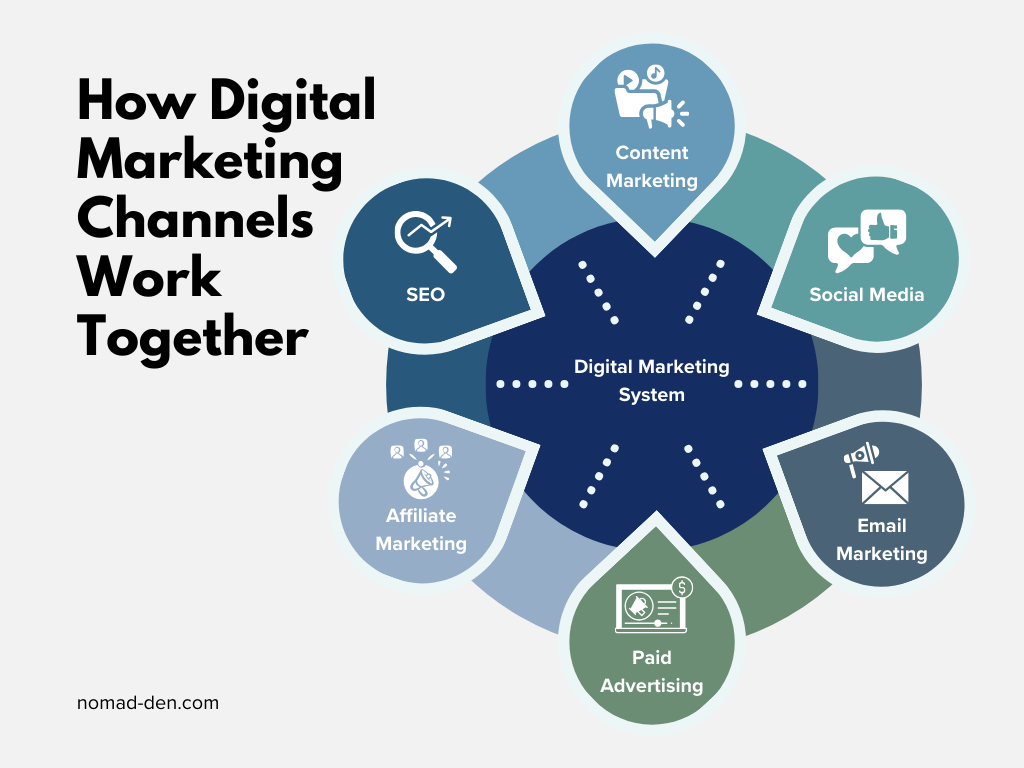
Core digital marketing channels work together as a connected system.
The Core Channels of Digital Marketing
Digital marketing consists of interconnected channels that work together. You don’t need to learn all of them when starting out. However, no channel works in isolation. The best results come from combining them strategically.
Below are six core digital marketing channels that businesses use to attract, engage, and convert their audience.
Search Engine Optimization (SEO)
SEO is the process of optimizing content so it appears in search engine results when users are actively searching for information, products, or solutions.
Fundamentally, SEO is about understanding and matching search intent, ensuring that content directly answers what users are trying to find.
- Generates organic traffic
- Builds long-term visibility
- Requires keyword research and technical structure
- Compounds over time
SEO has evolved beyond traditional search engines. Modern optimization now extends across multiple platforms, sometimes referred to as “Search Everywhere Optimization.” This shift makes high-quality content essential, which is why SEO and content marketing now work closely together.
Explore why SEO isn’t dead and how to optimize your content in this guide.
Content Marketing
Content marketing is the strategic creation and distribution of valuable content that attracts, educates, and builds trust with a specific audience over time. Examples include:
- Blog posts
- Videos
- Guides
- Podcasts
- Infographics
Strong content builds authority and supports SEO, email marketing, and social distribution. Learn how content creation and content marketing differ, and how they work together to drive visibility and brand growth.
Email Marketing
This channel centers on building and communicating with a subscriber list that a business directly controls, without relying on social media algorithms. Common tools and strategies include:
- Automated welcome emails
- Educational email series that build trust over time
- Promotional campaigns
- Ongoing relationship and retention messaging
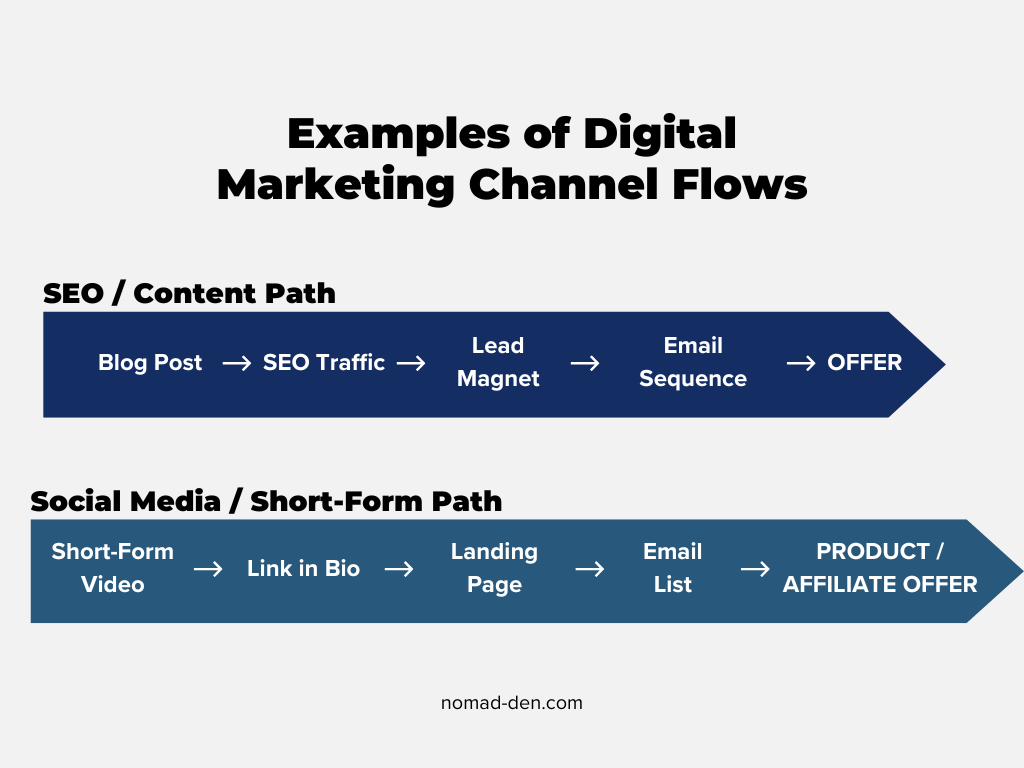
It plays a critical role in converting traffic into long-term customers. While SEO and social media generate visibility, email marketing turns that visibility into repeat engagement, trust, and revenue.
In many digital marketing systems, email is the bridge between attention and revenue. Learn more about three top email platforms and how they can help grow your business
Next, we cover paid advertising (PPC), a channel designed to accelerate traffic and visibility, often in exchange for ongoing budget investment.
Paid Advertising (PPC)
Paid advertising, often referred to as Pay-Per-Click (PPC), is a digital advertising model where businesses pay when users click on their ads. Unlike SEO and content marketing, which compound over time, PPC is designed to generate immediate visibility and traffic. Common PPC platforms include:
- Google Ads
- Social media ads
- Display ads
- Retargeting campaigns
Advantages:
- Immediate traffic
- Precise targeting
- Scalable with budget
Disadvantages:
- Traffic typically stops when spending stops
- Requires ongoing financial investment
- Can become expensive in competitive niches
PPC campaigns can be optimized in real time using data like click-through rates, conversions, and cost per acquisition, which is what separates it from traditional advertising.
It is important to note that not all promotional models allow paid advertising. Many affiliate programs, particularly those managed directly by merchants, restrict or prohibit PPC campaigns. Always review program terms before launching paid traffic strategies.
Social Media Marketing
Social media platforms reach billions of users daily, making them one of the most powerful distribution channels in digital marketing. They allow businesses to build brand awareness, engage directly with audiences, and drive traffic, but they don’t replace owned assets like your website or email list.
Social media drives attention and traffic, but it does not replace owned assets like websites or email lists. Platforms like Pinterest, for example, can drive highly targeted traffic when used strategically. Finally, we’ll examine affiliate marketing.
Affiliate Marketing
Affiliate marketing is a performance-based model where individuals or businesses earn commissions by promoting another company’s products or services. Rather than creating products, affiliates focus on distribution, audience trust, and strategic positioning. Common characteristics include:
- Promoting products through content, email, social platforms, or paid traffic
- Earning commissions on qualified sales or leads
- Low overhead entry compared to building a product-based business
Traffic can come from organic sources, paid advertising, or a combination of both. When used strategically, affiliate marketing can serve as:
- A low-risk entry point into online business
- A monetization layer added to existing content
- A scalable revenue stream built on trust and consistency
This model works best when integrated with SEO, content marketing, email, or paid campaigns rather than treated as a standalone tactic. Long-term success depends on clear positioning, helpful content, and consistent audience engagement.
If you’re exploring affiliate marketing as a starting point, you can begin with a simple, low-cost stack of tools and platforms designed for beginners.
How Digital Marketing Differs from Traditional Marketing
| Traditional Marketing | Digital Marketing |
|---|---|
| TV, radio, print | Search, social, email |
| Broad targeting | Precision targeting |
| Difficult to measure | Fully measurable |
| High upfront costs | Flexible budgets |
Key differences:
- Digital marketing allows data-driven decisions.
- Campaigns can be adjusted quickly.
- Small businesses can compete with larger brands through strategy and niche positioning.
The line between traditional and digital marketing is blurring. Connected TV and streaming platforms now deliver targeted, measurable ads through the internet, which technically makes them digital marketing channels. The distinction matters less than the principle: if you can target it, track it, and optimize it, it belongs in your digital strategy.
Where to Start with Digital Marketing
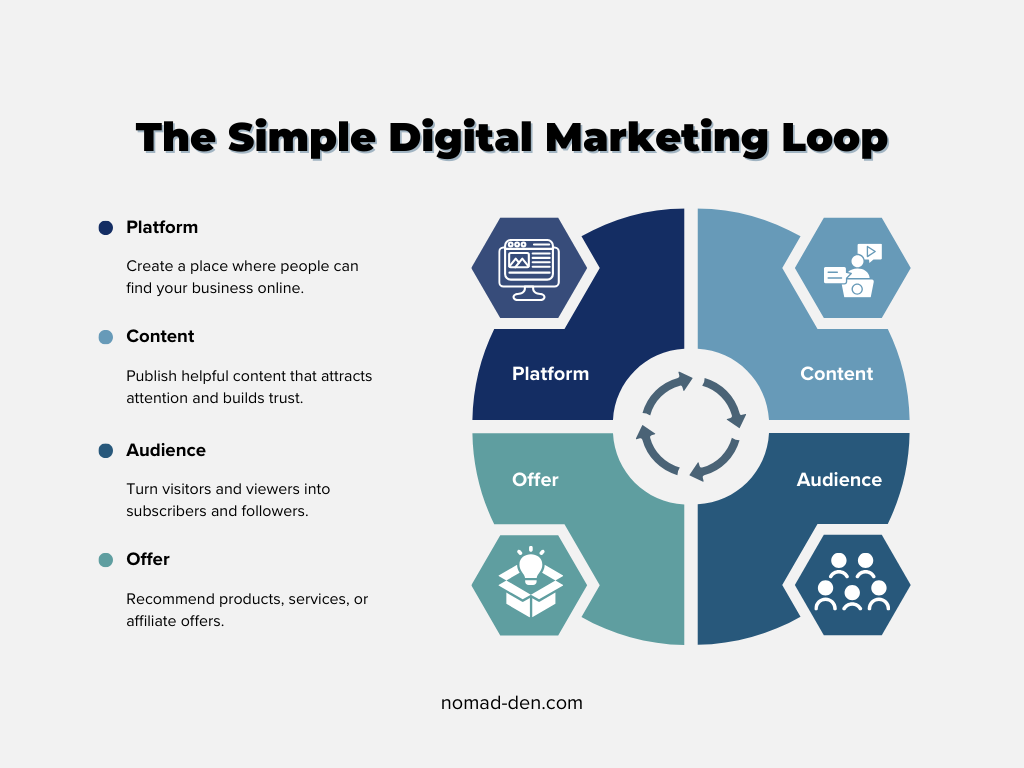
If you’re just getting started, the most common mistake is trying to learn every platform at once. Digital marketing becomes much easier when you focus on one channel, build a simple system, and improve it over time.
- Choose one primary channel.
- Learn fundamentals.
- Create consistent content or campaigns.
- Track performance.
- Improve weekly.
For a practical starting point, see this guide on the only free tools you need to launch before upgrading, which walks through the leanest digital marketing stack for beginners.
Frequently Asked Questions (FAQ)
Conclusion
Digital marketing isn’t a single tactic or platform. It’s a system of channels working together to attract attention, build trust, and convert that trust into revenue. You don’t need to master everything at once. Start with one channel, learn the fundamentals, and stay consistent.
As your skills grow, additional tools and platforms can be layered into the system. Over time, that system becomes a powerful engine for building and scaling an online business.
Recommended Next Reads
Best Free Tools for Content Creators (and What They Really Cost)
The best free tools for content creators cover four main jobs: planning what to make,…
White Hat vs. Black Hat SEO (and the Gray Area In Between)
SEO tactics fall into three categories: white hat, black hat, and a shrinking grey area…
Keyword Research for Beginners: How to Find What People Are Searching For
Keyword research in 2026 isn’t about ranking on Google anymore. It’s about understanding what a…
How to Use Social Media Scheduling Tools to Grow Without Being Online 24/7
There’s a version of social media growth that gets sold constantly: post more, post everywhere,…
How to Validate a Business Idea Before Wasting Months Building It
When you come up with an idea for an online business, you’re anxious to make…
Digital Marketing Analytics for Beginners: Stop Guessing, Start Tracking
When I first launched Nomad Den, I was publishing posts, building out a network of…